
Running a business demands financial precision. Unpaid invoices can quickly derail your company’s cash flow. Legal action for unpaid invoices becomes critical for protecting your financial interests.
Business owners invest significant time and resources into delivering quality work. They expect timely compensation in return. Unpaid invoices represent a serious challenge that disrupts operations and strains business relationships.
Knowing how to sue for unpaid invoice requires strategic understanding. Careful preparation is essential for success.
Confrontation might seem intimidating at first. Modern solutions like unpaid-invoices.com offer streamlined approaches to recovering outstanding payments. These platforms help businesses navigate payment recovery while maintaining professional client relationships.
Key Takeaways
- Unpaid invoices can significantly impact business financial stability
- Legal action requires careful documentation and evidence
- Professional communication is crucial before pursuing litigation
- Modern platforms can help automate payment recovery processes
- Understanding your contractual rights is the first step in resolution
Understanding Your Rights When Clients Don’t Pay
Navigating invoice dispute resolution presents significant challenges for small business owners. Understanding your rights becomes essential for recovering unpaid invoices effectively. Protecting your business interests demands a strategic approach to handling payment conflicts.
The foundation of invoice dispute resolution begins with comprehensive review of existing agreements. Proper documentation protects your business interests during payment conflicts. Strategic planning helps resolve unpaid invoice situations more efficiently.
Reviewing Your Contract and Payment Terms
Examine your original contract carefully to understand recovery specifics for unpaid invoice amounts. Key elements demand thorough review and consideration:
- Payment deadlines and schedules
- Late fee provisions
- Dispute resolution clauses
- Specific payment terms agreed upon
Pro tip: Written contracts provide stronger legal protection compared to verbal agreements. Clear documentation of payment expectations minimizes potential conflicts and strengthens your legal position.
Confirming Delivery of Goods or Services
Documentation serves as your strongest defense in invoice dispute resolution. Collect and organize comprehensive proof of completed work:
- Detailed service records
- Delivery receipts
- Email confirmations
- Communication logs with the client
Many payment disputes stem from misunderstandings rather than deliberate non-payment. Thorough documentation eliminates potential challenges to your invoice’s validity. Strong record-keeping strengthens your position in recovering unpaid funds significantly.
Gathering and Organizing Your Evidence
Successful debt collection for unpaid invoice requires meticulous documentation. Organizing your evidence is crucial for building a strong case against clients who haven’t paid. Think of this process as creating a comprehensive financial story that clearly demonstrates the work completed and payment owed.
Start by collecting key documents that support your claim. Your evidence package should include:
- Original contract or written agreement
- Detailed invoices with specific dates and amounts
- Proof of service delivery or completed work
- All communication records with the client
- Payment history or partial payment documentation
Digital tools can streamline your evidence collection process. Platforms like Unpaid-Invoices.com help professionals track and organize documentation related to unpaid accounts. These digital solutions ensure no critical piece of evidence gets lost.
Preparing for potential debt collection requires creating three copies of each document. Keep one for your records, one for potential legal proceedings, and one for the client. Digital backups provide an extra layer of protection and accessibility.
Well-organized evidence demonstrates professionalism and increases your chances of successfully recovering funds owed to your business.
Communicating with Your Client Before Legal Action
Recovering unpaid invoices requires a strategic approach to communication. Professional and empathetic outreach can effectively resolve invoice disputes before pursuing legal action.
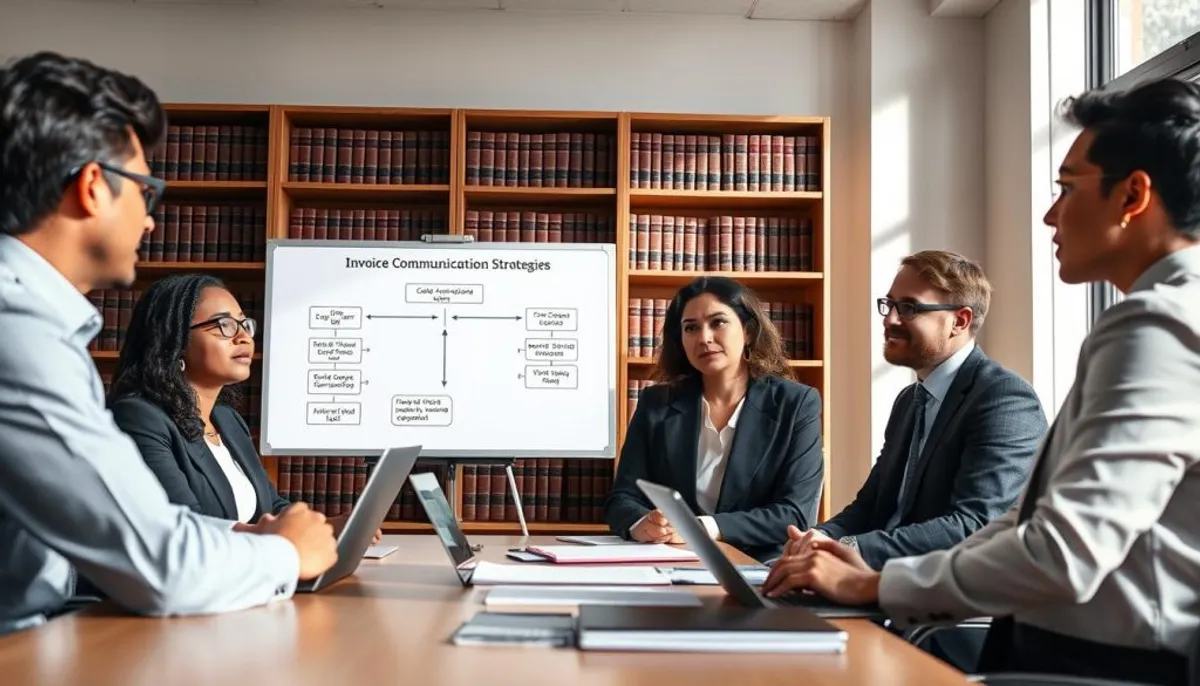
Successful invoice dispute resolution often begins with clear, respectful communication. Small business owners have several effective methods to address outstanding payments. Direct engagement frequently yields positive results without escalating tensions.
- Send carefully crafted email reminders
- Make direct phone contact
- Maintain a professional yet understanding tone
Sending Friendly Email Reminders
Email reminders should follow a strategic progression for recovering unpaid invoices. Each message builds upon the previous communication while maintaining professionalism.
- Initial Gentle Reminder: Assume the invoice was accidentally overlooked
- Firmer Follow-up: Highlight the overdue status professionally
- Final Notice: Indicate potential legal consequences
A sample email might read: “I noticed our invoice from [date] remains unpaid. As a small business, timely payments are crucial for our continued operations. Could we discuss a payment timeline?”
Making Direct Phone Contact
Phone communication becomes essential in specific situations. Direct conversations often clarify misunderstandings more effectively than written correspondence.
- Invoice amounts are substantial
- Client relationships are long-standing
- Email responses are non-existent
Prepare thoroughly before calling about unpaid invoices. Proper preparation demonstrates professionalism and increases successful resolution likelihood.
- Gathering complete invoice details
- Choosing appropriate contact times
- Documenting conversation outcomes
Modern tools like unpaid-invoices.com can automate reminder processes. These platforms send professional communications and track interactions without manual effort.
Writing and Sending a Formal Demand Letter
A formal demand letter serves as a critical communication tool before pursuing legal action for unpaid invoices. This document represents your final attempt to resolve payment issues without going to court.
An effective demand letter should include several key components:
- Detailed invoice information
- Total amount owed
- Specific payment deadline
- Consequences of non-payment
Crafting a professional demand letter requires precision. Your communication must clearly outline the following elements:
- Precise invoice details with dates and amounts
- Description of goods or services provided
- Reference to original contract terms
- Clear payment deadline (typically 7-10 business days)
- Potential legal ramifications
Professional platforms like unpaid-invoices.com can help generate legally sound demand letters that maintain a firm yet professional tone. These letters create a documented record of your collection efforts. They also signal serious intent to recover outstanding payments.
A well-constructed demand letter often resolves payment disputes without requiring costly legal proceedings. It demonstrates your commitment to professional business practices while providing a structured pathway for resolution.
Offering Payment Plans as an Alternative Solution
Facing challenges with debt collection for unpaid invoices requires creative solutions that preserve business relationships. Payment plans offer a strategic approach to invoice dispute resolution. Both parties benefit from this flexible arrangement. Outstanding funds can be recovered while maintaining professional connections.
Crafting an effective payment plan requires careful consideration and strategic thinking. The goal is designing flexible arrangements that ease client financial obligations. You receive full payment while clients manage their cash flow. This balanced approach supports long-term business relationships.
Structuring Installment Agreements
Developing a successful installment agreement involves several key steps:
- Determine the minimum acceptable monthly payment
- Set a realistic timeframe for complete repayment
- Calculate potential interest on the outstanding balance
- Document all agreement terms in writing
- Include consequences for missed payments
A client owing $3,000 might agree to pay $500 upfront and $500 monthly for five months. This approach breaks down total debt into manageable chunks. Smaller payments reduce financial pressure on clients. Recovery rates improve when obligations feel achievable.
Getting Client Buy-In on Payment Terms
The psychology of negotiation plays a crucial role in creating successful payment plans. Encourage clients to propose their own payment schedule. Clients who suggest comfortable terms are more likely to follow through. Ownership of the solution increases commitment to the agreement.
Use collaborative language during payment discussions. Ask questions like, “What payment schedule would work best for your current financial situation?” This approach transforms potentially confrontational interactions into cooperative problem-solving conversations. Clients feel respected rather than pressured.
Digital platforms now make tracking installment agreements easier than ever. Automated reminder systems help clients stay on track with scheduled payments. Businesses gain transparent payment monitoring without constant manual oversight. Technology streamlines the entire payment plan process.
How to Sue for Unpaid Invoice in Small Claims Court

Traditional collection methods sometimes fail to recover outstanding payments. A small claims court for unpaid invoice offers an effective legal solution. This court system provides accessible resolution for financial disputes. You won’t need expensive legal representation to pursue your case.
Before filing an unpaid invoice lawsuit, consider these critical steps:
- Verify the total amount owed matches your state’s small claims court limits
- Gather all documentation of the original contract and invoice
- Confirm you’ve attempted multiple collection methods
- Calculate potential court filing fees and potential recovery
The small claims court process typically involves several straightforward stages:
- Complete official court filing documents
- Pay the required court filing fee
- Serve legal documents to the defendant
- Prepare evidence for your hearing date
Pro tip: Many defendants settle immediately after receiving official court papers, potentially saving you time and additional legal expenses.
Most small claims courts offer an informal environment for self-representation. The judge will review evidence and listen to both parties’ perspectives. A fair determination gets made based on documentation and presented facts.
Platforms like unpaid-invoices.com can simplify your documentation process. You’ll have comprehensive records ready for potential legal proceedings. Maintaining organized communication and financial history prepares you well. Your small claims court appearance will benefit from thorough preparation.
Understanding Small Claims Court Limits and Filing Costs
Navigating small claims court for unpaid invoices requires understanding financial boundaries and legal parameters. Each state establishes unique limits that directly impact your ability to recover funds. These variations can significantly affect your unpaid invoice lawsuit strategy.
Small claims court offers an accessible path for businesses and individuals seeking outstanding payment recovery. The process remains straightforward, allowing plaintiffs to pursue justice without extensive legal complexity.
State-by-State Filing Fee Variations
Small claims court limits vary dramatically across the United States. Here’s a breakdown of key considerations:
- California: Corporations can sue for up to $6,250, while sole proprietors can pursue $12,500
- Florida: Maximum claim limit of $8,000
- Texas: Small claims limit reaches $20,000
- New York: Limits range from $3,000 to $5,000 depending on local court jurisdiction
Waiving Amounts Over the Limit
Your unpaid invoice might exceed the small claims court limit, but strategic options exist. Businesses can choose to waive the additional amount and sue for the maximum allowable limit. Consider this scenario: you’re owed $11,000, and your state’s limit is $10,000.
You can file a lawsuit for $10,000 and forgo the remaining $1,000. This approach keeps your case within small claims court jurisdiction.
Filing fees typically range between $15 and $75, depending on your state and claim amount. Most courts allow you to recover these fees if you win your case. This makes small claims court an economical solution for pursuing unpaid invoices.
Preparing for Your Small Claims Court Hearing
Suing a client for an unpaid invoice requires meticulous courtroom preparation that determines your case outcome. Small claims court hearings typically last 15-30 minutes. Your success hinges on thorough organization and clear evidence presentation.
Before your hearing, gather all critical documentation for your unpaid invoice lawsuit. Your evidence package should include:
- Original contract or agreement
- Detailed invoices
- Proof of service delivery
- Communication records with the client
- Chronological timeline of billing attempts
Create three complete sets of your documentation. One copy for yourself, one for the judge, and one for the defendant. This demonstrates professionalism and helps the judge understand your case quickly.
Prepare a concise verbal explanation of why you’re pursuing the unpaid invoice. Practice a clear, fact-based statement that outlines:
- Services you provided
- Agreed-upon payment terms
- Specific amount owed
- Your collection efforts
Courtroom etiquette proves crucial for case success. Dress professionally, arrive early, and speak respectfully to all parties involved. Address the judge as “Your Honor” throughout proceedings.
Stay calm and focus on presenting factual evidence supporting your unpaid invoice lawsuit. Emotional outbursts or aggressive behavior can undermine your credibility before the court.
Platforms like unpaid-invoices.com can help you organize documentation systematically. This ensures you have a court-ready case file demonstrating your systematic approach to collecting outstanding payments.
Enforcing Your Judgment and Collecting Payment
Winning a court judgment for an unpaid invoice doesn’t guarantee immediate payment. Seeking compensation for unpaid invoice amounts requires strategic debt collection tactics that protect your financial interests.
Several legal mechanisms exist to enforce your judgment and recover funds when a client fails to pay. Understanding these debt collection for unpaid invoice strategies can significantly improve your chances of getting paid.
Exploring Wage Garnishment Strategies
Wage garnishment offers a powerful method to collect outstanding debts directly from a debtor’s earnings. This process involves several critical steps:
- Obtain a writ of execution from the court
- Complete wage garnishment documentation
- Serve garnishment order to the debtor’s employer
- Receive court-mandated payment percentages
Leveraging Bank Levies and Property Liens
Additional collection methods can help you recover funds when wage garnishment isn’t feasible. Bank levies and property liens provide alternative approaches to collecting outstanding debts.
| Collection Method | Key Characteristics | Potential Recovery |
|---|---|---|
| Bank Levy | Freeze and seize funds from debtor’s account | Full or partial judgment amount |
| Property Lien | Legal claim against real estate | Prevents property sale until debt satisfied |
Collecting a judgment can be challenging, but persistence and knowledge of legal tools increase recovery chances. Some debtors might be judgment-proof, so realistic expectations are crucial in your debt recovery journey.
Conclusion
Navigating the complex world of recovering unpaid invoices can be challenging for businesses of all sizes. Understanding how to sue for unpaid invoice is crucial, but prevention and smart collection strategies are even more important. Your financial health depends on proactive management of accounts receivable and strategic approaches to payment recovery.
Legal action for unpaid invoice situations can be time-consuming and potentially costly. Small businesses need efficient solutions that preserve professional relationships while ensuring timely payment. Modern technology offers innovative approaches to how to recover unpaid invoice amounts without resorting to aggressive collection methods.
Platforms like Unpaid-Invoices.com provide comprehensive collection solutions that streamline the entire process. These services automate reminder communications, track payment histories, and offer professional negotiation tools. By leveraging such technology, businesses can reduce financial stress, maintain client relationships, and keep cash flow consistent.
Protecting your business requires a multi-faceted approach. Implement clear contract terms, communicate professionally, and leverage technology-driven collection tools. Understanding your legal options is essential. With the right strategies and resources, you can effectively manage unpaid invoices and maintain your business’s financial stability.
FAQ
How long do I have to sue for an unpaid invoice?
The statute of limitations varies by state, typically ranging from 3-6 years for written contracts. Check your specific state’s laws and take action before the deadline expires. Documenting all communication and maintaining detailed records can help strengthen your case if legal action becomes necessary.
What documentation do I need before filing a lawsuit for an unpaid invoice?
You’ll need comprehensive documentation, including: the original contract or agreement, all invoices sent, proof of delivery of goods or services, and records of communication attempts. Include emails, texts, call logs, any partial payment records, and documentation of payment promises. The more detailed your documentation, the stronger your case will be in small claims court.
Can I sue for an invoice amount that’s less than the small claims court limit?
Small claims court is designed for smaller monetary disputes. Each state has different limits, typically ranging from ,500 to ,000. If your invoice amount falls within your state’s limit, small claims court is an accessible and cost-effective option for recovering unpaid funds.
What are my options if the client claims they don’t owe the full amount?
First, review the contract and gather all evidence of completed work. Try to negotiate a resolution through direct communication, documenting all interactions. If disputes persist, consider mediation or presenting your case in small claims court. Offering a partial payment plan can sometimes resolve ongoing conflicts while preserving business relationships.
How much does it cost to file a small claims lawsuit?
Filing fees typically range from to , depending on your state and the amount of the claim. These fees are often recoverable if you win the case. The court may order the defendant to reimburse your court costs along with the original invoice amount.
What happens if I win the lawsuit but the client still doesn’t pay?
Winning a judgment doesn’t automatically mean immediate payment. You may need to pursue collection methods like wage garnishment, bank levies, or property liens. The court can provide various enforcement mechanisms, but you’ll need to take additional steps to collect. This might include obtaining a writ of execution or conducting a debtor’s examination.
Can I sue for late fees and interest in addition to the original invoice amount?
If your original contract includes provisions for late fees and interest, you can typically include these in your lawsuit. Make sure these terms were clearly outlined in the original agreement. You must have consistently applied these terms in your billing practices.
How long does the small claims court process typically take?
The entire process usually takes 2-3 months from filing to hearing, depending on your local court’s schedule. This includes time for filing, serving papers, and attending the court hearing. Many cases are resolved before the actual hearing through settlements or payment arrangements.
What if the amount owed is more than the small claims court limit?
You have two primary options: Sue for the maximum small claims amount and waive the excess. Alternatively, file in a higher court, which typically requires an attorney and involves more complex procedures. Pursuing the maximum in small claims court is often more cost-effective and efficient.
How can I prevent unpaid invoices in the future?
Implement robust preventative measures such as: requiring partial upfront payments, using clear contracts with specific payment terms, and sending invoices promptly. Follow up quickly on late payments. Consider using automated invoicing and collection platforms that track and remind clients about outstanding balances.