
Small business owners face a critical challenge in managing cash flow effectively. Unpaid invoices create significant financial strain for many companies. Strategic systems can prevent 80% of payment issues before they escalate. Smart entrepreneurs use proactive approaches to reduce revenue loss risks dramatically.
Modern businesses encounter complex billing challenges requiring sophisticated solutions. Invoices become 60% less likely to be collected after 90 days pass. This reality highlights the urgent need for rapid and professional recovery techniques. Innovative technology platforms offer streamlined approaches to debt recovery while preserving client relationships.
This comprehensive guide explores practical strategies for managing outstanding payments effectively. You’ll discover powerful techniques to protect your business’s financial health. Methods range from understanding invoice terminology to implementing cutting-edge collection approaches.
Key Takeaways
- Implement systematic approaches to invoice management
- Recognize early warning signs of potential payment delays
- Develop clear communication strategies with clients
- Leverage technology for efficient accounts receivable tracking
- Maintain professional relationships during recovery processes
Understanding Outstanding and Overdue Invoices
Navigating invoicing requires a clear understanding of key financial terms. Businesses often struggle with distinguishing between outstanding and overdue invoices. This confusion can significantly impact cash flow and financial planning.
If you issue an invoice on January 1st with Net 30 terms, it’s outstanding from January 1-30. It becomes overdue on January 31st. This timeline helps businesses track payment expectations and manage their accounts receivable more effectively.
What Makes an Invoice Outstanding
An outstanding invoice represents a bill that is currently active and awaiting payment. Key characteristics include:
- The invoice is within the agreed payment terms
- Payment has not yet been received
- The due date has not passed
The Critical Difference Between Outstanding and Overdue
Understanding the nuanced difference between outstanding and overdue invoices empowers business owners. This knowledge enables them to take strategic collection actions.
| Invoice Status | Payment Timeline | Action Required |
|---|---|---|
| Outstanding | Within payment terms | Standard follow-up |
| Overdue | Past payment deadline | Aggressive collection strategy |
Proactive business owners understand these invoice stages, positioning themselves ahead of those who react to payment issues. By recognizing where each invoice falls in the collection process, you develop targeted strategies. These strategies improve cash flow and maintain healthy client relationships.
Why Unpaid Invoices Threaten Your Business Health
Unpaid invoices can silently erode your business’s financial foundation. The impact goes far beyond a simple missed payment. Outstanding invoices create a ripple effect that can critically damage your company’s financial health.
Here are the key risks businesses face with unpaid invoices:
- Working Capital Drain: Unpaid invoices first tie up crucial funds that could be used for inventory, payroll, and operational expenses.
- Cash Flow Disruption: When payments stall, businesses struggle to meet their own financial obligations, creating a domino effect of financial challenges.
- Productivity Loss: Staff must divert time from productive activities to chase outstanding payments, reducing overall business efficiency.
The statistics are alarming. Approximately 49% of invoices become overdue, representing real money that could fuel business growth. These aren’t just numbers—they’re potential investments in your company’s future.
Credit ratings take a significant hit from unpaid invoices. Lenders and suppliers scrutinize accounts receivable aging when assessing a company’s financial stability. Excessive overdue invoices can signal financial weakness. This makes it challenging to secure future funding or favorable terms.
Financial forecasting becomes nearly impossible with outstanding invoices. Planning for growth, marketing investments, or new hiring becomes a complex puzzle. Expected revenue remains uncertain, complicating strategic decisions.
The risk of bad debt grows exponentially as invoices age. What starts as a manageable delay can quickly transform into a potential financial nightmare.
Common Causes of Late and Unpaid Invoices
Understanding the root causes of unpaid invoices is crucial for businesses seeking improved cash flow. Multiple factors contribute to payment delays, from financial challenges to communication breakdowns. Identifying these issues helps maintain healthy client relationships.
Customer Cash Flow Challenges
Cash flow issues often prevent clients from making timely payments. Small businesses and startups may struggle with financial constraints, forcing delayed invoice settlements. These customer cash flow problems can stem from various sources.
- Seasonal business fluctuations
- Unexpected economic downturns
- Delayed payments from their own clients
- Internal budget restrictions
Administrative Errors and Communication Gaps
Manual processes frequently lead to human error in invoicing. Administrative errors during manual data entry create significant payment obstacles. Common communication breakdown issues disrupt the payment cycle.
- Incorrect invoice details
- Sending invoices to wrong contact points
- Technical glitches in billing systems
- Unclear payment instructions
Product and Service Disputes
Disagreements over service quality or product expectations can halt payment processes. Deliverables that don’t meet client expectations may trigger payment withholding until resolution. Potential dispute areas require careful attention.
- Quality of work performed
- Misaligned service expectations
- Incomplete project specifications
- Pricing discrepancies
Proactively addressing these common invoice payment challenges can significantly reduce payment delays and improve overall business financial health.
How to Recover Unpaid Invoices
Recovering unpaid invoices requires a strategic and systematic approach. The best recovery strategy begins before invoices become overdue. Focus on proactive prevention rather than reactive measures. Business owners need a comprehensive plan that balances professional persistence with maintaining positive client relationships.
Effective invoice recovery follows a strategic progression with multiple critical stages:
- Prevention: Establish clear payment terms upfront
- Early Intervention: Send friendly reminders when invoices first become overdue
- Escalation: Implement more formal communication and explore additional payment options
- Final Measures: Consider late fees, collection agencies, or potential legal actions
Segmenting customers by their payment behavior allows for a customized approach. A first-time late payment from a reliable customer requires a different strategy. Chronic non-payment from a problematic account demands firmer action. Recommended best practices include:
- Remind customers on the due date
- Follow up every 10 days with consistent communication
- Adjust timeline based on relationship value and payment history
Modern technological tools can automate much of this process. Consistent follow-up happens without consuming excessive staff time. Many business owners avoid collection efforts due to discomfort. Professional and systematic collection actually strengthens client relationships by establishing clear expectations.
The key is maintaining a friendly, organized, and clear approach. Recovery doesn’t mean becoming aggressive—it means being consistent. Demonstrate the value of your services through professional persistence.
Building a Proactive Collection Strategy
Managing cash flow requires a strategic approach to accounts receivable. Businesses need smart systems that prevent invoice delays. These systems streamline payment collection processes effectively.
Successful invoice management starts with sending invoices immediately upon service completion. Automated systems can transform how businesses track and collect payments. They ensure consistent and timely communication with clients.
Automating Your Accounts Receivable Process
Automation doesn’t mean impersonal communication—it means being consistently professional. Platforms like unpaid-invoices.com enable businesses to optimize their collection workflows. These tools help maintain professional relationships while improving cash flow.
- Schedule pre-due date reminders
- Trigger overdue notices at specific intervals
- Track all communications in one centralized system
By implementing automated reminder sequences, businesses can focus energy on complex accounts. This approach maintains smooth payment workflows across all client relationships.
Segmenting Clients by Payment Behavior
Not all clients are equal regarding payment habits. A sophisticated approach involves categorizing customers based on their payment patterns. This segmentation allows for targeted communication strategies.
| Customer Segment | Payment Characteristic | Recommended Approach |
|---|---|---|
| Excellent Payers | Always pay on time | Minimal intervention |
| Good Payers | Occasionally run late | Gentle reminders |
| Slow Payers | Consistently late | Early and frequent reminders |
| Problem Accounts | Chronic non-payment | Immediate personal attention |
By tailoring communication strategies to different payment behaviors, businesses maintain professional relationships. This targeted approach ensures timely collections while preserving client goodwill.
Setting Clear Payment Terms From the Start
Establishing crystal-clear payment terms is crucial for protecting your business’s financial health. Precise communication prevents misunderstandings and ensures smooth transactions with clients.

- Specific due dates (Net 30, Due upon receipt)
- Accepted payment methods
- Early payment incentives
- Late payment penalties
- Dispute resolution processes
Different clients require different payment strategies. For new or high-risk clients, implement stricter payment conditions:
- Request 50% upfront deposit
- Use milestone billing
- Require immediate payment
| Client Type | Payment Terms | Risk Level |
|---|---|---|
| New Client | 50% upfront, milestone billing | High |
| Established Client | Net 30/45 terms | Low |
Sample contract language might read: “Payment is due within thirty days from the invoice date. Accepted methods include bank transfer, credit card, and check. Late payments incur a 1.5% monthly interest charge.”
Clear, professional payment terms protect your business while maintaining positive client relationships. Transparency builds trust and reduces potential payment disputes.
Crafting Effective Payment Reminder Communications
Your unpaid invoice needs immediate attention. Swift action prevents future complications.
Payment reminders are critical communication tools for maintaining healthy cash flow. Effective messaging can dramatically improve collection rates without damaging client relationships.
Writing Compelling Subject Lines
Your subject line determines whether an email gets opened. Craft these with precision:
- Keep it under 50 characters
- Include specific invoice number
- State exact amount due
- Create urgency without aggression
Unpaid-Invoices.com: $2,500 overdue for TechSolutions Inc. demonstrates a clear, direct approach. This method captures attention instantly.
Structuring Your Email Body for Maximum Response
- Start with a clear, concise opening statement
- Provide specific invoice details
- Explain payment options
- Include direct payment links
Payment reminder emails should be:
- Friendly for first-time reminders
- Firm for repeated overdue notices
- Always professional
Settle your account now through our convenient online portal, bank transfer, or credit card payment. Quick resolution prevents further action.
Offering Flexible Payment Options and Plans
Recovering unpaid invoices demands a strategic approach to payment collection. Modern businesses recognize that flexibility accelerates payment timelines. Accepting credit cards, despite processing fees, proves more beneficial than chasing payments for months.
Different customers prefer different payment methods. A comprehensive payment strategy should include:
- Digital wallets like PayPal and Venmo
- Online payment portals with one-click payment
- ACH/bank transfers
- Traditional checks for customers who prefer classic methods
Platforms like unpaid-invoices.com integrate multiple payment processors. Customers choose their preferred method from a single payment link. This approach dramatically increases payment speed and customer satisfaction.
Payment plans offer a powerful solution for recovering larger invoices. Consider implementing plans when:
- A valued customer experiences unexpected financial difficulty
- A large invoice creates genuine hardship
- The alternative is potential non-payment or legal action
| Payment Plan Strategy | Details |
|---|---|
| Installment Structure | 2-4 payments over 30-90 days |
| First Payment | Due immediately to demonstrate commitment |
| Early Payment Incentive | 2% discount for payment within 10 days |
Flexibility doesn’t signify weakness in collections. A customer on a payment plan actively works to pay you. An inflexible approach might result in no payment at all. Approach collections as a collaborative problem-solving process.
When to Escalate Collection Efforts
Protecting your business’s financial health requires strategic approaches to recovering unpaid invoices. Customers who repeatedly ignore reasonable collection efforts have already damaged the relationship. You have a right to protect your business interests.
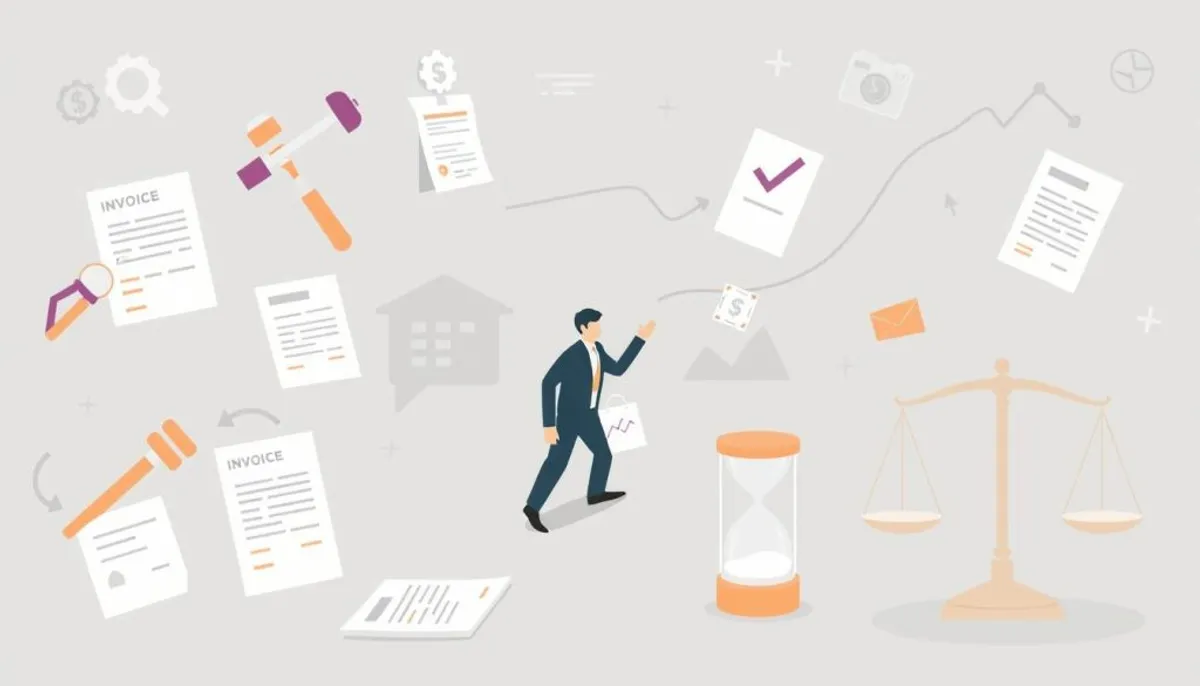
Standard invoicing methods sometimes fail, requiring businesses to consider more assertive collection strategies. The goal involves recovering funds while maintaining professional boundaries and minimizing financial losses.
Implementing Late Fees and Interest Charges
Financial penalties serve multiple critical purposes in debt recovery:
- Compensate for time and collection efforts
- Incentivize timely payment
- Signal business seriousness
Consider these essential guidelines for implementing late fees:
- Include penalties in original payment terms
- Follow state and local regulatory limits
- Clearly communicate fee structures
- Apply fees consistently
Considering Legal Action and Collection Agencies
Legal options represent last-resort collection methods. Each approach carries potential risks and costs:
| Collection Method | Estimated Cost | Potential Recovery |
|---|---|---|
| Demand Letters | $200-$500 | Medium |
| Small Claims Court | Filing Fees + Time | Variable |
| Collection Agencies | 25-50% of Recovery | Low-Medium |
Perform a careful cost-benefit analysis before pursuing aggressive collection. Sometimes writing off a bad debt represents the smartest financial decision. Unpaid-invoices.com offers a professional, cost-effective middle ground for persistent communication without expensive legal action.
How Unpaid-Invoices.com Streamlines Debt Recovery
Managing overdue invoices can drain your business resources. Unpaid-invoices.com emerges as a powerful SaaS platform designed to transform your accounts receivable process. The system uses cutting-edge automation and intelligent strategies to recover payments efficiently.
The platform offers a comprehensive solution for businesses struggling with unpaid accounts. Smart technology automates the entire invoice collection workflow. You recover payments efficiently without damaging client relationships.
- Automated reminder sequences tailored to your business needs
- Multi-channel communication including email and SMS
- Intelligent escalation based on invoice age
- Customizable payment portal for clients
Key features set unpaid-invoices.com apart from traditional collection methods. The platform generates professional, personalized communications that maintain a courteous tone. It persistently pursues outstanding payments while preserving customer goodwill. Unlike aggressive collection agencies, this approach protects valuable business relationships.
Businesses can expect significant improvements in cash flow. The system reduces average collection times and minimizes administrative burden. Real-time insights appear through an intuitive dashboard.
Users can track outstanding invoices and monitor payment behaviors. The platform streamlines the entire receivables management process.
- Cost-effective alternative to debt collection agencies
- Predictable monthly subscription pricing
- Seamless integration with existing accounting systems
- Maintains professional client relationships
Unpaid-invoices.com represents a game-changing solution for small and medium businesses. It offers a smarter approach to recovering overdue payments. By automating tedious collection tasks, the platform allows entrepreneurs to focus on growth. Steady cash flow becomes achievable without constant manual intervention.
Conclusion
Managing outstanding invoices requires a strategic approach that balances financial recovery with customer relationships. Timely collection of outstanding invoices is crucial for maintaining consistent cash flow and ensuring business growth. Small businesses can dramatically improve their financial health by implementing personalized collection strategies that address payment challenges proactively.
Prevention stands as the most powerful tool in invoice management. Clear payment terms, thorough credit checks, and early reminders can stop most payment issues before they escalate. Systematic approaches beat reactive methods every time.
Automated reminders and segmented strategies ensure consistent follow-up without consuming excessive time and resources. Technology now offers sophisticated solutions for businesses struggling with invoice collection. Platforms like Unpaid-Invoices.com provide the sophistication of enterprise collection systems at prices small businesses can afford.
These tools help engage client-facing teams, offer flexible payment options, and create personalized reminder systems. They preserve customer relationships while ensuring timely payments. Business owners no longer need to accept late payments as an inevitable cost of doing business.
With the right strategies and tools, you can create predictable cash flow and reduce collection stress. You can maintain strong customer connections while improving payment outcomes. The key is implementing a comprehensive approach that balances efficiency, communication, and strategic flexibility in your accounts receivable process.
FAQ
What exactly is an outstanding invoice?
An outstanding invoice is a bill for goods or services sent to a client but unpaid past the deadline. These invoices represent money owed to your business that hasn’t been collected yet.
How long should I wait before taking action on an unpaid invoice?
Start follow-up within 7-14 days after the invoice due date passes. Quick, professional communication prevents prolonged payment delays. It also helps maintain a good client relationship.
What are the most effective ways to remind clients about unpaid invoices?
Effective approaches include sending polite email reminders and making friendly phone calls. Offer flexible payment plans when needed. Gradually increase the urgency of your communication while maintaining a professional tone throughout.
Can I charge late fees for overdue invoices?
Yes, but you must clearly communicate late fee terms in your original contract or invoice. Late fees typically range from 1.5% to 5% of the total invoice amount. The exact percentage depends on your industry and local regulations.
When should I consider using a collection agency?
Consider a collection agency after your internal collection efforts have failed completely. This typically occurs after 90-120 days of non-payment. While they can help recover funds, they usually take a percentage of the collected amount.
How can I prevent invoice payment issues in the future?
Implement proactive strategies like clear payment terms and automated invoicing systems. Offer early payment incentives and accept multiple payment methods. Conduct thorough client credit checks before establishing business relationships.
What legal options do I have for recovering unpaid invoices?
Legal options include sending a formal demand letter or filing a lawsuit in small claims court. You can also work with a business attorney to pursue debt collection. The best approach depends on the invoice amount and your specific circumstances.
Are digital invoicing systems more effective for reducing payment delays?
Digital invoicing systems offer real-time tracking and automatic reminders for outstanding payments. They provide multiple payment options and improved transparency throughout the process. These features can significantly reduce payment delays and streamline your accounts receivable.