
Managing late payments drains your business’s financial energy. An unpaid invoice interest calculator transforms this frustrating process into a streamlined solution. It helps recover funds while maintaining professional relationships.
Cash flow disruptions happen to every business. Clients who delay payments owe compensation for your invested time and resources. A robust overdue invoice interest calculator tracks and calculates additional charges precisely. No complex manual computations required.
Modern financial tools make tracking late payments simple. You might handle a single unpaid invoice or manage multiple overdue accounts. An interest calculator provides clear, transparent financial insights. These insights protect your business’s economic health.
Key Takeaways
- Efficiently calculate interest on late payments
- Maintain professional client relationships
- Protect your business’s cash flow
- Simplify complex financial tracking
- Establish clear payment expectations
Understanding Late Payment Interest on Overdue Invoices
Managing cash flow is critical for any business. Late payments can significantly impact financial stability. A late payment interest calculator becomes an essential tool for tracking and recovering funds from overdue invoices.
Business owners face challenges when clients delay invoice payments. The invoice overdue interest calculation helps mitigate financial risks. It also incentivizes timely payments.
What Is Late Payment Interest and Why It Matters
Late payment interest is a financial charge applied when customers fail to pay invoices by the agreed-upon date. This mechanism serves multiple purposes:
- Compensates businesses for capital tied up in unpaid invoices
- Covers administrative costs of tracking overdue payments
- Encourages clients to meet payment deadlines
Small payment delays can compound quickly. They potentially disrupt business operations and growth potential. Implementing a systematic late payment interest approach protects your financial interests.
Legal Rights to Charge Interest on Unpaid Invoices
In the United States, businesses generally have the right to charge interest on late payments. Key considerations include:
| Legal Aspect | Details |
|---|---|
| Contract Terms | Interest rates must be clearly specified in initial agreements |
| State Regulations | Each state has specific guidelines for commercial transactions |
| Documentation | Transparent invoicing protects legal standing |
Successful late payment management requires clear communication. Well-defined payment terms are essential. A consistent approach to invoice tracking and interest calculation makes the difference.
How to Use an Overdue Invoice Interest Calculator
Managing late payments presents real challenges for businesses of all sizes. An outstanding invoice calculator streamlines tracking and calculating late payment fees efficiently. These digital tools quickly determine the total amount owed on overdue invoices.
To use an outstanding invoice calculator effectively, gather these essential details first:
- Original invoice amount
- Original invoice due date
- Current payment date or current date
- Applicable interest rate
The calculator simplifies late payment fee calculations through straightforward steps. Input the required details into the system. The tool instantly computes all necessary figures for your records.
- Total amount due
- Accrued interest
- Administrative fees
- Number of days overdue
| Calculator Input | Description |
|---|---|
| Invoice Amount | Original bill total |
| Due Date | Original payment deadline |
| Interest Rate | Percentage charged for late payment |
| Current Date | Date of calculation |
Businesses gain precise insights into late payment charges through outstanding invoice calculators. The tool eliminates manual calculations entirely, reducing costly errors. This automation saves valuable time previously spent tracking overdue invoices manually.
Pro tip: Always double-check your input dates and interest rates to ensure accurate calculations of late payment fees.
Simple Daily Interest Calculation Method
Calculating interest on overdue invoices doesn’t have to be complicated. The invoice overdue interest calculation process becomes straightforward once you understand basic daily interest tracking principles.

Business owners need a reliable unpaid invoice interest calculator to manage late payments effectively. The simple daily interest method provides a clear approach to determining additional charges for delayed payments.
The Basic Formula for Daily Interest Calculation
The core formula for calculating daily interest is simple: P(r/360*d), where:
- P = Principal amount of the invoice
- r = Annual interest rate
- d = Number of days the invoice is overdue
Let’s break down a practical example. Imagine an invoice for $1,500 that’s 10 days late with a 6.625% interest rate:
- Convert the rate to decimal: 6.625% = 0.06625
- Divide by 360 days: 0.06625 ÷ 360 = 0.0001840 daily rate
- Multiply by days late: 0.0001840 × 10 = 0.001840
- Calculate total interest: 0.001840 × $1,500 = $2.76 in interest
When to Use Simple Daily Interest for Late Payments
The simple daily interest method works best for short-term late payments, typically less than 31 days. This approach remains transparent and fair, allowing businesses to recover modest additional costs without overwhelming clients.
Professionals appreciate this method because it’s straightforward and easy to explain. It’s widely accepted in commercial transactions. The unpaid invoice interest calculator using this method provides a clear, predictable way to address late payments.
Monthly Compounding Interest for Long Overdue Invoices
Invoices that remain unpaid for extended periods require more than standard late payment calculations. An overdue invoice interest calculator with monthly compounding delivers accurate representations of accumulated costs. This approach captures the true financial impact of chronic payment delays.
Compound interest operates differently than simple interest calculations. It calculates interest not just on the original principal, but on the accumulated interest as well. The longer an invoice remains unpaid, the more dramatically your potential recovery grows.
Here’s how monthly compounding works for late payments:
- Interest is calculated on the original invoice amount at the end of the first month
- Subsequent months include interest on the previous month’s total balance
- Each month’s interest builds upon the previous month’s accumulated amount
Businesses dealing with chronic late payers need sophisticated late payment interest calculators. These tools automate complex calculations for precise tracking. They ensure you can recover mounting costs effectively.
Key considerations for monthly compounding include:
- Applying this method for invoices over 30 days late
- Clearly communicating compounding terms in initial payment agreements
- Using an overdue invoice interest calculator to maintain transparency
Professional financial tracking protects your business’s cash flow. It incentivizes timely payments from clients.
Fixed Rate vs Variable Interest Rate Methods
Selecting the right interest rate strategy protects your business’s financial health during late payment scenarios. An invoice interest rate calculator helps navigate payment recovery complexities. Understanding different calculation methods ensures you make informed decisions about late fee structures.
Businesses have multiple approaches to calculate late payment fees, each offering distinct advantages. The three primary methods provide flexibility based on your business model and client relationships.
- Annual Percentage Rate (APR)
- Monthly Percentage Rate
- Fixed Dollar Amount
Choosing Between Annual and Monthly Interest Rates
Annual rates typically range from 8% to 18%, with 12.5% as the standard default. This method suits professional services and long-term contracts effectively. Monthly rates, often around 1.5%, prove more digestible for clients psychologically. They also provide clearer short-term fee structures for immediate understanding.
Setting Appropriate Interest Rates for Your Business
Determining your late payment fee strategy requires careful consideration of several critical factors. These elements directly impact both client relationships and your bottom line.
- Industry standards
- Cost of capital
- Administrative collection expenses
- Legal restrictions in your jurisdiction
The ideal invoice interest rate calculator customizes rates balancing client relationships with financial protection. Some businesses prefer hybrid approaches combining modest percentage rates with minimum fixed fees. This strategy ensures cost recovery while maintaining professional client relationships throughout the payment collection process.
Adding Administrative Fees to Late Payment Charges
Managing overdue invoices involves more than just tracking interest. An outstanding invoice calculator helps businesses recover real costs associated with late payments through administrative fees.
Administrative fees represent tangible expenses your business incurs when clients delay payments. These fees cover critical operational costs including staff time, processing expenses, and accounting adjustments.
- Staff time spent on follow-up communications
- Payment processing expenses
- Accounting system adjustments
- Opportunity costs of collection efforts
Most businesses implement a standard administrative fee around $40 per overdue invoice. This flat rate helps offset hidden expenses of chasing late payments. A late fee calculator easily incorporates these administrative charges into total amounts due.
Implementing administrative fees requires strategic planning. Calculate actual collection costs and research industry-standard rates. Ensure legal compliance while clearly communicating fee structures to all clients.
- Calculate actual collection costs
- Research industry-standard rates
- Ensure legal compliance
- Clearly communicate fee structures
Your outstanding invoice calculator should transparently display both interest charges and administrative fees. This approach helps clients understand the full financial impact of late payments. It simultaneously protects your business’s financial interests.
Calculating Total Amount Due Including Interest and Fees
Understanding the complete financial picture of an overdue invoice is crucial for businesses managing unpaid payments. An unpaid invoice interest calculator provides a comprehensive breakdown of what clients truly owe. This tool goes beyond the original invoice amount.
The total amount due encompasses several critical components. These include the original invoice amount, accumulated interest charges, and administrative fees.
- Original invoice amount
- Accumulated interest charges
- Administrative fees
Breaking Down Interest Summary Components
The interest summary reveals key financial insights that help businesses communicate transparently with clients. Key metrics include:
- Total Interest: Cumulative interest across all overdue invoices
- Annual Interest Rate: Percentage applied to calculate charges
- Daily Interest Rate: Precise per-day accrual amount
Understanding Average Days Overdue Metrics
The average days overdue metric provides critical insights into payment behaviors. Different ranges signal various business health indicators.
- 5-10 days: Normal payment processing
- 15-30 days: Potential payment discipline issues
- 30+ days: Significant cash flow management concerns
An unpaid invoice interest calculator transforms complex financial data into actionable insights. This tool protects both revenue and professional relationships effectively.
Automating Late Payment Interest with unpaid-invoices.com
Managing overdue invoices can drain your business’s time and resources. The late payment interest calculator from unpaid-invoices.com transforms this challenging process into a streamlined, efficient system.
This innovative SaaS platform offers a comprehensive solution for businesses struggling with unpaid invoices. Key features include:
- Automatic interest calculation for overdue invoices
- Seamless integration with accounting platforms like Xero and QuickBooks
- Customizable reminder and escalation workflows
- Professional payment collection strategies
The overdue invoice interest calculator eliminates manual calculations. This saves businesses countless hours of administrative work. By automating interest tracking and client communication, companies maintain professional relationships while ensuring timely payments.
Imagine recovering outstanding payments without damaging client rapport. Unpaid-invoices.com makes this possible through intelligent, context-aware communication. The system provides precise financial tracking that keeps your records accurate.
Pricing models are designed to be cost-effective. They provide a budget-friendly alternative to traditional debt collection agencies. The platform’s automated late payment interest calculator ensures accuracy and consistency across all outstanding invoices.
Business owners can now focus on growth. Meanwhile, the system handles complex payment follow-ups professionally and systematically.
Best Practices for Managing Multiple Overdue Invoices
Managing multiple overdue invoices can quickly become a complex challenge for businesses. An outstanding invoice calculator becomes crucial in streamlining this process. It helps companies track and manage late payments efficiently.
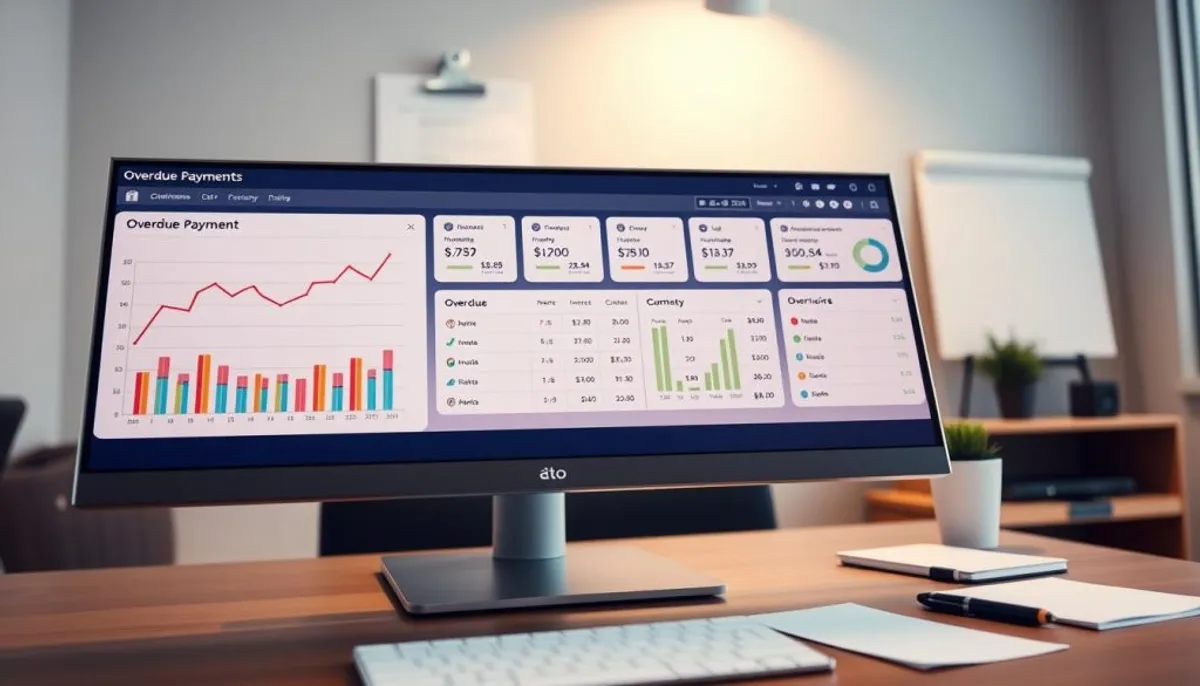
Effective invoice overdue interest calculation requires a systematic approach. Let’s explore the best strategies for handling multiple late payments.
- Categorize invoices by age groups:
- Current invoices
- 1-30 days overdue
- 31-60 days overdue
- 61-90 days overdue
- 90+ days overdue
- Implement a consistent follow-up schedule
- Prioritize high-value invoices
- Identify chronic late payers
The unpaid-invoices.com platform revolutionizes multiple invoice tracking through automation. It handles several critical functions simultaneously.
- Calculating days overdue
- Applying appropriate interest
- Generating reminder communications
- Tracking aggregate financial metrics
Tracking metrics across your invoice portfolio provides critical insights. Key performance indicators reveal the health of your accounts receivable.
| Metric | Significance |
|---|---|
| Average Days Overdue | Indicates collection efficiency |
| Total Outstanding Balance | Reveals potential cash flow risks |
| Percentage of Overdue Invoices | Measures overall payment health |
Consistent documentation and strategic follow-up are key to maintaining healthy client relationships while ensuring timely payments.
Communicating Late Payment Terms to Your Customers
Clear communication of late payment terms maintains professional client relationships while protecting your business finances. An overdue invoice interest calculator streamlines this process, ensuring transparency and clarity for all parties involved.
Establishing late payment terms requires businesses to focus on several key communication strategies:
- Include payment terms in initial contracts
- Display terms clearly on every invoice
- Discuss expectations during client onboarding
- Use a late payment interest calculator for precise calculations
Clear communication involves specifying exact details such as:
- Specific payment due dates
- Explicit interest rates
- Administrative fee structures
- Interest calculation methods
Professional communication requires a balanced approach. Your language should be direct yet respectful.
For example: “Payment is due within 30 days. Invoices not paid by the due date will accrue interest at 1.04% monthly.”
| Communication Stage | Recommended Action |
|---|---|
| Pre-Invoice | Discuss payment terms clearly |
| Near Due Date | Send friendly payment reminder |
| Post-Due Date | Apply overdue invoice interest calculator |
Platforms like unpaid-invoices.com demonstrate how businesses maintain strong client relationships while consistently enforcing payment terms. The key is presenting late payment conditions as standard professional practice.
Conclusion
Late payments can disrupt business cash flow, but the right approach transforms this challenge into an opportunity. An effective overdue invoice interest calculator empowers businesses to recover funds professionally while maintaining client relationships. Understanding how to calculate late payment fees creates a systematic approach to financial management.
Businesses now have powerful tools to streamline their receivables process. Implementing clear payment terms and utilizing automated calculation methods minimizes stress associated with overdue invoices. Leveraging technology like unpaid-invoices.com helps companies find balanced strategies that ensure fair compensation without damaging client partnerships.
A robust system for tracking and calculating overdue invoice interest requires strategic thinking. Small businesses and enterprises benefit from standardized processes that protect cash flow and establish professional boundaries. With the right tools and knowledge, managing late payments becomes a strategic financial practice rather than a burden.
Take control of your receivables today by reviewing your current invoicing practices and implementing clear payment terms. Explore automated solutions that simplify your financial management and improve efficiency. Unpaid-invoices.com offers a comprehensive platform designed to help businesses recover funds efficiently while maintaining professional client relationships.
FAQ
How do I calculate interest on an overdue invoice?
To calculate interest on an overdue invoice, gather the original invoice amount, annual interest rate, and days late. Use the formula P(r/360*d), where P represents principal, r is annual rate, and d equals days overdue. Most online calculators help you quickly determine the exact interest amount.
Is it legal to charge interest on late payments?
Businesses generally have the right to charge interest on late payments if terms appear in the original contract. Each state has specific regulations governing interest rates and fees. Ensure your charges comply with local laws and are transparently communicated to clients.
What is the standard interest rate for overdue invoices?
A common annual interest rate is around 12.5%, or approximately 1.04% monthly. The appropriate rate depends on your business, industry standards, and local regulations. Some businesses use rates between 8-18% depending on risk profile and client relationships.
How do administrative fees differ from interest charges?
Administrative fees cover actual costs of processing late payments, including staff time and additional work. Interest charges compensate for the time value of money. Administrative fees are typically flat rates, often around per invoice. Interest is calculated as a percentage of the total invoice amount.
Can I charge compound interest on overdue invoices?
Compound interest can be charged on invoices overdue for more than 30 days. This method calculates interest on the original principal and accumulated interest. Clearly communicate this in your original payment terms and ensure it complies with local regulations.
How can I prevent late payments?
Implement clear payment terms upfront and send invoices promptly. Offer multiple payment options and use automated reminder systems. Consider offering small early payment discounts. Consistent, professional communication about payment expectations significantly reduces late payments.
What’s the difference between simple and compound interest calculations?
Simple interest is calculated only on the principal amount for invoices less than 31 days late. Compound interest calculates interest on both principal and previously accrued interest. This can significantly increase the total amount due for longer overdue invoices.
How long can I charge interest on an overdue invoice?
The duration for charging interest varies by state and contract terms. Most businesses continue charging interest until the invoice is paid in full. Legal limitations may apply, so consult local regulations and potentially seek legal advice for long-outstanding invoices.
Are there tools to help manage overdue invoices?
Several software solutions like unpaid-invoices.com offer comprehensive invoice management. These include automatic interest calculation, reminder systems, and integration with accounting platforms. These tools save time and improve your accounts receivable process.
How should I communicate late payment charges to clients?
Communicate late payment terms clearly and professionally from the beginning. Send friendly, factual reminders that reference the original payment terms for overdue invoices. Be consistent and provide clear breakdowns of charges. Offer solutions like payment plans when appropriate.