
Running a business brings financial challenges, and unpaid invoices create significant headaches for entrepreneurs. You might write off unpaid invoices as a tax deduction, potentially reducing your taxable income. Understanding bad debt processes can save money and provide relief from difficult client situations.
The Internal Revenue Service allows businesses to claim unpaid invoices tax deduction under specific conditions. Not every unpaid invoice qualifies for this benefit. With proper documentation and approach, you can potentially recover financial losses through your tax return.
This comprehensive guide walks you through everything about writing off unpaid invoices. We’ll explore bad debt deduction nuances and help you understand qualifying criteria. You’ll receive practical steps to navigate this complex tax strategy effectively.
Key Takeaways
- Unpaid invoices can potentially be written off as bad debt
- Specific IRS rules govern bad debt deductions
- Documentation is crucial for claiming these deductions
- Different accounting methods impact how you can write off invoices
- Professional tools can help prevent and manage unpaid invoices
Understanding Bad Debt and Unpaid Invoices
Navigating the world of unpaid invoices can be challenging for businesses. Understanding what qualifies as a bad debt is crucial for maintaining financial health. Knowing when you can write off uncollectible debt maximizes tax benefits.
Businesses must recognize specific criteria that define a legitimate debt in write off bad debt situations. Not every unpaid invoice meets the IRS requirements for a tax deduction.
What Qualifies as a Valid Debt
A valid debt for tax purposes must meet several key requirements:
- The debt must be a genuine business transaction
- You must have had a reasonable expectation of payment when the transaction occurred
- The amount must have been previously included in your taxable income
- Documentation proving the debt exists is essential
When Does a Debt Become Worthless
A debt becomes worthless when clear evidence suggests it will never be collected. The IRS provides specific guidelines for determining when you can write off uncollectible debt:
| Debt Worthlessness Indicators | Explanation |
|---|---|
| Business Bankruptcy | Client declares bankruptcy or ceases operations |
| Unreachable Debtor | No contact information or proven inability to pay |
| Statute of Limitations | Legal time frame for debt collection has expired |
Tip: Always document your collection attempts and maintain clear records to support your bad debt write-off claim.
Simply believing a debt won’t be paid isn’t enough. You must demonstrate that you’ve taken reasonable steps to collect the outstanding amount before writing it off.
Can You Write Off Unpaid Invoices
Business owners frequently ask whether they can write off unpaid invoices. The answer involves several important considerations. The IRS maintains specific requirements that must be satisfied before claiming such deductions.
Successfully writing off unpaid invoices requires proof that the debt is genuinely uncollectible. You must demonstrate reasonable collection efforts have been made. The invoice must also meet particular tax guidelines established by federal authorities.
- The invoice must have been previously reported as income
- Documented collection attempts are mandatory
- The debt must be deemed completely unrecoverable
Writing off unpaid invoices delivers significant tax benefits through reduced taxable income. Businesses can recoup portions of losses from customers who never paid their bills. This strategy proves especially valuable for maintaining healthy cash flow during difficult periods.
| Requirement | Details |
|---|---|
| Income Reporting | Must be reported on previous tax return |
| Collection Efforts | Documented attempts to collect payment |
| Debt Status | Proven to be completely unrecoverable |
Understanding write-off eligibility for unpaid invoices requires careful analysis of your specific situation. Each case demands thorough documentation and strict adherence to IRS guidelines. Legitimate tax deductions depend on meeting all regulatory requirements precisely.
Business Bad Debts vs. Nonbusiness Bad Debts
Understanding the tax implications of bad debt can save your business significant money during tax season. The Internal Revenue Service (IRS) distinguishes between two critical types of bad debts: business and nonbusiness bad debts. This classification dramatically impacts how you can claim a deduction for bad debt on your tax return.
Not all unpaid invoices are treated equally in the eyes of tax regulations. The primary difference lies in the nature and origin of the debt. This determines your potential tax benefits.
Business Bad Debt Deductions
Business bad debts are typically more favorable for tax purposes. These debts arise directly from your business operations and include:
- Unpaid invoices from customers
- Loans to business clients or suppliers
- Credit sales that remain uncollected
- Business loan guarantees that default
The good news for businesses is that you can deduct these bad debts either partially or fully on your business tax return. Sole proprietors can report these deductions on Schedule C. Other business structures use their respective tax forms.
Nonbusiness Bad Debt Requirements
Nonbusiness bad debts face stricter tax treatment. These typically involve personal loans or financial transactions unrelated to your core business activities. Key characteristics include:
- Must be completely worthless to qualify for deduction
- Reported as short-term capital losses
- Subject to capital loss limitations ($3,000 per year for most taxpayers)
Understanding these distinctions can help you strategically manage your deduction for bad debt. This knowledge minimizes potential tax complications.
Cash Method vs. Accrual Method Accounting for Unpaid Invoices
Understanding your accounting method proves crucial for handling unpaid invoices tax deduction strategies. Small businesses typically use two primary accounting approaches. These methods dramatically impact how you manage unrecoverable debts.
The two primary accounting methods carry significant implications for tracking and deducting unpaid invoices:
- Cash Basis Accounting: Income recorded when payment is received
- Accrual Basis Accounting: Income recorded when services are provided
Cash basis accounting prevents claiming an unpaid invoices tax deduction if you never reported the income. A service provider who completes work but doesn’t receive payment cannot deduct that amount. This limitation exists since no income was initially reported.
Accrual basis accounting offers more flexibility for managing unpaid invoices. You record income at the time of service delivery. Later, you can write off unpaid invoices as bad debt. This method allows businesses to claim deductions for invoices that remain outstanding.
Selecting the right accounting method impacts your tax strategy and potential deductions significantly. Consulting with a tax professional helps determine the most advantageous approach. They can guide you in managing unpaid invoices and maximizing your tax benefits.
Tax Deduction Requirements for Writing Off Bad Debt
Navigating the IRS rules for bad debt deduction can be challenging for business owners. Understanding the specific requirements helps you write off bad debt correctly. This knowledge prevents potential tax complications down the road.
The Internal Revenue Service has clear guidelines for claiming bad debt deductions. Not every unpaid invoice qualifies for a tax write-off. Businesses must meet specific criteria to legitimately remove these financial losses from their tax records.
Core IRS Rules for Bad Debt Deduction
To successfully claim a bad debt deduction, you must demonstrate:
- The debt is genuinely worthless
- You previously included the amount in your taxable income
- The deduction is claimed in the specific tax year the debt becomes uncollectible
Reasonable Collection Steps Required
The IRS expects businesses to prove they’ve made legitimate efforts to collect the outstanding debt. Documentation is crucial for substantiating your claim.
| Collection Method | Documentation Needed |
|---|---|
| Email Reminders | Copies of sent emails |
| Phone Calls | Call logs and dates |
| Demand Letters | Signed and dated correspondence |
| Payment Negotiations | Written communication attempts |
The IRS wants to see you’ve made reasonable attempts to collect the debt. You don’t need to exhaust every possible avenue. However, you must demonstrate professional and persistent collection efforts throughout the process.
How to Claim Bad Debt on Your Tax Return
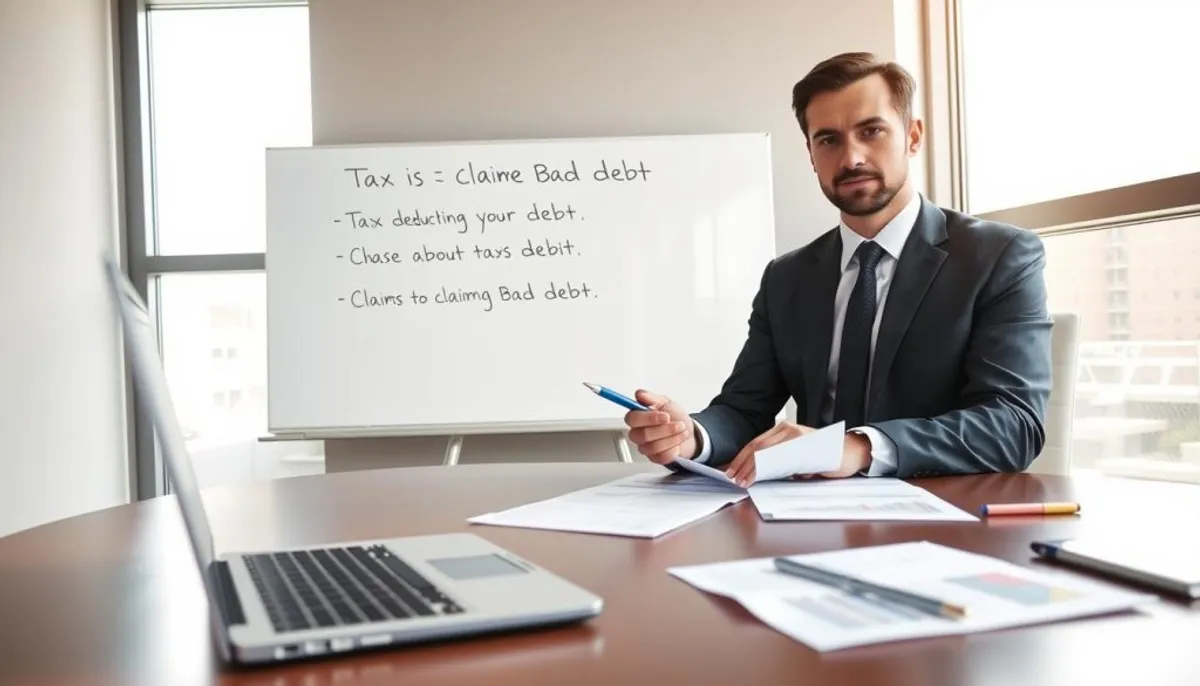
Navigating how to claim bad debt on taxes can seem complex. The process is more straightforward than most business owners realize. Understanding the right steps helps you recover some financial losses through tax deductions.
Learning how to claim bad debt on taxes requires differentiating between business and nonbusiness bad debts. For business bad debts, the reporting process varies depending on your business structure.
- Sole proprietors report on Schedule C (Form 1040)
- Corporations use Form 1120
- Partnerships file on Form 1065
Nonbusiness bad debts require a different approach. You’ll need to report these on Form 8949 as short-term capital losses.
Document these debts thoroughly by including:
- Debtor’s name
- Total amount owed
- Detailed statement explaining debt worthlessness
- Evidence of collection attempts
Tax professionals recommend maintaining meticulous records throughout the year. Detailed documentation simplifies the process of claiming bad debt on taxes. It also provides solid evidence for potential IRS inquiries.
Most tax preparation software can guide you through these steps. If you’re unsure, consulting a certified tax professional ensures accurate reporting. This approach maximizes your potential deduction.
Maintaining Client Relationships While Managing Unpaid Invoices
Navigating unpaid invoices requires balancing business finances with professional relationships. Small business owners face challenges collecting overdue payments without damaging client connections.
Finding a solution that handles collections professionally is essential. Modern technology provides innovative approaches to resolve payment challenges while maintaining mutual respect.
Using unpaid-invoices.com to Automate Collections
unpaid-invoices.com delivers a transformative SaaS platform designed to streamline collections. The platform offers several critical features:
- Automated professional reminder emails
- Graduated escalation of overdue notices
- Integrated payment tracking
- Comprehensive communication documentation
Businesses can now manage collections without uncomfortable confrontations. The system handles follow-ups automatically, saving time and reducing emotional stress.
Why unpaid-invoices.com Outperforms Traditional Collection Agencies
Traditional debt collection methods often create tension and destroy future business opportunities. unpaid-invoices.com offers a more strategic approach:
- Cost-effective monthly subscription model
- Professional communication tone
- Early intervention before serious delinquency
- Flexible payment plan options
Smart technology enables businesses to collect money faster while maintaining positive client relationships. The platform transforms collections from confrontational process to collaborative solution.
Recording Invoice Write-Offs in Your Financial Records
Managing unpaid invoices requires careful financial record-keeping. Businesses must properly document write-offs to maintain accurate financial statements. This documentation also supports potential tax deductions.
The process of recording an invoice write-off involves several critical steps:
- Create a dedicated Bad Debt Expense Account in your accounting system
- Identify the specific unpaid invoice for write-off
- Generate a credit memo matching the invoice amount
- Apply the credit memo to zero out the outstanding receivable
For businesses using QuickBooks Online, the workflow becomes straightforward. Navigate to your Chart of Accounts and select “New.” Choose “Expenses” as the account type. Designate “Bad Debt” as the detail type to ensure precise tracking of uncollected revenue.
Timing proves crucial for recording write-offs. Document the debt as worthless in the same tax year. This aligns with potential deduction claims. Maintain comprehensive documentation, including:
- Original invoice copies
- Records of collection attempts
- Detailed notes explaining why the debt is considered unrecoverable
Most modern accounting software simplifies invoice write-offs. Consulting with a professional accountant provides personalized guidance. They can tailor advice to your specific financial situation.
Common Mistakes to Avoid When Writing Off Unpaid Invoices
Navigating the complexities of debt write-offs can be tricky for business owners. Understanding potential pitfalls helps protect your financial records. Proper knowledge prevents costly IRS complications down the road.
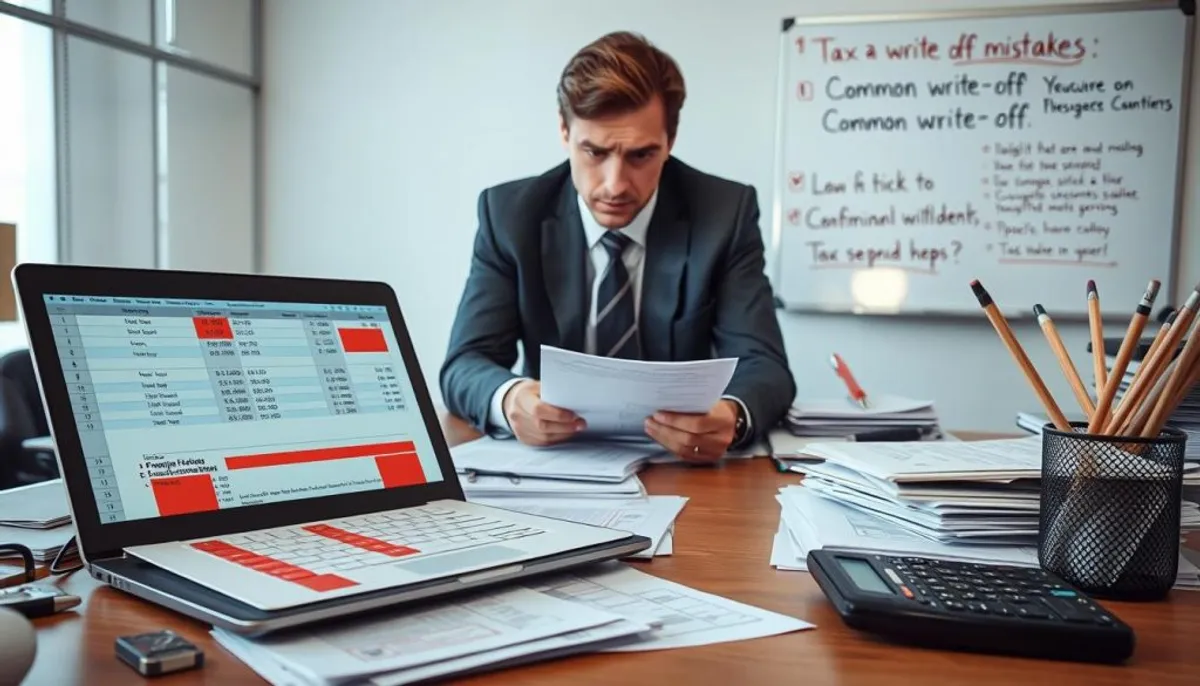
Business owners frequently encounter challenges when managing bad debt deductions. Knowing the right approach can save you significant time. It also helps you avoid potential tax headaches.
Documentation Requirements for Bad Debt Deductions
Proper documentation is crucial when writing off a debt. The IRS requires specific evidence to validate your claim:
- Original invoice or contract proving the debt’s legitimacy
- Detailed collection attempt records
- Evidence demonstrating the debt’s worthlessness
- Precise calculations of the amount being written off
What Happens When You Write Off a Debt
Writing off a debt involves several important financial implications. Your taxable income potentially decreases through this action. However, the legal obligation to collect remains intact.
| Action | Tax Consequence |
|---|---|
| Initial Debt Write-Off | Reduces Taxable Income |
| Later Debt Collection | Reported as Taxable Income |
| Debt Over $600 | Requires Form 1099-C |
Pro tip: Always maintain a comprehensive record of your bad debt write-offs. This ensures smooth tax reporting processes. It also helps with potential future collections.
Consulting with a tax professional can help you navigate these intricate processes. Expert guidance minimizes potential risks associated with writing off unpaid invoices.
Conclusion
Managing unpaid invoices requires a strategic approach that balances financial protection and professional relationships. Businesses can successfully navigate the complex landscape of invoice collections and tax deductions. Understanding IRS guidelines is essential. Leveraging modern technological solutions makes the process more efficient.
The key to effective invoice management lies in proactive collection strategies. Automated tools like unpaid-invoices.com provide businesses with powerful mechanisms to track outstanding payments. These platforms offer systematic approaches that maintain client relationships while ensuring consistent revenue flow. Following up on invoices before they become problematic bad debts is crucial.
Documentation remains critical throughout the process of dealing with uncollected invoices. Businesses must meticulously record collection attempts and maintain accurate financial records. Understanding specific tax requirements for writing off bad debts is necessary. Combining technological solutions with precise financial practices minimizes revenue loss and maintains robust financial health.
Successful invoice management centers on prevention and strategic action. Implementing robust collection processes protects your bottom line. Utilizing advanced digital tools streamlines operations. Staying informed about tax regulations empowers businesses to address unpaid invoices effectively and protect their financial interests.
FAQ
Can I write off unpaid invoices on my taxes?
Yes, you can write off unpaid invoices as bad debt if you meet specific IRS requirements. The debt must be a legitimate business transaction previously reported on your tax return. You must have made reasonable efforts to collect the payment.
What qualifies as a valid business debt for tax purposes?
A valid business debt must be a genuine business transaction with reasonable expectation of payment. The debt must be directly related to your business operations and documented properly. Informal loans or gifts do not qualify.
When does an unpaid invoice become considered a bad debt?
An invoice becomes a bad debt when there’s no reasonable expectation of collection. This typically occurs when a client declares bankruptcy or goes out of business. It also happens when clients become unreachable despite your collection efforts.
Do different accounting methods affect how I can write off unpaid invoices?
Yes, absolutely. With cash-basis accounting, you cannot write off invoices you never reported as income. With accrual-basis accounting, you can write off invoices you’ve already claimed as income.
What documentation do I need to write off an unpaid invoice?
You’ll need the original invoice and records of collection attempts like emails or letters. Evidence of the debt becoming worthless, such as bankruptcy notices, is essential. Calculations showing the exact amount being written off must be included.
How do I claim a bad debt deduction on my tax return?
For business bad debts, report the deduction as a business expense on Schedule C. You’ll need to demonstrate that you took reasonable steps to collect the debt. The debt must have become worthless in the tax year you’re claiming.
Are there differences between business and nonbusiness bad debts?
Yes, business bad debts offer more favorable tax treatment than nonbusiness bad debts. They can be deducted as ordinary business losses and can include partially worthless debts. Nonbusiness bad debts are treated as capital losses with more restrictive deduction limits.
What happens if I collect a debt after writing it off?
If you collect a debt after writing it off, report that amount as income. This is known as a “recovery of bad debt” and occurs in the year you receive payment. It may be taxable depending on the tax benefit you received from the original write-off.
How can I prevent having to write off invoices in the first place?
Use automated collection tools like unpaid-invoices.com, which send professional reminders and track payments. These tools help you collect outstanding invoices before they become bad debts. Establishing clear payment terms and following up consistently can significantly reduce unpaid invoices.