
Running a business means navigating financial challenges. Chasing invoices is one of the most frustrating hurdles entrepreneurs face. QuickBooks research reveals a stark reality: 73% of small and medium-sized businesses struggle with late or unpaid invoices. These payment delays create significant cash flow disruptions.
Unpaid invoices aren’t just minor inconveniences. They represent real financial strain that can slow business growth and create operational challenges. Most business owners find themselves trapped in an endless cycle of tracking down payments. This drains valuable resources and time.
Traditional invoice collection methods are outdated. Modern businesses need smart, efficient solutions that protect client relationships while ensuring timely payments. Innovative platforms now offer automated approaches to managing unpaid invoices. These tools transform a traditionally stressful process into a streamlined, professional experience.
Key Takeaways
- Late payments impact 73% of U.S. small businesses
- Chasing invoices requires strategic, professional approaches
- Automation can simplify payment collection
- Preserving client relationships is crucial during invoice follow-ups
- Modern technology offers efficient payment tracking solutions
Why Chasing Invoices Is Critical for Your Business Cash Flow
Managing overdue payments extends beyond merely collecting money. It fundamentally maintains your business’s financial health. Effective invoice collections separate thriving companies from those barely surviving in competitive markets.
The Hidden Cost of Unpaid Invoices
Unpaid invoices create a silent drain on business resources. The true impact stretches far beyond missing revenue. Accounts receivable management requires tracking the financial ripple effects of delayed payments.
- Administrative time spent following up on invoices
- Opportunity costs of capital tied up in receivables
- Increased stress and potential cash flow disruptions
How Late Payments Disrupt Business Operations
Client payment delays cause your entire business ecosystem to suffer. Cash flow constraints can prevent you from meeting critical operational expenses, creating a domino effect of financial challenges.
| Operational Impact | Potential Consequences |
|---|---|
| Delayed Supplier Payments | Reduced credit standing |
| Missed Payroll | Employee dissatisfaction |
| Limited Investment Capacity | Stunted business growth |
The Impact on Customer Relationships
Pursuing invoice collections requires a delicate balance. Professional and respectful communication maintains positive client relationships while ensuring timely payments. Strategic accounts receivable management protects your financial stability and preserves valuable customer connections.
Setting Clear Payment Terms Before You Send Your First Invoice
Establishing clear payment terms is the foundation of smooth financial interactions with clients. Effective payment follow-up starts long before you send the first invoice. By defining precise expectations upfront, businesses can dramatically reduce payment disputes and streamline their invoice reminder emails.
Critical elements of robust payment terms include:
- Specific due dates (Net 30, Net 45)
- Accepted payment methods
- Late payment penalties
- Dispute resolution procedures
Different clients require different payment approaches. Risk assessment plays a crucial role in determining payment structures. New or high-risk clients might need stricter terms. Established clients can receive more flexible arrangements.
| Client Type | Recommended Payment Terms | Payment Follow-up Strategy |
|---|---|---|
| New Client | 50% upfront deposit | Immediate invoice reminder emails |
| Established Client | Net 30/Net 45 | Gentle payment reminders |
| High-Risk Client | Full payment upon receipt | Proactive payment tracking |
Professional communication about payment terms builds trust. Frame these discussions as standard business practice, not as a sign of distrust. Crystal clear expectations from the start encourage clients to respect payment deadlines.
Implementing comprehensive payment terms minimizes payment delays and creates smoother financial workflows. Prevention is always more efficient than chasing overdue invoices.
Preventive Strategies to Reduce Overdue Payments

Preventing overdue payments proves far more effective than pursuing them after issues arise. Smart businesses implement proactive strategies that minimize invoice tracking challenges. These approaches reduce the need for aggressive debt recovery tactics.
Protecting your cash flow starts with understanding potential financial risks before they escalate into problems. The right approach saves significant time, money, and stress in business operations.
Check Customer Creditworthiness Upfront
Conducting thorough credit checks serves as your first line of defense in invoice tracking. Professional credit assessment helps you identify potential payment risks early. It allows you to avoid working with financially unstable clients while protecting your business’s financial health.
- Identify potential payment risks early
- Avoid working with financially unstable clients
- Protect your business’s financial health
Leverage reputable credit reporting services like Experian or Dun & Bradstreet to evaluate potential clients. Look for red flags such as frequent late payment history and multiple recent credit inquiries. High debt-to-equity ratios signal trouble. Signs of financial instability warrant careful consideration.
- Frequent late payment history
- Multiple recent credit inquiries
- High debt-to-equity ratios
- Signs of financial instability
Send Friendly Payment Reminders Before Due Dates
Proactive communication can dramatically improve debt recovery rates. Implement a strategy of sending gentle reminders five to seven business days before invoices come due. These reminders should remain polite and professional while clearly stating payment expectations.
- Polite and professional
- Clear about payment expectations
- Easy to understand
Modern invoice tracking software automates these reminders, making the process effortless and consistent. Setting up these preventive measures significantly reduces the likelihood of overdue payments. You’ll maintain positive client relationships while protecting your bottom line.
Chasing Invoices: Best Practices for Following Up on Overdue Payments
Effective payment follow-up is crucial for maintaining healthy cash flow and professional client relationships. Chasing invoices requires a strategic approach that balances persistence with diplomacy.
Timing and communication are key factors in pursuing overdue payments. A structured approach to payment follow-up yields better results.
- Send initial reminder immediately after the due date
- Use multiple communication channels
- Maintain a professional and empathetic tone
- Provide clear payment instructions
Your payment follow-up strategy should include a systematic timeline for tracking overdue invoices:
| Days Overdue | Action Step | Communication Approach |
|---|---|---|
| 0-7 Days | Gentle Reminder | Friendly email check-in |
| 8-14 Days | Direct Follow-up | Phone call or detailed email |
| 15-30 Days | Formal Request | Registered mail with payment terms |
Craft messages that are clear, professional, and solution-oriented during invoice collection efforts. Avoid aggressive language that might damage client relationships. Focus on understanding potential payment obstacles and finding collaborative solutions.
Key tips for successful payment follow-up include documenting all communication and offering flexible payment options. Set clear expectations from the start of your business relationship.
How Automation Can Transform Your Invoice Collection Process
The landscape of accounts receivable management is rapidly changing. Businesses are discovering powerful tools that can revolutionize how they track and collect invoices. The U.S. e-invoicing market is projected to grow from $3.85 billion in 2024 to $19.14 billion by 2033. Automation is no longer a luxury—it’s a necessity.
Traditional invoice tracking methods are becoming obsolete. Approximately 53% of companies still rely on paper-based processes. Smart businesses are embracing digital solutions that streamline their financial workflows.
Automated Reminder Systems Save Time and Money
Automation brings remarkable benefits to invoice management. Companies implementing automated systems can experience significant improvements:
- Up to 77% reduction in invoice processing costs
- Processing time cut from 8.8 days to just 3.8 days
- Consistent and professional invoice reminder emails
Streamlining Invoice Tracking with Modern Software
Modern invoice tracking software offers features that transform accounts receivable management:
| Feature | Benefit |
|---|---|
| Centralized Invoice Management | Eliminates scattered document tracking |
| Electronic Workflows | Reduces manual data entry |
| Mobile Accessibility | Manage invoices from anywhere |
| Real-time Reporting | Instant cash flow insights |
By embracing automation, businesses can work smarter, not harder. These tools give entrepreneurs more time to focus on growing their business.
When to Escalate: Moving from Friendly Reminders to Formal Action
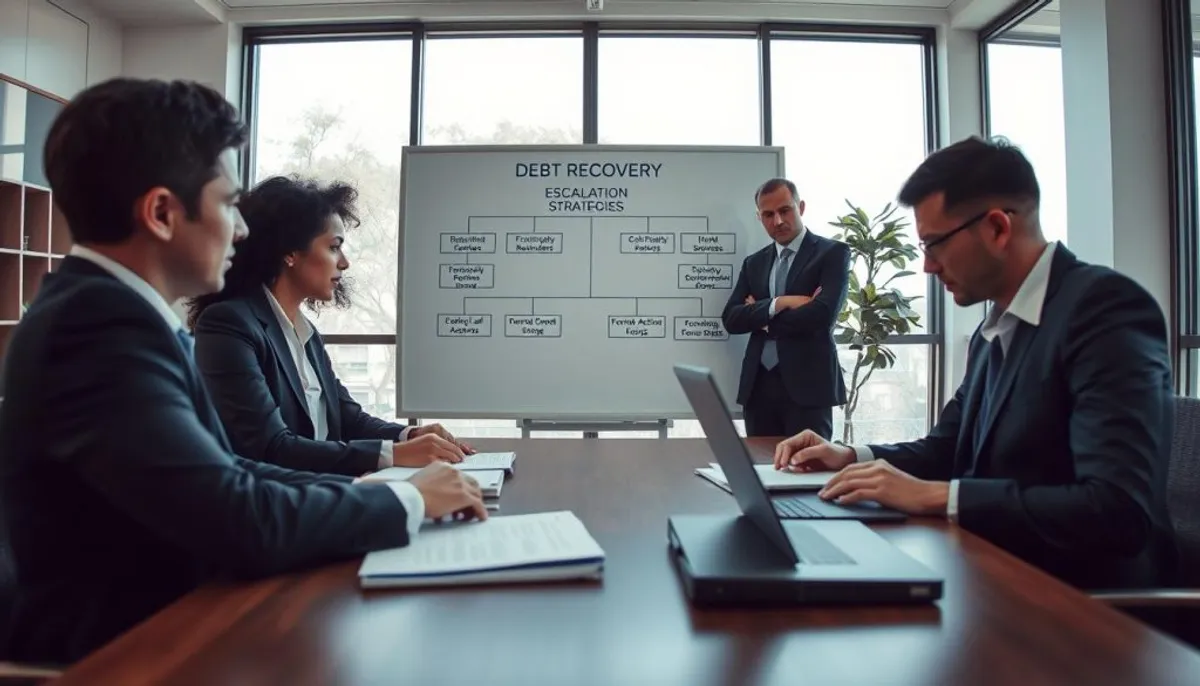
Navigating overdue payments requires a strategic approach to debt recovery. Business owners often struggle with knowing when to transition from friendly reminders to serious collection efforts.
Critical signs that it’s time to escalate your debt recovery process include:
- Invoices remaining unpaid for 30-45 days
- Client consistently breaking payment promises
- Multiple communication attempts have failed
- Outstanding amount significantly impacts cash flow
Before taking formal action, conduct a careful cost-benefit analysis. Calculate whether the potential recovery justifies the time and resources invested in pursuit. Professional debt recovery strategies help minimize financial losses while preserving business relationships.
Consider these escalation steps for managing overdue payments:
- Send a formal written notice detailing outstanding amount
- Issue a final demand letter with clear consequences
- Explore professional debt collection services
- Evaluate legal action as a last resort
Protecting your business’s financial health takes precedence. Sometimes writing off small debts becomes more economical than extensive collection efforts. Smart debt recovery means knowing when to pursue and when to strategically walk away.
How unpaid-invoices.com Helps You Recover Outstanding Payments Without Damaging Client Relationships
Recovering unpaid invoices requires careful balance for businesses. Traditional debt recovery methods often strain client relationships and create unnecessary tension. unpaid-invoices.com offers a revolutionary solution that transforms invoice collections into a smooth, professional process.
Our platform provides a strategic approach to managing outstanding payments. This keeps your business cash flow healthy while maintaining positive client connections.
Cost-Effective Alternative to Traditional Collection Methods
Traditional debt recovery agencies can be expensive and aggressive. unpaid-invoices.com changes the game with a transparent, affordable approach:
- Eliminate hefty collection agency fees
- Maintain complete control over communication
- Preserve client relationships during debt recovery
Automated Escalation and Payment Collection Features
Our innovative invoice collections platform streamlines the entire debt recovery process:
- Automated Reminder Sequences: Professionally crafted messages that prompt payment
- Customizable Escalation Timelines
- Easy Online Payment Options
- Comprehensive Tracking Dashboard
Real-world success proves the platform’s effectiveness. TaxAssist Accountants recovered £20,000 in just 30 minutes using our automated credit control software. This demonstrates the powerful impact of modern debt recovery tools.
With unpaid-invoices.com, businesses can confidently manage outstanding payments without risking valuable client relationships. Our approach ensures professionalism, persistence, and successful invoice collections every time.
Common Mistakes Businesses Make When Pursuing Overdue Invoices
Chasing invoices effectively requires a strategic approach and awareness of common pitfalls. Many businesses unknowingly sabotage their payment follow-up efforts through critical errors. These mistakes can significantly reduce their chances of recovering outstanding funds.
The most frequent mistakes in payment follow-up include:
- Waiting Too Long to Respond: Delaying invoice collection dramatically reduces recovery probability. The longer an invoice remains unpaid, the less likely you are to receive full payment.
- Inconsistent Communication: Sporadic reminders signal that payment deadlines aren’t serious. Clients interpret inconsistent follow-up as a lack of urgency.
- Aggressive Tone: Emotional or hostile communication typically backfires. Professional, calm messages are more likely to motivate payment.
Smart businesses avoid these traps by implementing systematic approaches to chasing invoices. Establishing clear, consistent communication protocols helps maintain professional relationships. This approach increases payment recovery rates while preserving client trust.
- Document every communication carefully
- Verify contact information before sending invoices
- Offer flexible payment solutions when possible
- Set realistic follow-up timelines
Technology can be a game-changer in streamlining payment follow-up. Automated reminder systems help businesses maintain professionalism and persistence. These tools prevent companies from becoming overly aggressive or time-consuming in their collection efforts.
Conclusion
Chasing unpaid invoices no longer needs to be stressful for businesses. Strategic approaches to invoice reminder emails and intelligent collections can transform cash flow management. Companies can shift from reactive to proactive methods. The key is developing a systematic approach that recovers outstanding payments while maintaining professional client relationships.
Implementing robust prevention strategies can dramatically reduce time spent tracking down overdue invoices. Clear payment terms and automated follow-up processes make a significant difference. Modern platforms like unpaid-invoices.com offer comprehensive solutions that streamline the entire collection workflow. Business owners can focus on core operations instead of constant financial follow-up.
Businesses that embrace innovative invoice collections techniques create a win-win scenario. They ensure consistent cash flow and minimize administrative burden. Valuable client connections remain preserved throughout the process. Technology and strategic communication turn invoice management into a smooth, efficient process that supports sustainable growth.
Take the first step towards transforming your invoice collection approach today. Refine payment terms, implement automated reminders, or explore professional platforms. The opportunity to optimize your financial processes is within reach. Your business deserves a streamlined, stress-free approach to managing receivables.
FAQ
How long should I wait before following up on an overdue invoice?
Best practices suggest sending a friendly reminder immediately after the due date passes. Follow up with additional emails or calls at 7 and 14 days past due. Prompt communication proves essential for maintaining healthy cash flow and demonstrating professionalism.
What’s the most effective way to ask a client about an unpaid invoice without damaging our relationship?
Use a friendly, professional tone that assumes positive intent from your client. Start with a simple check-in message like, “I wanted to confirm you received our invoice.” This approach avoids confrontation while opening productive dialogue about payment status.
Should I offer payment plans for overdue invoices?
Payment plans can prove highly effective for recovering outstanding funds from clients. Flexible payment options often work better than demanding immediate full payment. This strategy particularly benefits long-standing clients experiencing temporary financial challenges.
How can I prevent late payments before they happen?
Implement clear payment terms upfront and conduct credit checks on new clients. Send pre-due date reminders to keep invoices top of mind. Use automated invoicing systems that simplify payment processes and establish crystal-clear expectations.
What are the signs that I should escalate an overdue invoice to collections?
Consider escalation when an invoice reaches 30-45 days overdue without resolution. Multiple communication attempts have failed and the client becomes unresponsive. The client consistently breaks payment promises despite repeated opportunities to fulfill obligations. Always weigh potential recovery against collection costs before proceeding.
How can I improve my invoice collection process without seeming aggressive?
Leverage automation tools that send professional, consistent reminders to clients automatically. These systems help maintain a professional approach throughout the collection process. They also reduce the emotional stress of manually chasing payments.
What information should I include in my initial payment terms?
Clearly specify payment due dates and all accepted payment methods upfront. Include late payment penalties and any early payment discounts offered. Transparency helps establish clear expectations from the beginning of your business relationship.
How do I handle clients who consistently pay late?
Consider implementing stricter payment terms for repeat offenders to protect your business. Require upfront deposits, shorten payment windows, or charge interest on overdue amounts. Sometimes, reconsidering the business relationship altogether proves the most prudent decision.
What are the most common mistakes businesses make when chasing invoices?
Common mistakes include waiting too long before following up on overdue payments. Being inconsistent with reminders confuses clients about urgency and expectations. Using an aggressive tone damages relationships unnecessarily while failing to document communication.
Not having a systematic approach to invoice collection creates inefficiency and missed opportunities.
Is it worth using an automated invoice collection platform?
Automated platforms can significantly reduce time and stress involved in chasing invoices. They provide consistent follow-up and maintain professional communication throughout the collection process. These systems often improve payment recovery rates with minimal effort from your team.