
Business owners across the United States face a critical challenge: managing unpaid invoice debt. Companies lose thousands of dollars annually in outstanding payments. This creates significant financial strain and operational disruption that threatens business stability.
Unpaid invoice debt represents more than a minor inconvenience—it’s a serious business problem. This issue dramatically impacts cash flow and growth potential across industries. Research shows invoices become 60% less likely to be collected after 90 days pass. Proactive management proves essential for financial sustainability and long-term success.
Successful invoice debt management requires a strategic approach combining prevention, clear communication, and smart collection techniques. Modern businesses need comprehensive solutions that transform debt recovery processes. These systems convert stressful collection activities into systematic business functions. Strategic management protects revenue while maintaining valuable client relationships.
Key Takeaways
- Unpaid invoices can seriously damage business financial health
- Proactive management is crucial for reducing outstanding debt
- Early intervention prevents long-term revenue loss
- Technology can streamline invoice tracking and collection
- Maintaining professional relationships during debt recovery is vital
Understanding Unpaid Invoice Debt and Its Impact on Your Business
Unpaid invoice debt creates significant challenges for businesses of all sizes. Outstanding invoices pile up and trigger a domino effect. This threatens both financial stability and operational effectiveness.
What Does Unpaid Invoice Debt Mean for Your Cash Flow
Cash flow disruption happens quickly with unresolved past due accounts. Accounts receivable become trapped capital. This prevents businesses from accessing essential funds for critical operations.
- Covering essential operational expenses
- Investing in new business opportunities
- Maintaining consistent payroll
- Purchasing necessary inventory
The Hidden Costs of Outstanding Invoices
Unpaid bills carry multiple underlying expenses that aren’t immediately visible. These hidden costs accumulate over time and drain resources.
- Administrative time spent tracking payments
- Potential damage to credit ratings
- Increased stress on internal teams
- Reduced capacity for strategic planning
How Unpaid Invoices Affect Business Growth and Operations
Chronic issues with accounts receivable create a restrictive cycle that prevents business scaling. Persistent payment delays limit financial flexibility, making expansion investments difficult. Hiring new talent becomes challenging, and developing innovative products stalls.
Understanding these impacts helps businesses develop proactive strategies to manage unpaid invoice risks. Protecting financial health requires consistent monitoring and effective collection processes. Long-term sustainability depends on minimizing payment delays and maintaining healthy cash flow.
Prevention Strategies: Setting Up Your Business for Payment Success
Successful businesses understand that preventing unpaid invoices is far more effective than chasing them later. Debt recovery strategies start long before an invoice becomes overdue. Proactive invoice management can dramatically reduce financial risks and maintain healthy cash flow.
The key to payment prevention strategies lies in creating robust systems that protect your business from the start. Smart entrepreneurs recognize that most payment issues can be resolved before they become serious problems.
- Implement clear payment expectations upfront
- Develop comprehensive credit screening processes
- Create transparent billing documentation
- Establish consistent communication protocols
Effective debt recovery strategies focus on prevention rather than collection. By investing time in setting up solid financial practices, businesses can reduce the likelihood of late payments. They can also minimize administrative overhead while maintaining positive client relationships. These practices protect cash flow stability across all operations.
Proactive invoice management isn’t about mistrust—it’s about creating professional systems that benefit everyone involved. Clients who understand expectations from the beginning are more likely to pay promptly. They also tend to maintain a positive business relationship over time.
The most successful companies view payment prevention as a strategic approach, not just an administrative task. By implementing comprehensive strategies, you can significantly reduce financial risks. This creates a more stable business environment for long-term growth.
Establishing Clear Payment Terms and Credit Policies
Protecting your business’s financial health starts with developing robust payment terms and credit policies. Effective invoice dispute resolution begins long before an invoice becomes overdue. By establishing clear guidelines, you create a framework that minimizes financial risks and sets expectations for your customers.
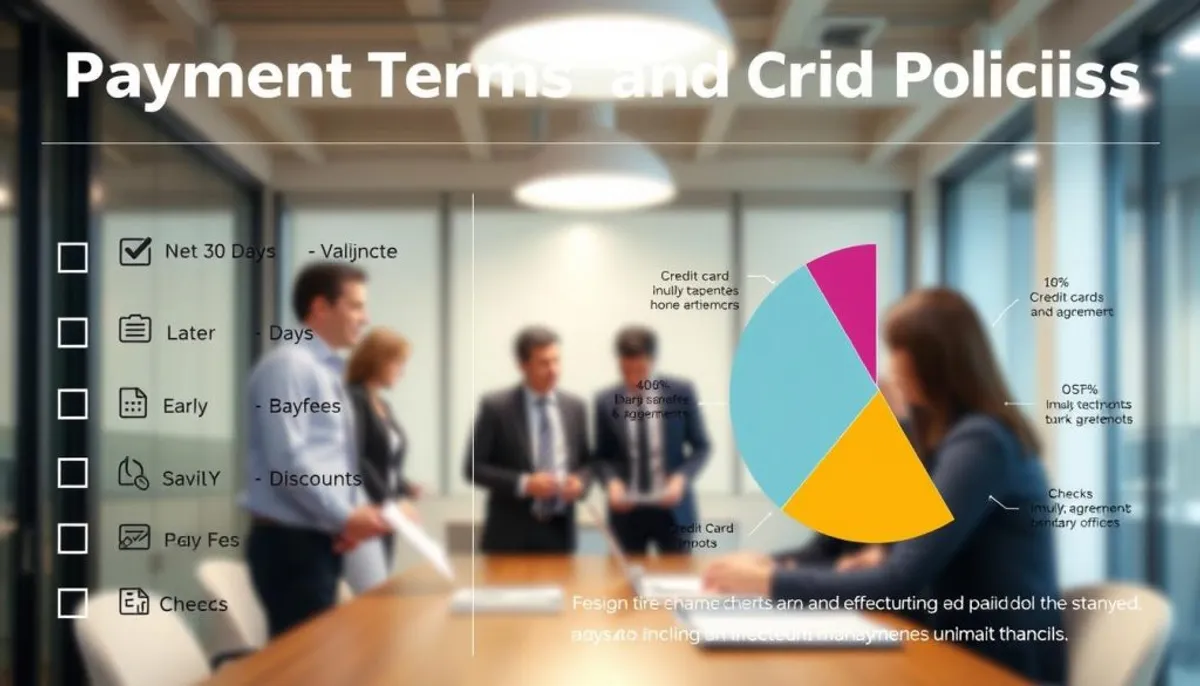
Crafting comprehensive payment terms requires careful consideration of several key elements:
- Specific due dates for payment
- Accepted payment methods
- Late payment penalties
- Detailed dispute resolution procedures
Defining Payment Terms That Protect Your Business
Your payment terms should be crystal clear and leave no room for misinterpretation. A strong credit policy includes precise language about when payment is expected. For instance, Net 30 terms mean full payment is due within 30 days of the invoice date. Include specific details about late fees and potential consequences of non-payment.
Conducting Customer Creditworthiness Assessments
Risk assessment is crucial before extending credit to new customers. Utilize credit reporting services like Experian or Dun & Bradstreet to evaluate potential financial risks. Look for red flags such as:
- Frequent late payment history
- Multiple recent credit inquiries
- High debt-to-equity ratios
- Signs of financial instability
Customizing Payment Terms Based on Risk Assessment
Not all customers are created equal. Develop a tiered approach to payment terms based on individual customer risk profiles. Low-risk customers with consistent payment histories might receive more flexible terms. New or high-risk clients may require upfront deposits or stricter payment conditions.
By implementing these strategies, you’ll create a solid foundation for managing your business’s financial interactions. This approach minimizes the potential for unpaid invoices.
Proactive Communication: The Key to Avoiding Unpaid Invoice Debt
Effective invoice payment reminders are powerful tools for maintaining healthy cash flow. Proactive communication transforms how businesses approach outstanding invoices. This strategy prevents debt before it becomes a serious problem.
Early reminders play a crucial role in payment collection. Sending invoice payment notifications at least five business days before the due date helps customers stay on top of their financial obligations. These gentle nudges serve multiple purposes in your collection strategy.
- Prevent invoices from getting lost in busy email inboxes
- Remind customers of upcoming payment deadlines
- Demonstrate professional and attentive business practices
- Reduce the likelihood of late payments
Crafting the perfect early reminder requires a delicate balance. The communication should be professional, friendly, and informative simultaneously.
- Professional – Clear and concise language
- Friendly – Warm tone that doesn’t feel accusatory
- Informative – Include specific invoice details
Your payment notifications must include key information for maximum effectiveness. Invoice number, total amount due, and exact payment deadline are essential elements. Don’t forget to list accepted payment methods and potential late payment consequences.
- Invoice number
- Total amount due
- Exact payment deadline
- Accepted payment methods
- Potential late payment consequences
The psychology behind proactive communication is straightforward and powerful. Most payment delays occur from simple oversight rather than intentional avoidance. Implementing strategic invoice payment reminders significantly improves collection rates while maintaining positive customer relationships.
Effective Collection Strategies for Outstanding Invoices
Navigating delinquent payment recovery requires a strategic approach that balances persistence with professionalism. Successful invoice recovery depends on implementing smart collection strategies that protect your business’s financial health. These methods also help maintain positive customer relationships throughout the process.
Developing a systematic payment follow-up process is crucial for managing outstanding invoices. The right approach can significantly reduce the time and effort spent on debt collection.
Creating a Systematic Follow-Up Schedule
An effective collection strategy requires a consistent communication timeline:
- Send a reminder on the invoice due date
- First follow-up communication 10 days after the due date
- Second follow-up at 20-25 days overdue
- Formal escalation at 30+ days past due
Balancing Professionalism with Persistence
Successful delinquent payment recovery relies on maintaining a professional tone while being persistent. Consider these communication strategies:
- Use friendly but firm language in initial reminders
- Offer flexible payment solutions
- Provide multiple communication channels
- Document all collection attempts
Communication methods for invoice recovery should include:
- Email reminders
- Phone calls
- Registered mail
- Online payment platforms
Tailor your approach based on customer payment history. Clients with good track records might receive less aggressive follow-ups. Chronic late payers may require more structured collection strategies to ensure timely payment.
Leveraging Technology to Automate Invoice Management
Modern businesses are transforming debt collection services through cutting-edge technology. Automated invoice management has revolutionized how companies track and recover outstanding payments. This innovation eliminates the traditional challenges of manual follow-ups.

Payment automation software offers a streamlined approach to managing financial workflows. Businesses can now leverage sophisticated invoice tracking technology to minimize revenue gaps. This technology improves cash flow efficiency significantly.
How Unpaid-Invoices.com Revolutionizes Debt Recovery
Unpaid-Invoices.com provides a comprehensive SaaS platform designed to simplify the entire invoice collection process. The platform offers several key advantages:
- Automated reminder scheduling
- Customizable communication templates
- Real-time payment tracking
- Detailed financial reporting
Benefits of Automated Reminders and Tracking
By implementing advanced payment automation software, businesses can experience significant improvements:
- Time Savings: Reduce manual follow-up hours by up to 80%
- Consistency: Ensure no invoice falls through the cracks
- Professional Communication: Maintain positive customer relationships
- Cash Flow Optimization: Accelerate payment recovery cycles
Unpaid-Invoices.com empowers businesses to transform their debt collection approach. The platform provides a cost-effective and efficient solution. It eliminates the need for traditional collection agencies.
When to Escalate: Moving from Reminders to Formal Action
Navigating unpaid invoices requires a strategic approach to commercial debt collection. Friendly reminders don’t always work, so businesses must prepare for serious escalation procedures.
Recognizing the right moment to transition from informal communication to formal collection action is crucial. This typically occurs after two to three unanswered payment requests. The shift usually happens 30-45 days beyond the original invoice due date.
- Send a registered letter with a formal tone
- Clearly document all previous communication attempts
- Specify exact amount owed and potential consequences
- Provide a final deadline for payment
Legal debt recovery becomes necessary when previous strategies prove ineffective. Consider these escalation steps:
- Issue a formal written notice
- Contact the client via registered mail
- Prepare documentation for potential legal action
- Consult with a legal professional
Before pursuing expensive legal routes, carefully evaluate the cost-benefit ratio. Smaller debts might not justify extensive legal proceedings.
Professional collection services can provide a balanced approach to recovering outstanding funds without completely destroying business relationships.
Professional platforms like Unpaid-Invoices.com offer streamlined escalation processes that help businesses recover debts efficiently. These services maintain professional communication standards throughout the recovery process.
Maintaining Customer Relationships While Recovering Debt
Debt collection doesn’t have to be a battle. Smart businesses understand that recovering unpaid invoices requires a delicate balance between financial needs and customer relationship management. The key is approaching debt settlement with empathy, professionalism, and strategic communication.
Effective debt recovery begins with understanding your customer’s unique situation. Flexible payment terms can transform a potentially contentious interaction into a collaborative problem-solving experience.
Communication Techniques That Preserve Business Partnerships
Successful debt collection relies on communication strategies that maintain respect and open dialogue. Consider these essential approaches:
- Assume positive intent from the beginning
- Listen actively to understand the customer’s challenges
- Offer clear, non-confrontational communication
- Demonstrate willingness to find mutual solutions
Offering Flexible Payment Solutions
Innovative payment arrangements can significantly improve debt recovery rates while preserving customer relationships. Explore these debt settlement options:
| Payment Strategy | Customer Benefit | Business Advantage |
|---|---|---|
| Installment Plans | Manageable payments | Guaranteed partial recovery |
| Partial Payment Acceptance | Reduced financial pressure | Immediate cash flow improvement |
| Early Payment Discounts | Cost savings incentive | Faster invoice resolution |
By implementing customer relationship management techniques that prioritize understanding and collaboration, businesses can successfully navigate unpaid invoices. These strategies maintain positive partnerships while recovering outstanding debts.
Conclusion
Managing unpaid invoice debt doesn’t have to overwhelm businesses. Strategic approaches to effective debt recovery transform invoice payment solutions into streamlined, professional systems. These methods protect cash flow while maintaining strong customer relationships.
Successful unpaid invoice debt management depends on prevention and proactive communication. Implementing robust strategies addresses potential payment issues early. This approach minimizes financial risks while preserving valuable client connections. Technology offers automated tools that simplify tracking, reminders, and collection processes.
Unpaid-Invoices.com emerges as a comprehensive platform integrating all aspects of invoice management. The platform empowers businesses to take control of their financial health. Its innovative approach reduces stress associated with debt collection. It provides a professional, efficient method for recovering outstanding payments.
Business owners can approach unpaid invoice debt with confidence. Adopting a strategic, technology-driven approach creates more predictable cash flow. Companies reduce collection time and maintain positive relationships with clients. The future of invoice management is about working smarter, not harder.
FAQ
What exactly is considered an unpaid invoice debt?
An unpaid invoice debt represents any outstanding payment a customer owes your business after the payment deadline passes. This includes invoices remaining unpaid beyond their due date. It represents money owed for goods or services already delivered to the customer.
How long should I wait before taking action on an overdue invoice?
Best practices suggest implementing a systematic follow-up schedule for overdue payments. Send a friendly reminder on the due date itself. Follow up first at 10 days overdue, then again at 20-25 days overdue. Begin escalation procedures at 30+ days with consistent, professional communication throughout.
Can unpaid invoices really threaten my business’s survival?
Chronic unpaid invoice debt creates a dangerous cash flow cycle that prevents business growth. It limits investment in resources and threatens your company’s financial stability. Studies show payment collection likelihood drops 60% after 90 days of being overdue.
What preventive measures can I take to reduce unpaid invoices?
Implement clear payment terms and conduct thorough creditworthiness assessments before extending credit. Use proactive communication strategies and send early reminders to customers. Customize payment terms based on customer risk profiles. Leverage technology solutions like automated invoice management platforms for efficiency.
How can I collect outstanding invoices without damaging customer relationships?
Focus on professional, empathetic communication that assumes good intent from your customers. Offer flexible payment solutions like payment plans, partial payments, and alternative payment methods. Approach collections as collaborative problem-solving rather than confrontation. Maintain a respectful tone throughout all interactions.
When should I consider legal action for unpaid invoices?
Legal action typically becomes appropriate for larger amounts where pursuit costs are justified. You need clear documentation and confirmation the customer has recoverable assets. This option generally emerges after 30-45 days of unsuccessful collection attempts.
Are there technology solutions to help manage unpaid invoices?
Platforms like unpaid-invoices.com offer comprehensive invoice management solutions for businesses. These technologies provide automated reminder systems and customizable communication templates. They include payment tracking, escalation workflows, and reporting dashboards. These features streamline the entire collection process efficiently.
What are the most common reasons for invoice payment delays?
Common reasons include administrative oversights, cash flow challenges, and disputed invoice details. Communication breakdowns and simple forgetfulness also contribute to payment delays. Proactive communication and clear payment terms mitigate many issues before they become serious problems.
How can I assess a customer’s creditworthiness?
Conduct credit checks using professional services and review financial statements thoroughly. Check business credit reports and request references from other vendors. Establish a systematic approach to evaluating new customers’ financial reliability before extending credit terms.
What’s the difference between in-house collection and using a debt collection agency?
In-house collection allows you to maintain customer relationships and control the entire process. Traditional collection agencies often charge high fees, typically 25-50% of recovered amounts. They may use aggressive tactics that damage customer relationships permanently. Modern technology platforms offer a more balanced, professional approach to collections.