
Running a business involves navigating complex financial challenges. Managing VAT on unpaid invoices stands among the most frustrating scenarios for entrepreneurs. Customers who fail to pay trap businesses into paying value-added tax on revenue they never received.
Can you reclaim VAT on unpaid invoices? The answer is yes, though the process requires strategic understanding and careful documentation. VAT on unpaid invoices represents a significant financial burden that strains your company’s cash flow and profitability.
Tax regulations provide mechanisms for businesses to recover VAT from invoices that remain outstanding. Understanding these rules transforms potential financial setbacks into opportunities for financial recovery. Improved accounting practices emerge from mastering these recovery mechanisms.
Key Takeaways
- VAT recovery is possible for legitimate unpaid invoices
- Documentation is critical for successful VAT reclaim
- Different countries have unique VAT recovery rules
- Timely action is essential in recovering unpaid invoice VAT
- Professional guidance can streamline the VAT reclaim process
Understanding VAT on Unpaid Invoices and Why It Matters
Navigating value-added tax (VAT) complexities proves challenging for businesses, particularly with unpaid invoices. The VAT system creates unique financial pressures impacting company cash flow significantly. These challenges affect your bottom line and require strategic management.
Most countries require businesses to account for VAT at invoice issuance, regardless of payment receipt. This creates critical financial challenges for companies managing vat recovery on unpaid invoices.
The Cash Flow Impact of Advancing VAT
Unpaid invoices vat can create substantial financial strain. Consider this breakdown of potential challenges:
- Businesses must pay VAT to tax authorities immediately after invoicing
- Cash is tied up before actual payment is received
- Working capital becomes restricted
How VAT Becomes a Direct Business Cost
VAT transforms from a pass-through tax to a direct expense when customers fail to pay. This violates VAT neutrality principles and creates significant financial burdens.
| Invoice Scenario | VAT Impact |
|---|---|
| Full Customer Payment | VAT Neutral |
| Partial Payment | Potential VAT Recovery Needed |
| No Payment | Direct Business Cost |
Understanding these dynamics proves crucial for effective financial management and vat recovery on unpaid invoices. Businesses must develop strategic approaches to mitigate potential losses. Maintaining healthy cash flow requires proactive planning and monitoring.
When VAT Becomes Due: Tax Point Rules Explained
Understanding when VAT becomes due proves crucial for businesses navigating tax compliance. Tax point rules define the exact moment VAT liability is triggered. This timing can significantly impact financial reporting and cash flow management.
The tax point represents the specific time when claiming VAT on unpaid invoices becomes a legal requirement. Different jurisdictions have unique approaches to determining this critical moment.
- Invoice date trigger
- Service completion date
- Goods delivery date
- Payment receipt date
Here’s a comprehensive breakdown of tax point variations across different regions:
| Region | VAT Becomes Due | Reporting Requirement |
|---|---|---|
| European Union | Invoice issuance | Same reporting period |
| United Kingdom | Service completion | Following reporting period |
| United States | Transaction date | Current tax period |
Businesses must carefully track their specific tax point rules to ensure accurate VAT reporting. Misunderstanding these rules can lead to potential penalties and compliance issues. The key is distinguishing between when VAT becomes due and when it’s actually payable to tax authorities.
Always consult with a local tax professional who understands the nuanced tax point regulations in your specific jurisdiction. This ensures full compliance when managing VAT on unpaid invoices.
The Bad Debt Relief System: Your Safety Net for Unpaid Invoices
Businesses facing unpaid invoices have a crucial financial lifeline called bad debt relief. This system allows companies to reclaim VAT on invoices that remain outstanding. It provides critical support for cash flow management during challenging financial periods.
The vat bad debt relief mechanism operates as a strategic financial protection tool. Companies struggling with uncollected payments can recover tax payments on essentially worthless invoices. This recovery process helps stabilize business finances and reduces losses from non-paying customers.
Qualifying Criteria for Bad Debt
Not every unpaid invoice qualifies for vat reclaim. Businesses must meet specific requirements to claim bad debt relief successfully.
- Invoice must be genuinely uncollectible
- Documented evidence of collection attempts
- Specific time frames for claiming relief
- Proper accounting documentation
Country-Specific Relief Variations
European countries approach bad debt relief differently. Some key variations include:
| Country | Bad Debt Relief Approach |
|---|---|
| United Kingdom | Six-month waiting period for claims |
| Netherlands | One-year timeframe for VAT reclaim |
| Germany | Strict objective evidence requirements |
Businesses must carefully navigate these country-specific rules to successfully implement vat reclaim for unpaid invoices. Understanding local regulations is crucial for maximizing financial recovery. Compliance with regional requirements ensures smooth processing of relief claims.
Pro tip: Always maintain detailed documentation of collection efforts and invoice histories to support your bad debt relief claims.
Can You Reclaim VAT on Unpaid Invoices
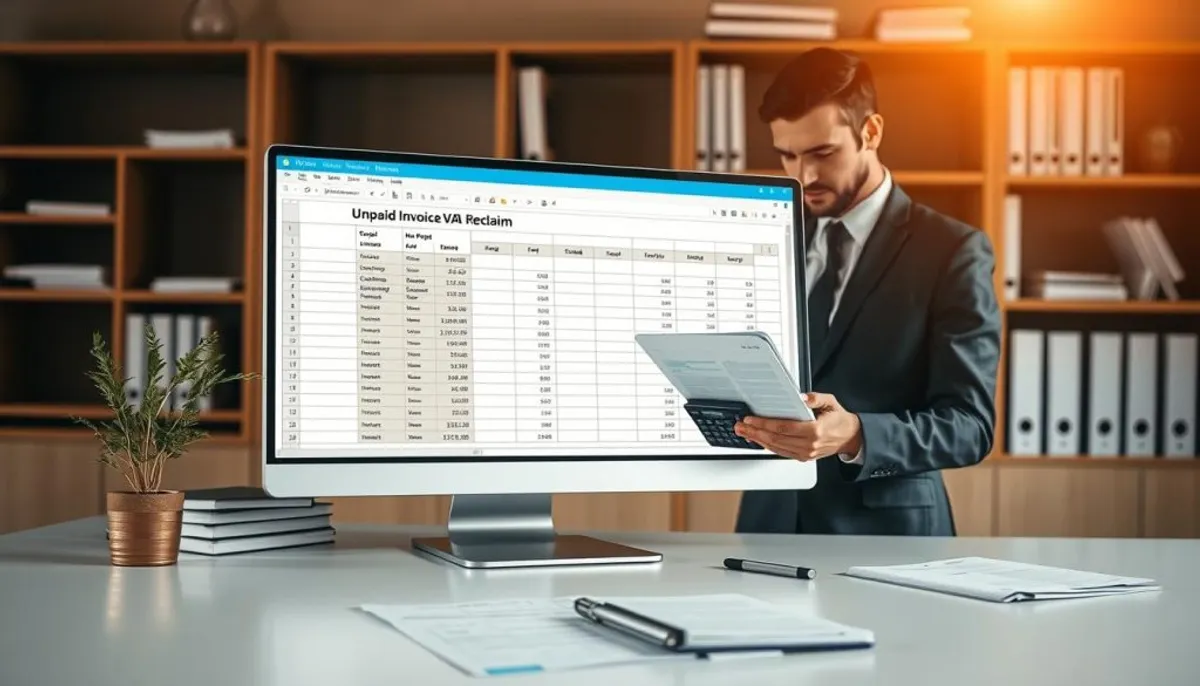
Business owners often wonder if they can reclaim VAT on unpaid invoices. The good news is that in most jurisdictions, you can recover VAT when customers fail to pay. However, specific conditions apply that must be met first.
Submitting a VAT return requires paying tax authorities the full VAT amount for invoices issued during that period. This holds true regardless of whether customers have actually paid you. Such requirements can create significant financial strain for small businesses struggling with cash flow.
- VAT must be paid on all issued invoices during the reporting period
- You can reclaim VAT on unpaid invoices after meeting certain criteria
- Documentation and timing are critical for successful VAT recovery
To successfully reclaim VAT on unpaid invoices, you’ll need to demonstrate several key elements:
- Proof of reasonable collection efforts
- A specified waiting period (typically 6-12 months)
- Formal debt write-off in accounting records
Each country has unique regulations for VAT recovery. The process involves some administrative work but remains essential for protecting your business’s financial health. Proper documentation ensures maximum chances of successful recovery.
Businesses seeking VAT reclaims should carefully document all collection attempts. Following your local tax authority’s specific guidelines maximizes recovery success rates.
Requirements for Recovering VAT on Unpaid Customer Invoices
Navigating the complex world of reclaiming VAT on unpaid invoices requires careful attention to specific documentation and legal requirements. Businesses must understand the precise steps to successfully recover VAT from unpaid customer invoices.
Several critical conditions must be met for recovering vat on unpaid invoices. The invoice must be fully or partially unpaid. VAT must have been already declared and paid to tax authorities.
Documented evidence of collection attempts must exist. The debt remains outstanding beyond a specific time period.
- The invoice must be fully or partially unpaid
- VAT must have been already declared and paid to tax authorities
- Documented evidence of collection attempts must exist
- The debt remains outstanding beyond a specific time period
Proving Irrecoverability: Documentation Essentials
Successful reclaiming vat on unpaid invoices demands rigorous documentation. Businesses need to compile comprehensive proof of the debt’s irrecoverability.
This typically includes detailed payment reminder correspondence and formal collection attempt records. Financial statements demonstrating the unrecovered debt are essential. Credit notes issued for the uncollected invoice complete the documentation package.
- Detailed payment reminder correspondence
- Formal collection attempt records
- Financial statements demonstrating the unrecovered debt
- Credit notes issued for the uncollected invoice
Time Periods and Write-Off Conditions
Different jurisdictions impose varying timeframes for VAT recovery. In the United States, businesses must typically wait at least six months from the invoice date before initiating recovery processes. Crucially, simply having an overdue invoice is insufficient.
Companies must demonstrate active and documented attempts to collect the outstanding amount. Key write-off conditions include removing the debt from accounts receivable and recording it as a bad debt expense. Maintaining meticulous records of all collection efforts is mandatory.
Businesses seeking to recover vat unpaid invoices must be prepared to provide comprehensive documentation proving the debt’s genuine unrecoverability.
VAT on Debits vs. VAT on Payments: Key Differences
Understanding the nuances between VAT on debits and VAT on payments can dramatically impact your business’s financial strategy. These two distinct VAT accounting methods determine how and when you handle unpaid invoices vat reclaims.
VAT on debits represents an invoice-based system primarily used for goods and merchandise sales. Under this method, businesses must pay VAT to tax authorities immediately after issuing an invoice. Payment status from customers does not affect this obligation.
- VAT is calculated and remitted upon invoice generation
- Applies predominantly to tangible product sales
- Creates potential cash flow challenges
In contrast, VAT on payments operates as a cash-based system typically applied to services and professional work. This approach simplifies VAT accounting by requiring tax payment only after actual customer payment is received.
| VAT Method | Taxation Trigger | Unpaid Invoice Impact |
|---|---|---|
| VAT on Debits | Invoice Issuance | Requires VAT Reclaim Process |
| VAT on Payments | Actual Payment Received | No VAT Liability |
Businesses dealing with vat on debits must carefully track unpaid invoices vat reclaims to recover taxes paid on uncompensated transactions. Meanwhile, vat on payments offers a more straightforward approach with reduced administrative burden.
Selecting the appropriate VAT method depends on your business type, sales model, and financial management strategies.
Certificates of Irrecoverability and How to Obtain Them
Dealing with unpaid invoices presents significant challenges in business finance management. Reclaiming VAT for unpaid invoices demands thorough understanding of critical documentation. This documentation must prove a debt is genuinely unrecoverable. The certificate of irrecoverability serves as your essential legal document throughout this complex process.
Businesses encounter two primary scenarios requiring a certificate of uncollectibility:
- Bankruptcy proceedings
- Non-bankruptcy debt collection situations
Bankruptcy Proceedings and Court-Issued Certificates
Obtaining a certificate becomes considerably more straightforward during formal customer insolvency. Different court procedures directly impact VAT recovery options and requirements.
| Insolvency Procedure | VAT Recovery Status | Certificate Issuer |
|---|---|---|
| Judicial Liquidation | Recoverable from court decision date | Court-appointed Liquidator |
| Court-Ordered Reorganization | Recoverable from reorganization plan date | Court Mandatary |
| Conciliation Proceedings | Not Recoverable | N/A |
Obtaining Certificates Outside Insolvency Cases
Proving debt irrecoverability without formal bankruptcy demands extensive documentation. Businesses must demonstrate comprehensive efforts and maintain detailed records.
- Exhaustive collection attempts
- Documented communication with debtor
- Proof of inability to recover funds
Regulated collection agencies provide valuable assistance in these situations. They issue professional certificates of irrecoverability following unsuccessful recovery efforts. Maintaining meticulous records of collection attempts proves crucial for successfully reclaiming VAT.
Step-by-Step Process to Claim VAT Back on Bad Debts

Reclaiming VAT on unpaid invoices can be a critical financial strategy for businesses looking to recover lost revenue. The process to claim vat back requires careful documentation and understanding of specific tax regulations.
Here’s a comprehensive guide to help you navigate how to reclaim vat on unpaid invoices:
- Verify Eligibility Conditions
- Confirm the required waiting period (typically 6-12 months)
- Document reasonable collection attempts
- Ensure debt is officially written off in accounting records
- Gather Necessary Documentation
- Original invoices
- Proof of collection attempts
- Write-off documentation
- Certificates of irrecoverability (if applicable)
- Select Appropriate Claiming Method
- Understand country-specific VAT recovery procedures
- Prepare VAT return with claimed amount
- Follow local tax authority guidelines
- Maintain Comprehensive Records
- Keep documentation for 6-10 years
- Prepare for potential tax authority audits
- Create a dedicated bad debt accounting system
Different countries have unique requirements for VAT recovery. In the United Kingdom, you can typically claim VAT directly on your next return.
Other countries like Belgium and Spain might require additional steps such as issuing credit notes. By following these systematic steps, businesses can effectively manage VAT recovery on unpaid invoices.
This approach improves overall financial resilience and helps recover lost revenue from bad debts.
VAT on Contract Cancellations and Early Termination Fees
Navigating the complex world of VAT on contract cancellations can be challenging for businesses. Understanding cancellation fees subject to VAT becomes crucial for managing financial obligations. This knowledge helps with potential vat refund for unpaid invoices.
The landscape of early termination vat has dramatically shifted through landmark European Court of Justice rulings. These decisions have significant implications for how businesses handle cancellation fees vat.
Evolving Legal Interpretations of Cancellation Fees
Key court cases have established important precedents for VAT treatment of cancellation fees:
- In 2015, airline ticket cases revealed that non-refundable tickets remain VAT-taxable
- The 2018 MEO case confirmed early termination fees are typically subject to VAT
- Vodafone Portugal case in 2020 reinforced that even reduced termination fees carry VAT obligations
When Cancellation Fees Trigger VAT Liability
The critical factor is whether a direct service connection exists. If payment relates to service supply, VAT typically applies even if not fully utilized. Businesses must carefully track cancellation fees and potential bad debt recovery.
For companies dealing with contract terminations, understanding these nuanced VAT rules is essential. This knowledge helps manage financial risks and compliance requirements.
Deadlines and Timing for VAT Recovery Claims
Navigating vat recovery claims requires precise timing and careful attention to deadlines. Businesses must understand the critical windows for submitting VAT refund requests to maximize their financial opportunities.
The standard rule for timing vat claims typically follows a two-year window from the original invoice date. This means companies have a specific timeframe to pursue unpaid invoice VAT refunds before losing their legal right to recovery.
- Claim deadlines are usually December 31 of the second year following the original invoice
- Tracking invoice dates becomes crucial for successful VAT recovery
- Missed deadlines can permanently forfeit your right to VAT refunds
Different jurisdictions have unique rules for deadlines vat refund processing. Some countries require claims to be filed within the same reporting period when the bad debt becomes officially recognized.
| Country | VAT Recovery Deadline | Specific Conditions |
|---|---|---|
| United States | 2 years from invoice date | Must prove irrecoverability |
| United Kingdom | 4 years from invoice date | Requires detailed documentation |
| European Union | Varies by member state | Typically 2-3 years |
Businesses should implement robust tracking systems to monitor unpaid invoices and potential VAT recovery opportunities. Proactive management is key to maximizing financial recovery.
Professional accounting software can help automate deadline tracking, ensuring you never miss a critical VAT recovery window. Staying informed and organized protects your company’s financial interests.
How Unpaid-Invoices.com Helps You Avoid Bad Debt Situations
Managing unpaid invoices presents significant challenges for businesses of all sizes. Debt collection and payment reminders consume valuable time and resources that could be allocated elsewhere. Unpaid-Invoices.com delivers a comprehensive solution to streamline accounts receivable management effectively. The platform prevents bad debt situations before they escalate into more serious financial problems.
Automating Payment Reminders with Precision
The platform revolutionizes how businesses handle overdue invoices through intelligent automation. Key features include:
- Customizable reminder schedules
- Professional communication templates
- Automatic escalation of overdue accounts
- Real-time tracking of invoice status
A Cost-Effective Alternative to Traditional Collection Agencies
Traditional debt collection agencies can charge up to 50% of recovered amounts. These agencies often damage client relationships through aggressive tactics. Unpaid-Invoices.com provides a smarter approach. The platform offers:
- Subscription-based pricing
- Preserved client relationships
- Higher collection rates
- Minimal administrative overhead
By preventing invoices from becoming bad debts, businesses avoid complex VAT recovery processes. This proactive approach maintains healthy cash flow and strengthens financial stability. Sign up today to transform your accounts receivable management strategy.
Conclusion
Navigating VAT recovery for unpaid invoices requires understanding key principles that transform lost revenue into strategic financial opportunities. The process demands careful attention to documentation, timing, and specific country regulations.
Reclaim VAT successfully by maintaining meticulous records of collection attempts and understanding jurisdiction-specific requirements. Each country has unique VAT recovery rules, but the fundamental goal remains consistent: ensuring businesses don’t bear financial burdens from recoverable unpaid invoices.
Prevention stands as the best strategy for managing unpaid invoices effectively. Automated invoicing and collection platforms significantly reduce bad debt likelihood. Proactive accounts receivable management minimizes VAT recovery challenges while maintaining healthy cash flow.
Review current unpaid invoices and understand available VAT recovery options immediately. Implement systems protecting your financial interests with appropriate knowledge and tools. Transform VAT recovery from a complex challenge into a manageable, potentially profitable aspect of business financial strategy.
FAQ
Can I reclaim VAT on unpaid invoices?
Yes, most jurisdictions allow you to reclaim VAT on unpaid invoices through bad debt relief systems. You must meet specific conditions first. These include waiting a required time period, typically 6-12 months. You must also demonstrate collection efforts and properly document the unpaid debt in your accounting records.
How long do I have to wait before claiming VAT on an unpaid invoice?
Waiting periods vary by country. In the UK, you can claim after six months from the invoice date. The Netherlands requires one year. Countries like Germany have stricter requirements and may need additional proof of the debt’s uncollectibility.
What documentation do I need to reclaim VAT on unpaid invoices?
You’ll typically need the original invoice and evidence of collection attempts. This includes reminder letters, emails, and phone call logs. You must provide proof that you’ve written off the debt in your accounting records. Depending on your jurisdiction, you may need a certificate of irrecoverability.
Does VAT on unpaid invoices apply to all types of sales?
No, it depends on your accounting method. You might use VAT on debits (invoice-based) or VAT on payments (cash-based) accounting. Goods sales typically use VAT on debits, requiring payment when issuing an invoice. Services might use VAT on payments, where VAT is only due when payment is received.
What happens if my customer declares bankruptcy?
In bankruptcy proceedings, you can typically reclaim VAT more easily. Court-issued certificates of irrecoverability help you claim VAT from specific dates. The date depends on the court’s liquidation or restructuring decision and the specific type of insolvency proceeding.
Are there differences in VAT reclaim rules across European countries?
Absolutely. The EU has a general directive on bad debt relief. However, each country implements its own specific rules. France, Germany, the UK, Netherlands, and others have unique requirements for documentation, waiting periods, and claiming procedures.
Can I claim VAT back on partial unpaid invoices?
Yes, most cases allow you to reclaim VAT proportionally for the unpaid portion. You’ll need to demonstrate the specific amount that remains outstanding. Follow the same bad debt relief procedures as for fully unpaid invoices.
How long should I keep records for VAT reclaim purposes?
Most jurisdictions require you to maintain detailed records for 6-10 years. This includes original invoices and proof of collection attempts. Keep write-off documentation and any correspondence related to the unpaid invoice. Also retain all records related to your VAT recovery claim.