Running a business means facing the frustrating reality of unpaid invoces. Small claims court offers a powerful solution for debt recovery against clients who refuse to pay. The unpaid invoice small claims court process provides business owners a straightforward path to reclaim money owed.

According to recent financial data, U.S. consumers owe over $17.57 trillion in debt. Small claims court enables businesses to recover amounts typically under $10,000. This makes it an accessible method for small business owners seeking justice. The small claims court for debt collection process is designed to be user-friendly and cost-effective.
Navigating unpaid invoices can drain your energy and resources. This guide will walk you through everything you need to know about using small claims court. You’ll learn filing procedures and potential enforcement strategies to recover your hard-earned money.
Key Takeaways
- Small claims court provides an affordable debt recovery option
- Most claims are processed without requiring a lawyer
- Typical claim limits range between $5,000-$10,000
- The process is faster than traditional legal proceedings
- Business owners can represent themselves effectively
- Court fees are significantly lower than hiring a collection attorney
Understanding Small Claims Court for Debt Recovery
Small claims court offers a powerful solution for businesses seeking to recover unpaid invoices quickly and affordably. This specialized legal pathway provides an efficient alternative to traditional court systems. It’s designed specifically to help businesses resolve financial disputes with minimal complexity.
What Makes Small Claims Court Different from Regular Court
The small claims court for business debt recovery stands apart from standard legal proceedings in several key ways:
- No jury trials required
- Simplified evidence rules
- Faster resolution times (typically 2-4 months)
- Minimal paperwork
- No mandatory attorney representation
Judges in small claims courts expect clear, straightforward communication. They prioritize understanding the core facts of the dispute rather than complex legal terminology.
Why Small Claims Is Ideal for Business Debt Collection
The small claims procedure for unpaid invoices presents unique advantages for businesses:
- Cost-effective filing fees ($30-$150)
- Minimal time investment
- Ability to represent yourself
- Streamlined process for commercial disputes
Business owners can leverage small claims court to recover funds without sacrificing billable hours or incurring substantial legal expenses. This approach levels the playing field for smaller businesses. It allows them to pursue outstanding debts efficiently and professionally.
How Much Money Can You Realistically Recover
Understanding potential recovery amounts is crucial for business owners collecting unpaid debts through small claims court. State limits vary dramatically, ranging from $2,500 to $25,000 across different jurisdictions.
Monetary limits for collecting unpaid debts in small claims court depend on your specific state regulations:
- California: $12,500 for individuals
- Texas: $20,000 maximum claim
- New York: $10,000 in city courts
- Most states: $5,000-$10,000 range
Winning a judgment doesn’t guarantee full payment. Realistic expectations are key. National statistics reveal that 30-60% of small claims court judgments result in partial or complete debt recovery.
Success rates improve when debtors:
- Have steady employment
- Possess traceable assets
- Maintain bank accounts
Research the debtor’s financial situation before pursuing a small claims court case for collecting unpaid debts. This strategic approach helps predict potential recovery. It also determines whether legal action makes financial sense.
When to Use Unpaid Invoice Small Claims Court
Navigating unpaid invoice legal action presents challenges for small business owners. Small claims court offers a streamlined path to recover debts. However, not all situations suit this approach equally well.
Understanding pursuit of small claims court for invoice disputes requires careful consideration. Several key factors determine whether this route makes sense for your situation.
Types of Unpaid Invoices Suitable for Small Claims
Small claims court works best for straightforward debt recovery with clear documentation. The following scenarios prove most appropriate for this legal avenue:
- Completed services with signed contracts or email confirmations
- Delivered goods with proof of delivery and acceptance
- Unpaid rent from commercial tenants
- Bounced checks for provided products or services
Critical elements determine success in small claims cases. Documentation quality directly impacts your claim’s strength and likelihood of favorable judgment.
| Document Type | Strength of Claim |
|---|---|
| Signed Contract | Very Strong |
| Email Confirmation | Strong |
| Invoice with Delivery Proof | Solid |
| Verbal Agreement | Weak |
Debts That Don’t Belong in Small Claims Court
Not all unpaid invoice legal action suits small claims proceedings. Certain cases require different legal channels or more complex judicial processes.
Avoid pursuing cases involving these circumstances:
- Complex disputes requiring expert testimony
- Ongoing business conflicts with multiple claims
- Debts exceeding state monetary limits
- Secured loans needing collateral repossession
Pro tip: Gather comprehensive documentation before filing to increase your chances of success in small claims court.
Steps to File a Small Claims Case for Unpaid Invoices
Navigating the small claims court process for chasing unpaid invoices can seem daunting. Breaking it down into clear steps makes it manageable. Business owners have a strategic path to recover outstanding debts through this straightforward legal approach.
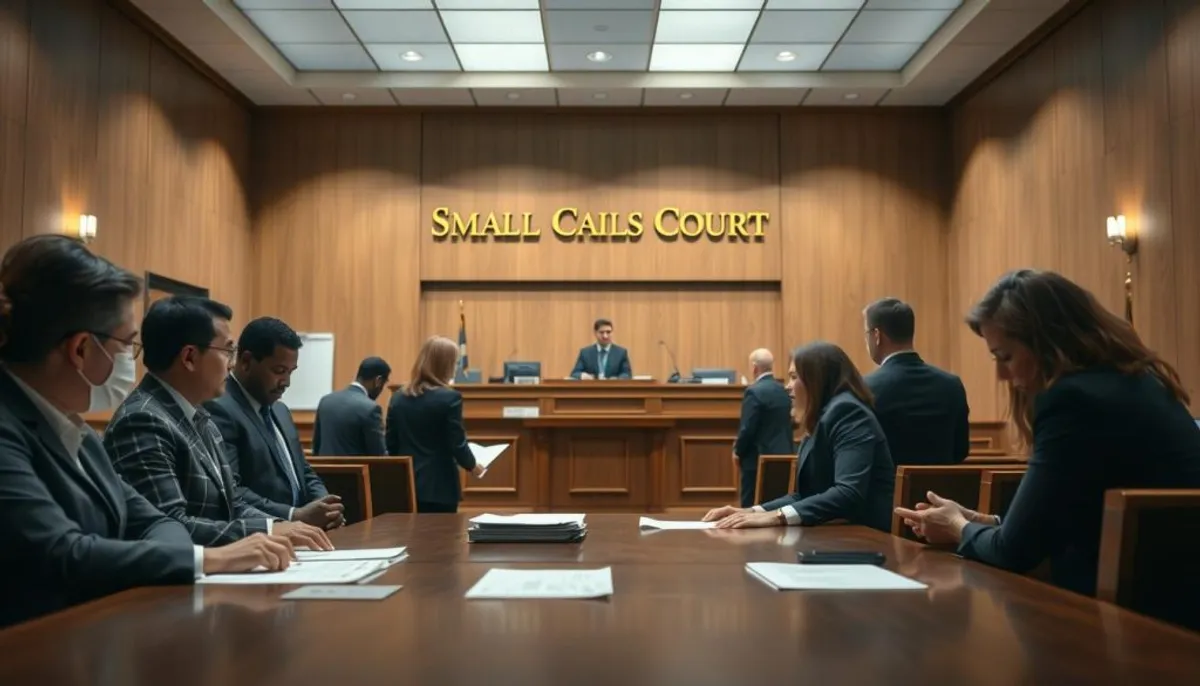
Before filing a small claims court case, prepare a comprehensive documentation strategy:
- Gather all invoice records
- Collect communication proof
- Organize payment history
- Verify debt legitimacy
The small claims court process requires careful preparation. Start by sending a final demand letter documenting the unpaid invoice. This demonstrates your commitment to resolving the debt professionally.
| Filing Step | Required Action |
|---|---|
| Document Preparation | Compile invoice, contract, communication records |
| Demand Letter | Send formal notice of intent to pursue legal action |
| Court Filing | Complete claim forms, pay filing fee ($35-$150) |
| Defendant Notification | Serve legal documents through certified mail |
Pursuing unpaid invoices through small claims court demands precision. Accurately complete all required paperwork. Ensure you have substantial evidence supporting your claim.
- Verify court jurisdiction
- Complete claim forms
- Pay required filing fees
- Serve defendant officially
- Prepare hearing documentation
The small claims court process offers businesses a direct path to recovering outstanding debts. Complex legal procedures are unnecessary. Following these systematic steps increases your chances of successful invoice collection.
What Happens After You Win Your Judgment
Winning a small claims court case for pursuing unpaid invoices through small claims court is just the first step in debt recovery. The court’s judgment provides a legal document confirming the debt. However, collecting the money requires additional action on your part.
Winning a judgment doesn’t guarantee immediate payment. Collection rates typically range between 30-60%, depending on the debtor’s financial situation. Your enforcement strategies also play a significant role in recovery success.
Collection Rates and Realistic Expectations
Understanding the potential outcomes of pursuing unpaid invoices through small claims court is crucial. Several key factors influence collection success significantly.
- Employed debtors: Higher collection potential (up to 70%)
- Debtors with traceable assets: Moderate collection chances
- Unemployed or asset-free debtors: Low collection likelihood
What to Do When Debtors Ignore Court Orders
Debtors sometimes fail to pay after a judgment. Fortunately, you have several enforcement options available to pursue recovery.
- Wait 30 days for voluntary payment
- Request post-judgment discovery
- Pursue wage garnishment
- File for bank account levy
- Place property liens
| Enforcement Method | Collection Effectiveness |
|---|---|
| Wage Garnishment | 70-80% success rate |
| Bank Levy | 50-60% success rate |
| Property Lien | 30-40% eventual collection |
Persistence is key for pursuing unpaid invoices through small claims court. The legal system provides tools to help you recover your money. You must actively use them to maximize your chances of collection.
Enforcement Options: Wage Garnishment and Asset Seizure
Winning a judgment in small claims court for debt collection is just the first step. The real challenge is collecting the money owed to you. Fortunately, several powerful enforcement options can help you recover your funds.
Wage garnishment stands out as one of the most effective methods for collecting unpaid debts. This process allows you to legally claim a portion of the debtor’s paycheck directly from their employer. Federal law permits garnishing up to 25% of disposable earnings. This makes it a reliable collection strategy for small claims court debt recovery.
- Wage Garnishment: Directly collect money from the debtor’s paycheck
- Bank Account Levy: Freeze and seize funds from the debtor’s bank account
- Property Liens: Secure future payment when the debtor sells real estate
- Asset Seizure: Potentially collect through selling non-exempt personal property
To initiate wage garnishment, you’ll need to file a writ of execution with the court. The process involves serving the garnishment order to the debtor’s employer. The employer must then withhold the specified amount from each paycheck. State laws may provide additional protections for low-income earners, so understanding local regulations is crucial.
Bank account levies offer another powerful tool in small claims court debt collection. By identifying the debtor’s bank and obtaining a court order, you can freeze and seize funds directly. This one-time seizure can provide immediate relief for unpaid invoices.
Property liens provide a long-term solution for debt recovery. By filing a lien against the debtor’s real estate, you ensure payment when they sell or refinance. Most states allow liens to remain in effect for 10 years, giving you extended protection.
Hidden Costs of Pursuing Debt Through Small Claims
Business owners must carefully evaluate financial implications beyond the initial debt amount before pursuing small claims court. Small claims court appears straightforward at first glance. However, numerous hidden expenses can quickly erode your potential recovery.
Understanding the true cost of legal action requires a comprehensive financial assessment. Expenses associated with small claims court can significantly impact your debt recovery strategy.
Court Fees and Filing Expenses
Filing fees for small claims court cases vary across different states, typically ranging from $30 to $150. These initial expenses can quickly accumulate and impact your bottom line.
- Claims under $1,500: $30-$75 filing fee
- Claims between $1,500-$5,000: $50-$100 filing fee
- Claims between $5,000-$10,000: $75-$150 filing fee
Additional costs include service of process fees and certified document charges. These expenses can add another $50-$100 to your initial investment.
Time Investment and Lost Income
The most significant hidden cost is often your time spent pursuing the claim. Business owners typically spend considerable hours on the entire process.
- 2-5 hours preparing documentation
- Half-day attending court hearing
- Potential additional time for post-judgment proceedings
| Cost Category | Estimated Expense |
|---|---|
| Filing Fees | $30-$150 |
| Service Fees | $30-$75 |
| Time Investment | $200-$500 |
| Total Potential Cost | $260-$725 |
Pro tip: Calculate your break-even point before filing. For smaller debts under $500, court costs might exceed potential recovery. Larger debts ($2,000+) often justify the investment.
Should You Represent Yourself or Hire Legal Help

Navigating the small claims procedure for unpaid invoices can be tricky. Most business owners wonder whether they should tackle the legal process alone. The good news is that small claims court is designed for self-representation.
Consider these key factors before deciding whether to represent yourself:
- Complexity of your unpaid invoice case
- Total amount of debt recovery
- Your comfort level with legal procedures
- Potential enforcement challenges
Self-representation offers significant advantages for the small claims procedure for unpaid invoices:
- Cost savings – Avoid expensive attorney fees
- Direct control – Manage your own case timeline
- Simplified process – Courts expect plain language explanations
- Learning experience – Build confidence in legal procedures
Legal representation might be beneficial in specific scenarios:
| Scenario | Recommended Action |
|---|---|
| Complex legal defenses | Consult attorney |
| High-value claims | Consider professional guidance |
| Enforcement challenges | Seek legal strategy advice |
For most straightforward unpaid invoice cases, business owners can successfully represent themselves. The small claims system empowers individuals to seek justice without extensive legal expertise.
Alternatives to Small Claims: Using Debt Collection Agencies
Collecting unpaid debts presents significant challenges for many businesses today. Alternatives to small claims court exist that can streamline the recovery process. Debt collection agencies offer specialized services for recovering outstanding invoices and managing difficult payment situations.
Professional debt collection agencies focus exclusively on tracking down money owed to businesses. They bring specialized expertise to complex debt recovery scenarios. These agencies can handle cases that might overwhelm internal resources.
When Collection Agencies Make Strategic Sense
- Multiple small unpaid invoices requiring simultaneous collection
- Out-of-state debtors difficult to pursue through local courts
- Post-judgment collection when debtors ignore court orders
- Limited time to manage personal debt recovery processes
Cost Comparison: Agencies vs. Small Claims Court
Understanding financial implications proves crucial for businesses pursuing unpaid invoices. Both small claims court and collection agencies present distinct cost structures. Each method offers different recovery percentages and upfront expenses.
| Collection Method | Typical Costs | Recovery Percentage |
|---|---|---|
| Small Claims Court | $50-$150 filing fees | 100% of collected amount |
| Collection Agency | 20-50% of recovered funds | 50-80% of total debt |
Collection agencies simplify the debt recovery process but present potential drawbacks. Aggressive collection tactics might damage valuable customer relationships permanently. These approaches can create significant reputation risks for your business.
Modern businesses now seek balanced approaches that preserve professional connections while recovering outstanding payments. Automated reminder systems offer more customer-friendly alternatives to traditional collection methods. These innovative solutions maintain relationships while effectively pursuing what you’re owed.
Preventing Unpaid Invoices Before They Happen
Business owners can dramatically reduce small claims court risks by implementing proactive prevention strategies. Establishing clear financial expectations before work begins creates robust payment systems. Setting these foundations protects your business from future payment disputes.
Critical prevention techniques include:
- Developing comprehensive written agreements
- Requesting upfront deposits
- Implementing systematic payment tracking
- Offering multiple payment options
Crafting detailed contracts protects both parties and minimizes potential disputes. Every agreement should clearly outline specific terms and expectations.
- Exact services or products provided
- Total project cost
- Specific payment schedules
- Late payment penalties
For larger projects, conducting credit checks provides valuable insights into a client’s financial reliability. Requesting a 25-50% deposit serves multiple purposes beyond securing initial payment. It demonstrates the client’s genuine commitment to the project.
Establishing a consistent follow-up process proves crucial for managing small claims court risks. Send friendly payment reminders at regular intervals to maintain communication. Escalate communication strategically while maintaining professional channels to encourage timely payments.
How Unpaid-Invoices.com Simplifies Debt Recovery
Navigating small claims court for business debt recovery can be challenging and time-consuming. Unpaid-Invoices.com emerges as a revolutionary solution designed to streamline the debt collection process. The platform serves businesses of all sizes seeking efficient recovery methods.
Our platform transforms the traditional approach to recovering unpaid invoices. It offers a smart alternative to both small claims court proceedings and aggressive collection agencies.
Automated Reminders and Payment Collection Features
Unpaid-Invoices.com provides a comprehensive toolkit for managing overdue accounts:
- Intelligent automated payment reminder system
- Multi-channel communication strategies
- Direct payment links in every message
- Real-time tracking and reporting dashboard
The platform sends professionally crafted reminder emails that gradually increase in urgency. This approach maximizes the chances of collecting outstanding invoices without damaging business relationships.
Why It’s Better Than Traditional Collection Agencies
Traditional collection methods for small claims court debt recovery often come with significant drawbacks. Unpaid-Invoices.com offers a more effective approach:
- Lower cost compared to collection agencies
- Preserve customer relationships
- Maintain complete control over collection process
- Faster and more efficient recovery
Businesses can recover outstanding debts professionally and efficiently by choosing Unpaid-Invoices.com. This approach avoids the stress and expense of small claims court. It maintains positive customer interactions throughout the recovery process.
Conclusion
Navigating unpaid invoice small claims court can feel overwhelming. However, you’re now equipped with powerful strategies to recover your hard-earned revenue. The debt collection journey doesn’t have to be complicated or confrontational. Understanding your options is the first step toward protecting your business’s financial health.
Small claims court remains viable for recovering outstanding debts, especially for amounts between $1,000 and $10,000. Yet, the most efficient path often begins with proactive collection strategies. Unpaid-invoices.com offers a modern solution that helps businesses systematically pursue overdue payments without damaging customer relationships.
Your best approach is a strategic, multi-step process. Start with automated, professional follow-up through Unpaid-invoices.com, which can recover many outstanding invoices through consistent communication. For stubborn accounts that resist initial collection efforts, small claims court provides a legal backstop to secure payment.
Don’t let unpaid invoices drain your business’s resources. Take action today by exploring Unpaid-invoices.com’s streamlined collection tools. Every day you wait reduces your chances of recovery. Your business deserves to be paid, and now you have the knowledge and tools to make it happen.
FAQ
How much does it cost to file a small claims court case for an unpaid invoice?
Filing fees typically range from to 0, depending on your state and the claim amount. Claims under
FAQ
How much does it cost to file a small claims court case for an unpaid invoice?
Filing fees typically range from $30 to $150, depending on your state and the claim amount. Claims under $1,500 usually cost $30-$75, while claims between $5,000-$10,000 may cost $75-$150. Additional costs include service of process fees ($30-$75). You may also face post-judgment enforcement fees.
Do I need a lawyer to file a small claims court case for an unpaid invoice?
No, small claims court is specifically designed for self-representation. Some states don’t even allow attorneys in small claims court. The process is intentionally simplified, with relaxed evidence rules. Judges expect plain language explanations.
What happens if I win my small claims court case but the debtor still doesn’t pay?
Winning a judgment doesn’t automatically mean you’ll collect the money. You’ll need to pursue enforcement through wage garnishment, bank levies, or property liens. Collection rates typically range from 30-60%. Success depends on the debtor’s financial situation and employment status.
How long does the small claims court process take for an unpaid invoice?
The entire process usually takes 2-4 months from filing to judgment. This includes time for filing, serving the defendant, and waiting for the court date. Post-judgment collection efforts can take additional time. The timeline depends on the debtor’s cooperation.
What types of unpaid invoices work best for small claims court?
Ideal cases include invoices for completed services with clear documentation. Delivered goods with proof of delivery also work well. Unpaid commercial rent, bounced checks, and business-to-business invoices within your state’s monetary limit are suitable. The key is having clear evidence of the debt and completed work.
Can I sue for the full amount of an unpaid invoice?
Most states have monetary limits for small claims court, typically ranging from $5,000 to $12,500. If your invoice exceeds this amount, you’ll need to waive the excess. Alternatively, you can file in a higher court with more complex procedures.
What documentation do I need to bring to small claims court?
Bring the original contract or agreement, invoices, and proof of services rendered or goods delivered. Include all communication about the debt and demand letters. Bring any other evidence supporting your claim. Organize these documents chronologically and make copies for the court and defendant.
Are there alternatives to small claims court for collecting unpaid invoices?
Yes, alternatives include traditional collection agencies, which charge 20-50% of the collected amount. Modern solutions like unpaid-invoices.com offer automated collection services with lower fees. These services provide a more professional approach to debt recovery.
How can I improve my chances of collecting an unpaid invoice?
Prevent issues by having clear written agreements and requiring upfront deposits. Perform credit checks for large projects. Implement systematic payment follow-up and offer multiple payment options. Establish clear late payment policies.
What happens if the debtor has no assets or income to collect?
If the debtor is “judgment proof,” you may collect little or nothing despite winning. Judgment proof means no job, no bank account, and no assets. Research the debtor’s financial situation before pursuing legal action. Consider the potential recovery versus the costs of collection.
,500 usually cost -, while claims between ,000-,000 may cost -0. Additional costs include service of process fees (-). You may also face post-judgment enforcement fees.
Do I need a lawyer to file a small claims court case for an unpaid invoice?
No, small claims court is specifically designed for self-representation. Some states don’t even allow attorneys in small claims court. The process is intentionally simplified, with relaxed evidence rules. Judges expect plain language explanations.
What happens if I win my small claims court case but the debtor still doesn’t pay?
Winning a judgment doesn’t automatically mean you’ll collect the money. You’ll need to pursue enforcement through wage garnishment, bank levies, or property liens. Collection rates typically range from 30-60%. Success depends on the debtor’s financial situation and employment status.
How long does the small claims court process take for an unpaid invoice?
The entire process usually takes 2-4 months from filing to judgment. This includes time for filing, serving the defendant, and waiting for the court date. Post-judgment collection efforts can take additional time. The timeline depends on the debtor’s cooperation.
What types of unpaid invoices work best for small claims court?
Ideal cases include invoices for completed services with clear documentation. Delivered goods with proof of delivery also work well. Unpaid commercial rent, bounced checks, and business-to-business invoices within your state’s monetary limit are suitable. The key is having clear evidence of the debt and completed work.
Can I sue for the full amount of an unpaid invoice?
Most states have monetary limits for small claims court, typically ranging from ,000 to ,500. If your invoice exceeds this amount, you’ll need to waive the excess. Alternatively, you can file in a higher court with more complex procedures.
What documentation do I need to bring to small claims court?
Bring the original contract or agreement, invoices, and proof of services rendered or goods delivered. Include all communication about the debt and demand letters. Bring any other evidence supporting your claim. Organize these documents chronologically and make copies for the court and defendant.
Are there alternatives to small claims court for collecting unpaid invoices?
Yes, alternatives include traditional collection agencies, which charge 20-50% of the collected amount. Modern solutions like unpaid-invoices.com offer automated collection services with lower fees. These services provide a more professional approach to debt recovery.
How can I improve my chances of collecting an unpaid invoice?
Prevent issues by having clear written agreements and requiring upfront deposits. Perform credit checks for large projects. Implement systematic payment follow-up and offer multiple payment options. Establish clear late payment policies.
What happens if the debtor has no assets or income to collect?
If the debtor is “judgment proof,” you may collect little or nothing despite winning. Judgment proof means no job, no bank account, and no assets. Research the debtor’s financial situation before pursuing legal action. Consider the potential recovery versus the costs of collection.