
Business owners frequently face the frustrating challenge of clients who don’t pay their invoices on time—or at all. Unpaid invoices can create significant financial strain, threatening your company’s stability and cash flow.
Small claims court offers an accessible, affordable legal pathway for recovering unpaid debts. These courts typically handle amounts under $10,000-$25,000. They provide entrepreneurs with a strategic option to reclaim money owed to their business.
Modern technology platforms like Unpaid-Invoices.com are revolutionizing debt recovery. They offer streamlined processes that can help businesses resolve payment issues before legal action becomes necessary. Our comprehensive guide will walk you through effective strategies for managing and recovering outstanding payments.
Key Takeaways
- Small claims court provides an affordable legal solution for recovering unpaid invoices
- Technology platforms can help streamline debt collection processes
- Understanding your recovery options is crucial for financial protection
- Early intervention can prevent long-term financial damage
- Professional strategies exist beyond traditional collection methods
Understanding the Financial Impact of Unpaid Invoices
Unpaid invoices create devastating financial challenges for businesses of all sizes. Outstanding payments restrict liquidity and disrupt critical operations. The economic strain extends far beyond a simple missed payment.
Small businesses face particularly acute risks with unpaid invoices. Financial consequences escalate quickly, transforming manageable situations into potential survival threats.
Cash Flow Bottlenecks and Operational Limitations
Client payment delays trigger several critical challenges for businesses:
- Slow down payroll processes
- Impact supplier relationships
- Limit reinvestment opportunities
- Create unexpected financial pressure
Cash flow bottlenecks force businesses into difficult decisions. Reduced working capital results in operational delays that prevent growth. These constraints potentially damage long-term business prospects.
Hidden Costs of Payment Collection
Chasing unpaid invoices involves significant administrative and legal expenses. Businesses spend valuable time and resources attempting to recover funds.
Recovery efforts typically include:
- Repeated customer communication
- Formal reminder systems
- Potential legal intervention
- Court filing procedures
Collection attempts generate substantial costs, ranging from hundreds to thousands of dollars. The opportunity cost of pursuing payments often exceeds the original invoice value.
Acting early and understanding available options prevents problems from escalating. Businesses can protect their financial stability through proactive measures.
When an Invoice Becomes Legally Actionable
Determining when an invoice becomes legally actionable requires careful evaluation of several key factors. The payment deadline serves as a critical starting point for understanding your legal options.
Most jurisdictions establish clear guidelines for when an invoice transitions from an unpaid bill to a legal matter. An invoice typically becomes legally actionable under specific conditions.
- The payment deadline has passed
- Any grace period has expired
- A reminder or follow-up has been sent
- The debtor has acknowledged the obligation
Documentation plays a crucial role in establishing legal grounds for collection. Critical evidence includes:
- Signed contracts
- Purchase orders
- Email agreements
- Delivery confirmations
- Proof of completed work
In most jurisdictions, an invoice is considered late 30 days after the issue date or service completion. The statute of limitations for pursuing unpaid invoices typically spans six years from the due date. After this period, legal recovery becomes impossible.
Businesses should carefully track communication attempts and maintain comprehensive records. A verbal acknowledgment or written email promising payment can reset the legal timeline. This documentation strengthens your collection efforts significantly.
Prompt action remains essential for successful debt recovery. Waiting too long can diminish your chances of recovering funds. Delays may potentially eliminate your legal options entirely.
Early-Stage Legal Options for Collecting Unpaid Invoices
Recovering unpaid invoices requires a strategic approach that balances professionalism with assertiveness. Business owners face challenging decisions when confronting delinquent accounts. Careful navigation of collection strategies becomes essential for successful debt recovery.

Sending a Formal Demand Letter
A formal demand letter represents your first critical step in serious invoice collection. This document must include a clear statement of amount owed, referencing the original invoice and specific due date. Your communication should demonstrate professionalism while conveying urgency and seriousness about payment expectations.
- Comprehensive documentation of previous communication attempts
- Precise total amount outstanding
- Firm deadline for payment (typically 10-14 days)
- Explicit consequences of non-payment
Structuring a Payment Plan Agreement
Clients experiencing genuine financial challenges may benefit from a structured payment plan that salvages business relationships. A robust agreement should encompass clear terms that protect both parties’ interests. Establishing these parameters early prevents future misunderstandings and demonstrates your willingness to work cooperatively.
- Specific payment amounts
- Agreed payment frequency
- Penalty clauses for missed payments
- Legally binding signatures
| Collection Strategy | Best Used When | Recommended Approach |
|---|---|---|
| Internal Collections | Small amounts, recent invoice, cooperative debtor | Direct communication, flexible terms |
| External Professionals | Large amounts, unresponsive client, potential asset hiding | Legal intervention, systematic recovery |
Internal vs. External Collections Strategies
Choosing between internal and external collection methods depends on specific circumstances surrounding your unpaid invoice. Internal collections work best for smaller, recently overdue invoices where client communication remains open. External professionals become necessary when amounts are substantial or communication breaks down completely.
Platforms like Unpaid-Invoices.com offer streamlined solutions, bridging the gap between self-management and traditional collection agencies. Their automated systems provide professional templates and escalation protocols. These tools ensure systematic and effective debt recovery without extensive legal expenses.
Unpaid Invoice Small Claims: Court Process and Requirements
Navigating the small claims court process for unpaid invoices can seem intimidating. However, it’s more straightforward than most business owners expect. The journey begins with preparing a comprehensive evidence package and understanding court filing requirements.
To start your small claims court process, you’ll need to complete claim forms. These are typically available from your county court or can be accessed online. The first critical step involves paying a filing fee. This fee varies depending on your claim amount:
- Small claims under $1,500: $30-$50 filing fee
- Claims between $1,500-$5,000: $75-$100 filing fee
- Claims over $5,000: Up to several hundred dollars
Your evidence package is crucial for a successful claim. Organize your documentation meticulously to demonstrate the validity of your unpaid invoice. Essential documents include:
- Original invoice copies
- Contracts or agreement documentation
- Proof of goods or services delivery
- Collection attempt records
- Communication logs with the debtor
The court will initiate a service of process, notifying the defendant about your lawsuit. The defendant typically has 20-30 days to respond. If they fail to respond, you may win by default.
A hearing will be scheduled within 30-90 days once they respond. At the hearing, expect an informal process where you’ll present your case directly to a judge. Practice explaining your situation clearly and concisely.
The judge will likely issue a decision either during the hearing or within a few weeks. This timeline allows for thorough review of your evidence. While this process requires time and effort, platforms like unpaid-invoices.com offer systematic approaches to pursue payment before reaching court.
Small Claims Court vs. Civil Court for Debt Recovery
Navigating the legal landscape for unpaid invoices can be challenging. Business owners have two primary paths to recover funds: small claims court and civil court. Understanding the differences between these options can save you time, money, and frustration.
Small claims court presents a streamlined approach to debt recovery. You present your case directly without complex legal procedures. Rules of evidence are relaxed, making the process more accessible. The most significant advantages include:
- No mandatory attorney requirement
- Quick resolution (2-4 months)
- Lower filing costs
- Simplified legal process
Understanding Monetary Caps and Filing Costs
Each state sets specific monetary limits for small claims court. These limits typically range from $3,000 to $10,000. Filing fees are relatively low, usually between $30 and $100.
| Court Type | Average Timeline | Legal Representation | Cost Range |
|---|---|---|---|
| Small Claims | 2-4 months | Optional | $30-$100 |
| Civil Court | 12-18 months | Recommended | $500-$5,000 |
Simplified Process and Timeline Differences
Think of small claims court as the express lane for debt recovery. Civil court involves formal discovery, potential jury trials, and significantly longer timelines. For straightforward unpaid invoices under your state’s small claims limit, this court provides efficient resolution.
Consider using a platform like unpaid-invoices.com for systematic collection efforts before pursuing legal action. This approach can often recover debts without court involvement. It saves both time and financial resources.
What to Expect After Winning Your Small Claims Judgment
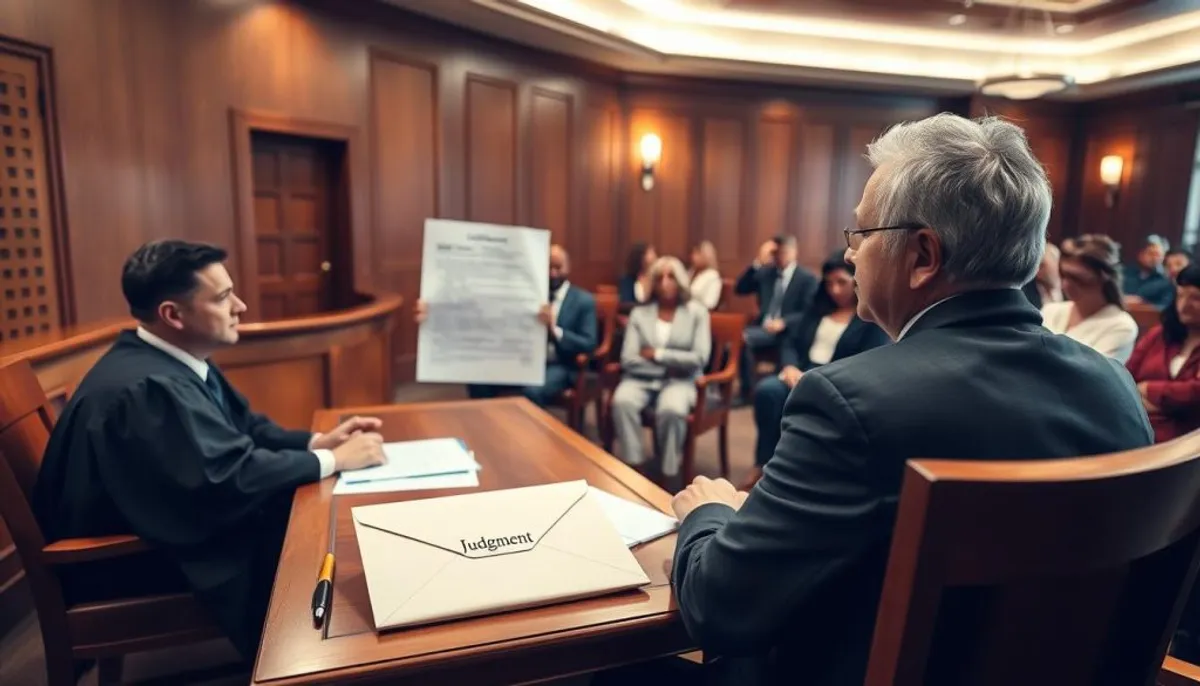
You’ve been declared the winner, but your journey isn’t quite over. Winning a small claims judgment is just the first step in recovering your unpaid invoice. The court provides a legal pathway to collect what you’re owed. You’ll need to take strategic actions to claim your prize.
After the judge rules in your favor, expect to receive a written judgment. This critical document typically arrives immediately after the court hearing or within a few weeks. It specifies the exact amount owed and may include court costs and interest.
- Immediately after the court hearing
- Within a few weeks of the ruling
- Specifying the exact amount owed
- Potentially including court costs and interest
Realistic expectations are crucial for this process. Research shows collection rates for small claims judgments range between 50-70%. Success increases significantly when the debtor has steady employment or identifiable assets. Many debtors will pay voluntarily once a legal judgment is entered.
Courts typically require a waiting period, often 30 days, before you can begin enforcement actions. This gives the debtor a chance to pay voluntarily. Judgments aren’t permanent but usually remain enforceable for 10-20 years, depending on state law. You can often renew the judgment if collection hasn’t occurred.
Platforms like unpaid-invoices.com offer systematic collection strategies that can result in payment without extensive legal proceedings. If voluntary payment doesn’t happen, you’ll need to explore post-judgment enforcement options. These tools provide powerful legal mechanisms to recover your funds.
Post-Judgment Enforcement Options for Collecting Unpaid Debts
After winning a judgment, creditors have several powerful tools to recover funds from debtors who refuse to pay. The legal system provides multiple strategies to help you collect what you’re owed. Your hard-earned judgment doesn’t have to become just paperwork.
A court ruling in your favor gives you significant leverage. The law offers multiple approaches to track down and recover funds from a non-paying debtor.
Wage Garnishment: Direct Payment from Paychecks
Wage garnishment is a powerful collection method that allows you to recover funds directly from a debtor’s employment income. Here’s how it works:
- File a motion with the court for a wage garnishment order
- The court issues the garnishment order
- Serve the order to the debtor’s employer
- Employer legally withholds a portion of each paycheck
Federal limits typically cap garnishment at 25% of disposable income or the amount above 30 times minimum wage. The lower amount applies. State protections may further reduce this percentage for low-income debtors or heads of household.
Bank Levies: Freezing and Seizing Funds
Bank levies provide another effective method for debt recovery. By obtaining a court order, you can:
- Freeze the debtor’s bank account
- Seize available funds up to the judgment amount
- Typically incur a one-time fee ($75-$150)
Some funds like Social Security benefits are exempt. Business and checking accounts remain fair game. Bank levies capture whatever funds are available at that moment.
Property Liens and Asset Seizures
For long-term debt recovery, consider these strategies:
- File judgment as a lien against real estate
- Prevent property sale or refinancing until debt is paid
- Obtain writ of execution to seize non-exempt personal property
These methods work best with larger judgments and identifiable valuable assets. Pursuing these options requires patience, additional fees, and persistent effort.
Court-based enforcement can be effective, but platforms like unpaid-invoices.com offer more efficient alternatives. These cost-effective collection approaches often resolve debts before legal action becomes necessary.
Alternative Approaches: Mediation, Arbitration, and Collection Agencies
Businesses facing unpaid invoices have multiple strategies for debt recovery. Each approach offers unique advantages and potential drawbacks that require careful consideration.
Collection agencies remain a traditional method for recovering outstanding debts. They pursue collection using various tactics once you assign or sell the debt to them.
- Phone calls and persistent communication
- Written correspondence
- Credit reporting
- Skip-tracing to locate debtors
These agencies typically keep 25-50% of recovered funds. Percentages increase for older or more challenging debts. Their persistence can be effective, but they often come with significant downsides.
| Collection Method | Cost | Relationship Impact |
|---|---|---|
| Traditional Collection Agency | 25-50% of recovered amount | High risk of damaging business relationships |
| Unpaid-Invoices.com | Minimal fees | Preserves professional connections |
Modern SaaS platforms like Unpaid-Invoices.com offer a superior alternative. These platforms provide cost-effective collection strategies and professional communication. They also deliver real-time process visibility and proactive account management.
Businesses can choose from several debt recovery approaches:
- Mediation: Best for disputed debts where relationship preservation is crucial
- Arbitration: Suitable for substantial amounts with contractual requirements
- Legal Action: Recommended for complex situations or large outstanding amounts
- Unpaid-Invoices.com: Ideal first-line solution for professional, systematic receivables management
Select the approach that aligns best with your specific financial situation and business goals.
How Unpaid-Invoices.com Streamlines the Debt Recovery Process
Managing unpaid invoices can drain your business’s time and resources. Unpaid-invoices.com offers a revolutionary solution that transforms how businesses handle outstanding payments. The platform provides a smart, efficient approach to debt recovery.
Small businesses often struggle with tracking and collecting overdue payments. The platform simplifies this complex process by automating critical collection steps. It maintains professional communication throughout the entire recovery process.
Automating Reminders and Escalating Issues
Sign up and input your unpaid invoices into the system. The platform automatically sends professionally crafted payment reminders on a schedule you control. These strategic communications escalate appropriately over time:
- First reminder: Friendly and assuming good faith
- Subsequent reminders: Progressively more formal
- Final stages: Potential legal action notifications
The set it and forget it approach means you input an invoice once. The system handles all follow-up automatically. This saves countless hours of manual tracking and communication.
Cost-Effective Alternative to Traditional Collection Agencies
| Traditional Agencies | Unpaid-Invoices.com |
|---|---|
| 25-50% recovery fee | Modest monthly subscription |
| 90+ days overdue collection | Early intervention from day one |
| Aggressive collection tactics | Professional, relationship-preserving communication |
The platform offers unique advantages: early problem detection, professional communication, and preservation of client relationships. Consistently using this service creates a systematic collection process. Most issues resolve before they escalate to serious problems.
Transform your receivables management today. Visit unpaid-invoices.com and discover how technology can streamline your debt recovery process. Focus on growing your business while the platform handles collections.
Hidden Costs and Realistic Recovery Expectations
Pursuing unpaid invoices involves more than just the initial invoice amount. Small claims court filing fees range from $30 to $100+. This creates an immediate financial investment for businesses seeking debt recovery.
The true cost of collections extends far beyond simple monetary expenses. Business owners must consider multiple factors that impact their bottom line and operational efficiency.
- Time away from work for court preparation
- Lost productivity during collection efforts
- Potential enforcement expenses
Realistic recovery expectations demonstrate that creditors typically recover 50-70% of judgment amounts. This occurs when actively pursuing enforcement through legal channels. Debts under $1,000 often cost more to pursue than they’re worth. Strategic decision-making becomes crucial for protecting profit margins.
| Collection Cost Factor | Estimated Expense Range |
|---|---|
| Filing Fees | $30 – $100 |
| Enforcement Costs | $50 – $200 per action |
| Attorney Fees | $150 – $400 per hour |
| Collection Agency Fees | 25% – 50% of recovered amount |
Time frames for payment can vary dramatically based on debtor cooperation. Cooperative debtors might settle within 3-6 months of initial contact. Resistant individuals could extend the process to 12+ months or longer. Understanding these potential challenges helps businesses make informed decisions about debt recovery strategies.
Platforms like Unpaid-Invoices.com offer cost-effective alternatives that minimize hidden expenses. They maximize recovery potential through automated systems and professional escalation methods. By automating reminders and providing structured communication, such services significantly reduce financial investments. These solutions also decrease the time commitments typically associated with collections.
Conclusion
Recovering unpaid invoices is more than a financial challenge—it’s a critical business survival strategy. The real financial impact of unpaid invoices can devastate small businesses. These unpaid debts create cash flow bottlenecks that threaten operational stability. Understanding your legal rights and collection options transforms this frustrating process into a manageable system.
Successful businesses approach invoice collection systematically. This means establishing clear payment terms from the start and implementing automated reminder systems. Developing escalation strategies for overdue accounts is equally important. Proactive management dramatically increases your chances of recovering funds before legal action becomes necessary.
Small claims court represents a powerful tool for debt recovery, but it’s not the first or only option. Platforms like Unpaid-Invoices.com provide automated, cost-effective solutions that help businesses recover funds efficiently. By leveraging technology and strategic approaches, you can minimize the financial drain of unpaid invoices. This approach also helps preserve professional relationships.
Your business deserves payment for services rendered. Take action now—develop a structured approach to invoice collection and utilize professional tools. Reclaim the financial resources that are rightfully yours. The path to effective debt recovery starts with knowledge, strategy, and the right support system.
FAQ
How long does the small claims court process typically take?
The small claims court process usually takes between 2-3 months from filing to judgment. This timeline depends on your local court’s caseload and scheduling availability. Most courts aim to resolve cases relatively quickly. Hearing dates are typically set within 30-60 days of filing your claim.
What is the maximum amount I can claim in small claims court?
The monetary limit varies by state. Most states allow claims between ,000 and ,000. California caps at ,000 for individuals, while Tennessee allows up to ,000. Always check your specific state’s current limit before filing.
What documents do I need to bring to small claims court?
You’ll want to bring key documentation including original invoices and proof of services rendered. Communication records with the debtor are essential. Include your contract or agreement and evidence of payment attempts. Make multiple copies for the court and the defendant.
Can I sue for legal fees and court costs?
In many jurisdictions, you can recover court filing fees if you win your case. You may also reclaim other reasonable collection costs. However, attorney fees are typically not recoverable in small claims court. The exception is when fees are specifically outlined in your original contract.
What happens if the defendant doesn’t show up to court?
If the defendant fails to appear, the court will likely issue a default judgment. This means you automatically win the case. However, you’ll still need to take additional steps to collect the awarded amount.
How do I know if my unpaid invoice qualifies for small claims court?
Check three key criteria for qualification. First, the debt amount must be within your state’s small claims court limit. Second, you need clear documentation of the debt. Third, the claim must be within your state’s statute of limitations for debt collection. This timeframe typically ranges from 3-6 years.
What are my alternatives if the amount is above small claims limits?
For larger amounts, you’ll need to file in civil court. Civil court involves more complex procedures than small claims court. You might consider hiring a collections attorney for debts exceeding small claims limits. Commercial collection services are another viable option.
Can I file a small claims case against a business?
Yes, you can file against both individual and business entities. However, businesses may send a representative to court instead of the owner. Some jurisdictions have slightly different rules for corporate defendants.
How much does it cost to file in small claims court?
Filing fees typically range from to 0. The exact amount depends on your state and claim amount. Some courts offer fee waivers for individuals with limited financial resources. These fees are often recoverable if you win your case.
What should I do if I win the judgment but can’t collect?
After winning, you can request a wage garnishment from the court. Placing a lien on property is another option. You may also use other court-approved collection methods. Many courts offer post-judgment support to help you recover awarded funds through legal channels.