
Navigating complex business finances proves challenging, particularly regarding unpaid invoice artinya. Every business owner recognizes invoices’ critical role in maintaining financial stability. Smooth operations depend on proper invoice management and timely payments.
An invoice represents more than paper or a digital document. It’s a formal transaction record capturing business exchanges’ essence. Outstanding invoices create significant challenges for companies across various industries.
Grasping unpaid invoices proves crucial for maintaining healthy cash flow and sustainable relationships. Businesses encounter numerous obstacles handling outstanding payments. These issues impact overall financial performance and operational efficiency.
The term “artinya” derives from Indonesian, meaning “means” or “definition of.” It helps professionals explore financial documentation’s nuanced world. Payment tracking becomes clearer through this understanding.
Key Takeaways
- Invoices are critical financial documents for business transactions
- Unpaid invoices can significantly disrupt business cash flow
- Understanding payment statuses helps prevent financial complications
- Proactive invoice management is essential for business success
- Clear communication about payments reduces potential conflicts
What Does Unpaid Invoice Artinya Mean for Your Business
Understanding unpaid invoices is crucial for maintaining financial health in any business. An unpaid invoice definition goes beyond a simple billing document. It represents a critical financial transaction that can significantly impact your company’s cash flow. Operational stability depends on managing these documents effectively.
Exploring what does unpaid invoice mean requires recognizing core elements of invoice management. An unpaid invoice is a billing document that remains outstanding after its designated payment deadline.
Breaking Down the Term Unpaid Invoice
The unpaid invoices explanation involves several key components:
- A formal request for payment from a business to a customer
- Detailed documentation of goods or services provided
- Specific payment terms and due dates
- Total amount owed by the client
Why Understanding Invoice Payment Status Matters
Tracking invoice payment status is essential for maintaining financial stability. Unresolved invoices can create significant challenges for businesses of all sizes. Monitoring payment timelines helps prevent cash flow disruptions. Companies must establish systematic approaches to invoice tracking.
| Invoice Status | Business Impact |
|---|---|
| Paid on Time | Healthy Cash Flow |
| Unpaid/Overdue | Potential Financial Strain |
| Consistently Late | Risk of Business Disruption |
Understanding the nuances of unpaid invoices allows businesses to develop proactive strategies. Managing financial risks becomes easier with proper invoice tracking systems. Strong client relationships depend on clear communication about payment expectations.
The Financial Impact of Outstanding Invoices on Cash Flow
Cash flow serves as the lifeblood of small businesses. Unpaid invoices can quickly transform from a minor inconvenience to a critical financial threat. The consequences extend far beyond simple delayed payments, potentially jeopardizing an entire business’s financial stability.
Small businesses face significant challenges as invoices remain outstanding. Unpaid invoice consequences create a domino effect that disrupts multiple aspects of business operations:
- Inability to pay suppliers on time
- Difficulty meeting payroll expenses
- Reduced capacity for business growth and investment
- Potential damage to business credit ratings
Research reveals a stark reality: nearly 50% of B2B invoices become overdue, creating substantial cash flow challenges. A business with $20,000 in outstanding invoices but only $5,000 in available funds faces critical operational paralysis.
| Invoice Status | Financial Impact | Business Risk |
|---|---|---|
| Paid on Time | Stable Cash Flow | Low |
| Delayed Payment | Cash Flow Disruption | Medium |
| Unpaid Invoice | Severe Cash Flow Strain | High |
Understanding and managing unpaid invoice consequences represents more than an administrative task—it’s a critical survival strategy. Proactive invoice management can mean the difference between thriving and merely surviving in today’s competitive marketplace.
Common Invoice Payment Terms Every Business Owner Should Know
Navigating invoice payment terms presents challenges for business owners across industries. Understanding these terms proves crucial for maintaining healthy cash flow and building strong client relationships. Let’s explore the most common invoice payment terms available today.
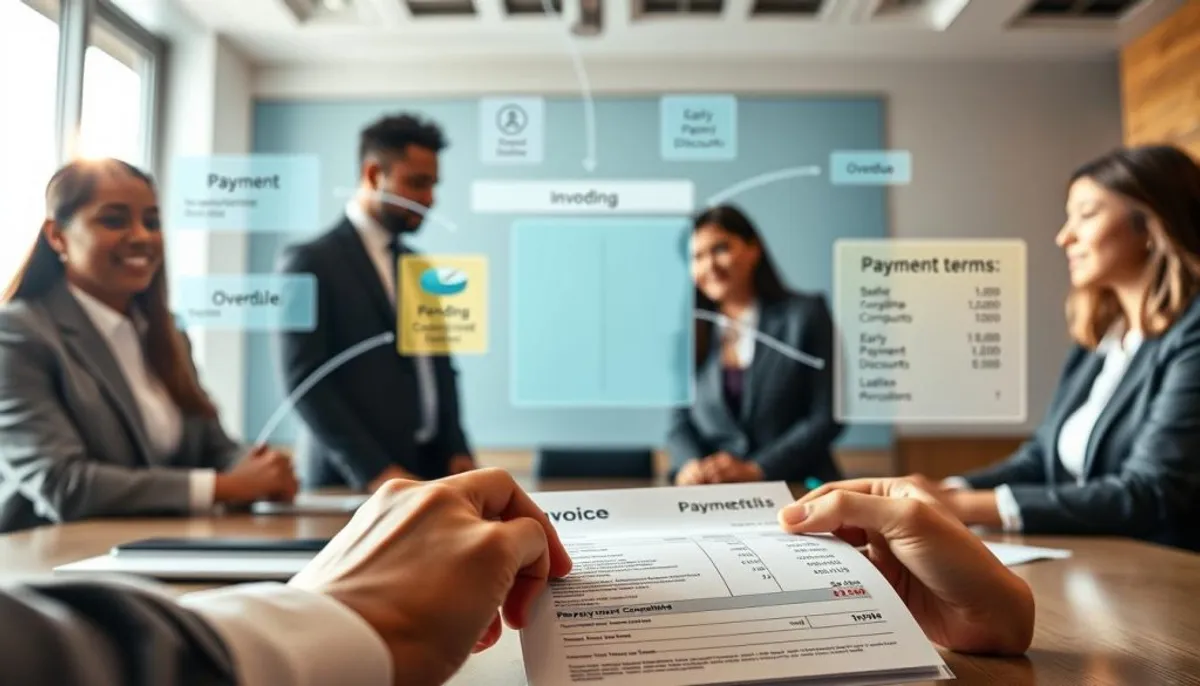
Invoice payment terms define when and how customers are expected to pay for goods or services. These terms create a clear framework for financial transactions between businesses and clients. They help prevent misunderstandings and establish professional expectations from the start.
Net Payment Terms Explained
Net payment terms represent a standard approach in business invoicing across multiple sectors. Understanding these terms helps businesses set realistic payment expectations with their clients.
Here’s a breakdown of the most common net payment terms:
- Net 30: The most popular payment term, allowing customers 30 calendar days to pay the full invoice amount
- Net 15: Customers have 15 days to complete payment
- Net 60: Typically used by larger companies, giving 60 days for payment
- Net 90: Common in specialized industries, providing 90 days for invoice settlement
Early Payment Discounts and Incentives
Many businesses use early payment discounts to encourage prompt payment from their clients. These incentives can significantly improve cash flow and strengthen long-term client relationships. Offering discounts creates mutual benefits for both parties involved.
Common early payment terms include:
- 2/10 net 30: 2% discount if paid within 10 days, full amount due in 30 days
- 1/10 net 30: 1% discount if paid within 10 days, full amount due in 30 days
Payment in Advance and Cash on Delivery Options
Some businesses prefer alternative payment terms to minimize financial risk and protect revenue streams. These options work particularly well for new client relationships or high-value transactions.
- Payment in Advance (PIA): Clients pay before receiving services
- Cash on Delivery (COD): Payment expected upon service or product delivery
- Due upon receipt: Immediate payment required when invoice is received
Choosing the right invoice payment terms depends on your business model and industry standards. Client relationships also play a significant role in determining appropriate payment structures. Carefully consider these options to optimize your financial management and reduce unpaid invoice risks.
Unpaid Invoice Artinya: Consequences for Small Businesses
Small businesses face unique challenges when dealing with unpaid invoices. These financial setbacks can quickly escalate from minor inconveniences to critical threats. Understanding late payment impacts proves crucial for maintaining stability and growth.
The unpaid invoice effects extend far beyond simple monetary concerns. They create ripples of challenges disrupting entire business operations. Client relationships often suffer as collection efforts intensify.
How Late Payments Affect Business Operations
Late payments create significant operational challenges for small businesses. The impact manifests in several critical ways across daily operations.
- Restricted cash flow preventing new investments
- Delayed hiring or expansion plans
- Potential need for high-interest credit to cover expenses
- Time wasted tracking and collecting outstanding payments
Small businesses operate on razor-thin margins. Each unpaid invoice becomes a potential threat to financial sustainability. A single delayed payment forces difficult decisions about resources.
Growth strategies often stall due to insufficient working capital. Business owners must choose between pursuing payments and developing new opportunities.
The Risk of Damaged Client Relationships
Pursuing unpaid invoices requires a delicate balance. Aggressive collection tactics can potentially damage valuable client relationships. Passive approaches may leave businesses financially vulnerable.
| Collection Approach | Potential Outcome |
|---|---|
| Aggressive Tactics | Risk of losing future business |
| Professional Communication | Maintains relationship, increases payment likelihood |
| Automated Reminders | Consistent, non-confrontational follow-up |
Strategic, professional communication about unpaid invoices can strengthen client relationships. This approach demonstrates business maturity and clear expectations. Clients often appreciate transparent, respectful collection processes.
Effective Strategies for Handling Unpaid Invoices
Dealing with unpaid invoices presents significant challenges for business owners. Understanding how to handle unpaid invoices demands a strategic and professional methodology.
Experts recommend implementing a multi-tiered approach to unpaid invoice strategies. This systematic framework helps businesses maintain financial stability while preserving client relationships.
- Prevention through Clear Communication: Set explicit payment terms before beginning work
- Proactive Follow-up: Send friendly reminders before and after invoice due dates
- Systematic Escalation: Create a structured approach to invoice collection
Professional Mark Stewart, CPA, advocates implementing a tiered incentive system. This approach includes offering small discounts for early payments. It also creates flexible payment plans for clients experiencing financial challenges.
Key strategies for handling unpaid invoices include:
- Send a friendly reminder 7 days before the due date
- Follow up with a formal communication 15 days after the invoice date
- Make a personal phone call at 30 days
- Consider flexible payment arrangements
Modern businesses increasingly utilize automated reminder systems that professionally manage invoice follow-ups. These systems help maintain client relationships while ensuring consistent payment collection.
The objective centers on recovering payments without damaging valuable business relationships. Approaching unpaid invoices with empathy and professionalism significantly improves cash flow. Clear communication strategies enhance client retention rates.
How Unpaid-Invoices.com Simplifies Debt Collection

Businesses struggling with unpaid invoices now have a powerful ally: Unpaid-Invoices.com. This innovative SaaS platform transforms how companies manage what to do with unpaid invoices. It offers a streamlined approach to debt collection solutions that saves time and preserves client relationships.
Automated Reminder Systems That Work
Tracking overdue payments becomes effortless with Unpaid-Invoices.com’s cutting-edge automated invoice collection system. The platform eliminates manual follow-ups by implementing smart reminder strategies:
- Customizable email reminders before and after invoice due dates
- Escalating communication protocols
- Professional, brand-aligned messaging
Maintaining Client Relationships While Collecting Payments
Debt collection doesn’t mean damaging client rapport. Unpaid-Invoices.com prioritizes respectful communication that keeps business relationships intact. The platform’s intelligent approach ensures clients feel supported while gently nudging them toward payment.
Cost-Effective Alternative to Traditional Collection Agencies
Traditional collection agencies can charge up to 50% of recovered funds. Unpaid-Invoices.com offers a revolutionary alternative with transparent pricing and higher collection rates. Small businesses can now manage outstanding invoices without expensive third-party intervention.
Blake Rutledge, CFO at Kruze Consulting, recommends: “There are so many platforms that make the invoicing process easy that there’s no point trying to reinvent the wheel.”
Preventing Unpaid Invoices Before They Happen
Protecting your business’s cash flow requires proactive strategies that prevent late payments. Smart practices implemented early make dealing with unpaid invoices significantly easier.
Key strategies for invoice payment prevention include:
- Establish crystal-clear payment terms before starting work
- Request partial or full payment upfront
- Conduct credit checks for new clients
- Send professional invoices immediately
- Offer multiple convenient payment methods
Professional communication is your first defense against payment delays. Blake Rutledge, CFO at Kruze Consulting, recommends invoicing in advance to mitigate cash flow risks. Transparent discussions about payment expectations during initial contract negotiations prove essential for success.
| Prevention Strategy | Potential Impact |
|---|---|
| Upfront Deposits | Reduces financial risk by 60% |
| Clear Payment Terms | Minimizes misunderstandings by 75% |
| Multiple Payment Options | Increases payment speed by 40% |
Regular account receivable reviews help catch potential issues early. These invoice payment prevention techniques significantly reduce the likelihood of dealing with unpaid invoices.
Tracking and Managing Outstanding Payments Efficiently
Successful businesses understand that tracking unpaid invoices is crucial for maintaining healthy cash flow. Modern invoice management systems have revolutionized how companies approach outstanding payments. These tools make the process more streamlined and effective for organizations of all sizes.
Effective payment tracking requires strategic approaches that go beyond traditional methods. Small businesses can dramatically improve their financial management by implementing robust systems. These systems are specifically designed to monitor and collect outstanding payments efficiently.
Using Invoicing Software for Better Organization
Digital invoicing software offers powerful tools for managing outstanding payments with precision. Key benefits include:
- Automatic tracking of invoice statuses
- Real-time visibility into accounts receivable
- Instant aging report generation
- Integrated payment reminder systems
Blake Rutledge, CFO at Kruze Consulting, emphasizes that Excel spreadsheets become unmanageable as businesses grow. Modern invoicing platforms provide comprehensive solutions that save time. They also reduce collection challenges significantly.
Setting Up Internal Controls and Payment Monitoring
Establishing clear internal controls is essential for effective payment management. Recommended practices include:
- Create a consistent invoice review schedule
- Develop standardized follow-up procedures
- Implement automated reminder systems
- Categorize receivables by outstanding duration
By adopting systematic tracking methods, businesses can minimize revenue delays. They maintain professional client relationships while ensuring steady cash flow. This approach creates a sustainable foundation for long-term financial health.
Conclusion
Navigating unpaid invoices doesn’t have to overwhelm business owners. Understanding unpaid invoice artinya means recognizing payment tracking as critical for maintaining financial health. Small businesses can transform their accounts receivable approach by implementing strategic management techniques.
Managing unpaid invoices reveals several strategies that dramatically improve cash flow. Clear communication, proactive tracking, and professional collection methods protect your business’s financial interests. Automated systems like Unpaid-Invoices.com provide innovative solutions that simplify payment collection processes.
Successful businesses view invoice management as growth opportunities rather than burdens. Establishing clear payment terms, using modern invoicing software, and maintaining professional client relationships minimize payment delays. These proactive approaches reduce stress and allow focus on core operations and expansion.
Review your current invoicing processes today. Explore professional tools and technologies that streamline your payment collection strategy. With the right approach, unpaid invoices become manageable, ensuring your company’s continued success and financial stability.
FAQ
What does “unpaid invoice artinya” mean?
“Unpaid invoice artinya” is an Indonesian phrase meaning “what does unpaid invoice mean.” In business context, it refers to an invoice for goods or services. The customer has not paid by the specified due date.
How long can an invoice remain unpaid?
The duration depends on the payment terms agreed upon. Common terms include Net 15, Net 30, Net 60, and Net 90 days. After these periods, an invoice becomes officially “unpaid” or “overdue.”
What are the consequences of unpaid invoices?
Unpaid invoices can severely impact business cash flow and prevent growth investments. They damage supplier relationships and potentially threaten business survival. They tie up working capital and create financial stress for small businesses.
How can businesses prevent unpaid invoices?
Prevention strategies include establishing clear payment terms and requesting deposits or advance payments. Conduct credit checks and send prompt, professional invoices. Offer multiple payment methods and maintain strong client relationships.
What is the best way to follow up on unpaid invoices?
Implement a systematic approach with friendly, professional reminders. Start with gentle email reminders before and after the due date. Escalate to more formal communication as needed. Consider using automated systems like unpaid-invoices.com to manage the process.
How do early payment discounts work?
Early payment discounts, like 2/10 net 30, offer customers a small percentage discount. For example, 2% if they pay within 10 days. Otherwise the full amount is due within 30 days. This incentivizes faster payment and improves cash flow.
What are the alternatives to chasing unpaid invoices manually?
Modern solutions like unpaid-invoices.com offer automated reminder systems and professional communication templates. They provide systematic follow-up processes that save time. These tools improve collection rates without damaging client relationships.
How can invoicing software help manage unpaid invoices?
Invoicing software provides automatic tracking of invoice status and aging reports. It offers easy filtering of invoice history. Integration with accounting systems helps businesses efficiently monitor and manage outstanding payments.
Are there different payment terms for various industries?
Yes, payment terms can vary by industry. Net 90 is common in trucking and manufacturing sectors. Freelancers and consultants might use Payment in Advance (PIA) or require partial upfront payments.
What should I do if a client consistently has unpaid invoices?
Review the client’s payment history thoroughly. Have a professional conversation about payment challenges. Consider adjusting payment terms to accommodate their situation. If issues persist, reassess the business relationship or implement stricter collection procedures.