
Unpaid invoices can drain your business’s financial energy faster than you might expect. Small businesses across the United States lose thousands of dollars annually due to delayed payments. Learning how to collect unpaid invoices effectively is crucial for maintaining healthy cash flow. Sustainable business operations depend on timely payment collection.
Collecting unpaid invoices requires strategic communication and persistent yet professional follow-up. Nearly 30% of outstanding invoices demand multiple payment reminders before resolution. This challenge affects businesses of all sizes, from freelance professionals to established corporations.
Modern technology and digital platforms now provide sophisticated tools to streamline the collection process. Smart entrepreneurs can leverage these resources to recover funds without damaging client relationships. Aggressive tactics are no longer necessary for successful debt recovery.
Key Takeaways
- Understand the impact of unpaid invoices on business cash flow
- Develop a systematic approach to collecting unpaid invoices
- Use professional communication strategies
- Leverage technology for efficient invoice tracking
- Maintain positive client relationships during collection processes
Understanding Outstanding vs. Past Due Invoices
Navigating the world of dealing with unpaid invoices requires a clear understanding of invoice terminology. Not all unpaid invoices are created equal. Knowing the difference between outstanding and past due invoices can help businesses manage their cash flow more effectively.
What Makes an Invoice Outstanding
An outstanding invoice represents a bill that hasn’t been paid yet but hasn’t reached its due date. These are completely normal in business transactions and don’t necessarily signal a problem.
Businesses typically send outstanding invoices well in advance of the payment deadline to:
- Provide clear payment expectations
- Give clients time to process payment
- Maintain transparent financial communication
When Outstanding Becomes Overdue
Dealing with unpaid invoices takes a critical turn once an invoice transitions from outstanding to past due. This happens the moment the payment deadline passes without receiving funds. Past due invoices represent a more serious financial concern and require immediate attention.
| Invoice Status | Payment Timeline | Business Impact |
|---|---|---|
| Outstanding | Before due date | Normal business practice |
| Past Due | After due date | Potential cash flow risk |
Recognizing the distinction between outstanding and past due invoices helps businesses develop targeted strategies for dealing with unpaid invoices. This understanding maintains healthy financial operations.
Why Unpaid Invoices Hurt Your Business Cash Flow
Cash flow represents the financial lifeline of any business. A breakdown in the invoice collection process creates a domino effect of financial challenges. These challenges can threaten your company’s survival.
Unpaid invoices create significant financial strain by disrupting your expected revenue stream. Every unrecovered invoice means:
- Lost potential income
- Increased operational costs
- Potential credit line strain
- Reduced financial flexibility
The true cost of uncollected invoices goes beyond the face value. At a 20% gross margin, a single unrecovered invoice requires selling five times more product to break even.
| Invoice Status | Financial Impact |
|---|---|
| Paid On Time | Positive Cash Flow |
| Delayed Payment | Increased Financial Stress |
| Unpaid Invoice | Potential Business Risk |
Proactive invoice collection protects your business’s financial health. It ensures steady cash flow and supports payroll obligations. This approach enables inventory purchases and maintains overall operational stability.
Setting Clear Payment Terms from the Start
Preventing unpaid invoices starts with establishing crystal-clear payment expectations. Effective strategies for collecting unpaid invoices begin long before an invoice becomes overdue. By setting precise terms upfront, businesses can significantly reduce payment delays and maintain healthy cash flow.
Creating transparent payment expectations protects both your business and your clients. Clear financial ground rules minimize misunderstandings and disputes.
Specifying Due Dates on Every Invoice
Successful strategies for collecting unpaid invoices require precision in invoicing. Replace vague terms like “payment upon receipt” with specific practices that eliminate confusion.
- Include an exact calendar date for payment
- Use clear language like “Payment Due: January 15, 2025”
- Highlight the specific payment deadline prominently
- Consider adding a friendly reminder note about payment expectations
Including Payment Expectations in Contracts
Proactive businesses understand that strategies for collecting unpaid invoices start with comprehensive contracts. Your service agreements should explicitly outline key payment details.
- Standard payment terms (net 15, net 30)
- Accepted payment methods
- Early payment discount opportunities
- Late payment penalties or interest charges
Discussing penalties might feel uncomfortable, but it establishes professional boundaries. Clear terms reduce misunderstandings and provide a reference point for potential collection conversations.
How to Collect Unpaid Invoice: A Step-by-Step Process
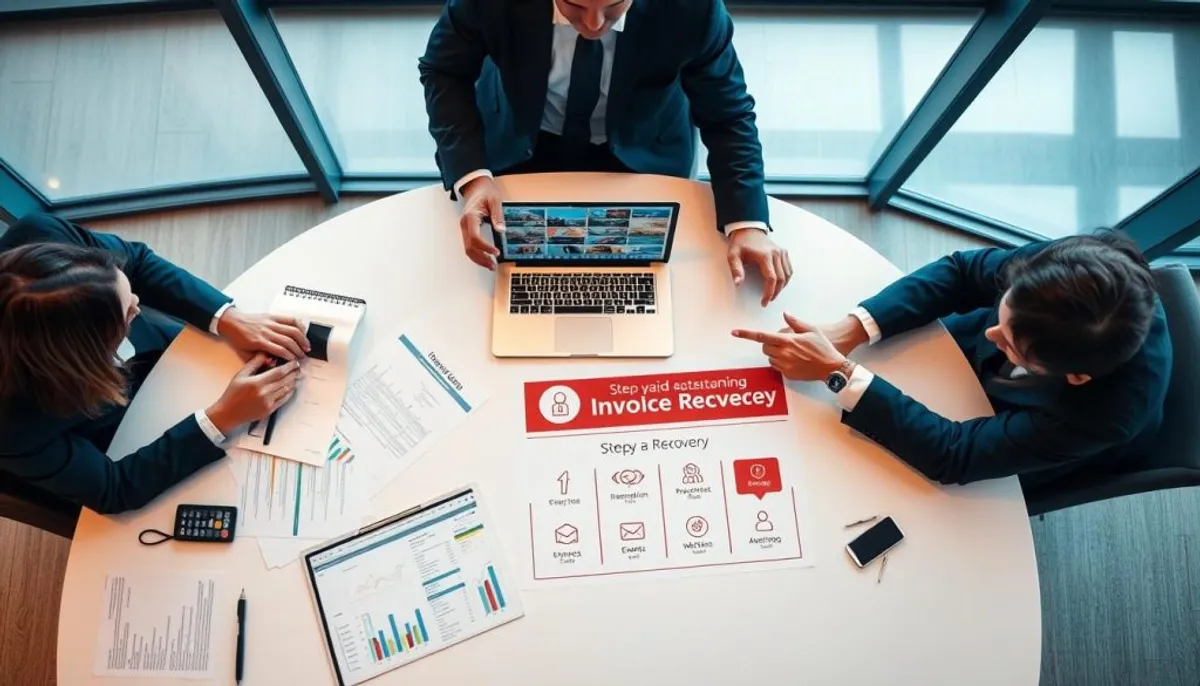
Recovering unpaid invoices requires a strategic approach. The steps to recover unpaid invoices involve a systematic process. This process helps businesses efficiently collect outstanding payments while maintaining professional relationships.
Effective steps to recover unpaid invoices typically include:
- Identify Overdue Invoices
- Review accounts receivable reports
- Pinpoint invoices past their due date
- Prioritize amounts and aging
- Initiate Soft Contact
- Send polite email reminders
- Verify invoice receipt
- Request payment confirmation
- Escalate Communication
- Make personalized phone calls
- Discuss payment challenges
- Offer flexible payment options
Proactive communication is key to successful invoice recovery. Implementing these structured steps significantly improves your chances of collecting outstanding payments.
| Stage | Action | Goal |
|---|---|---|
| Initial Follow-up | Friendly Reminder | Prompt Payment |
| Second Stage | Detailed Communication | Payment Plan |
| Final Stage | Formal Collection | Recover Funds |
Successful invoice collection relies on persistence, professionalism, and creating clear communication channels with clients. These three elements form the foundation of effective debt recovery.
Analyzing and Prioritizing Your Overdue Accounts
Mastering unpaid invoice recovery starts with a strategic approach to analyzing your overdue accounts. The key to successful collections lies in understanding which invoices demand immediate attention. Some invoices can wait while others require urgent action to maximize recovery potential.
Your aged receivables report becomes your most powerful tool for unpaid invoice recovery efforts. This financial document breaks down outstanding invoices based on how long they’ve remained unpaid. The report provides critical insights into payment patterns and helps identify problematic accounts requiring immediate intervention.
Using Aged Receivables Reports Effectively
An aged receivables report typically categorizes invoices into specific time buckets:
- Current (0-30 days)
- 1-30 days past due
- 31-60 days past due
- 61-90 days past due
- 90+ days past due
Identifying High-Risk Past Due Invoices
Critical statistics reveal a stark reality about collection success rates over time. Your chances of collecting drop by 60% after an invoice crosses the 90-day threshold. This dramatic decline makes prioritization crucial in unpaid invoice recovery strategies and resource allocation decisions.
| Invoice Age | Collection Priority | Recovery Likelihood |
|---|---|---|
| 0-30 days | Low | High |
| 31-60 days | Medium | Good |
| 61-90 days | High | Declining |
| 90+ days | Critical | Very Low |
Prioritizing your unpaid invoice recovery efforts requires a systematic approach to maximize results. Focus on high-dollar invoices approaching 90 days as your first priority. Target accounts with consistent late payment history next, followed by invoices with potential disputes.
Smaller, newer overdue accounts should receive attention after addressing critical cases. This hierarchy ensures optimal resource allocation and improves overall collection rates significantly.
Pro tip: Create a strategic action plan that targets your most at-risk receivables first to maximize your recovery potential.
Sending Effective Payment Reminder Emails
Collecting unpaid invoices requires strategic communication. Nearly one-third of late payments occur due to simple processing oversights. Crafting the right payment reminder email proves crucial for effective collection strategies.
Key strategies for creating powerful reminder emails include:
- Keep the email professional and polite
- Use plain text formatting
- Send from a personal email address
- Personalize the message
Your initial email should feel like a friendly nudge rather than a harsh demand. Include specific details such as:
- Invoice number
- Original due date
- Total amount owed
- Available payment methods
Avoid generic billing addresses that might trigger spam filters. Your email from a real person’s account increases the likelihood of getting a response. Personalization remains essential for successful email communication regarding unpaid invoices.
Pro tip: Use email tracking tools to confirm delivery and opening of your reminder. This helps you understand if your message reaches the intended recipient. It also allows for strategic follow-up planning.
Establishing a Consistent Follow-Up Schedule
Collecting unpaid invoices requires a strategic approach that goes beyond a single reminder. Research shows that 30% of outstanding invoices need multiple follow-ups before payment is received. Businesses must develop a consistent workflow that keeps the payment request front and center. This approach protects valuable client relationships while ensuring timely payments.
Successful collecting of unpaid invoices depends on creating a systematic approach that balances persistence with professionalism. The key is establishing a reliable reminder process that keeps your invoice from getting lost.
Creating an Automated Reminder Workflow
An effective reminder system should include a structured approach to collecting unpaid invoices:
- Send first reminder immediately after invoice becomes overdue
- Follow up with a second reminder 7 days later
- Send a third reminder with increased urgency after another 7 days
- Escalate to phone calls or account manager intervention
- Issue formal written notices as a final step
Setting the Right Tempo for Payment Collections
The ideal follow-up schedule strikes a delicate balance. Too frequent reminders can irritate clients and damage business relationships. Infrequent follow-ups risk letting invoices slip through the cracks and delay payment indefinitely.
| Days Overdue | Recommended Action | Communication Tone |
|---|---|---|
| 0-7 days | Friendly reminder email | Gentle and understanding |
| 8-14 days | Detailed follow-up email | More direct, requesting immediate action |
| 15-30 days | Phone call or personal outreach | Urgent but professional |
Automation tools can help businesses maintain this consistent approach without dedicating endless hours to manual follow-up. By implementing a structured system, companies can significantly improve their chances of collecting unpaid invoices efficiently.
Making Phone Calls to Resolve Overdue Payments

Phone calls remain one of the most direct debt collection methods for resolving unpaid invoices. Many businesses hesitate to pick up the phone. This approach often yields faster results compared to email reminders.
Timing is crucial for implementing debt collection methods through phone communication. You should make these calls after sending two or three unanswered email reminders. Preparation is key to making these conversations productive and professional.
Before dialing, gather essential information:
- Specific invoice numbers
- Total outstanding balance
- Original due dates
- Days past due
- Available payment methods
Maintain a friendly yet direct tone during the call. Start by introducing yourself and clearly stating the purpose. For example: “Hi [Client Name], I’m calling about our outstanding invoice #[number] for [amount] that was due on [date].”
Listen carefully to understand any potential obstacles preventing payment during the conversation. Some clients might be experiencing temporary cash flow challenges. Others may have unresolved questions about the invoice.
Always send a follow-up email summarizing your discussion and any agreed-upon next steps after the call. This creates a written record. It also reinforces the commitment to resolving the outstanding payment.
Mastering these phone-based debt collection methods helps businesses improve their accounts receivable process. It also maintains healthy client relationships.
Involving Your Sales Team in the Collection Process
Collecting unpaid invoices isn’t just a finance department task. Your sales team can be a powerful ally in strategies for collecting unpaid invoices. Account managers and salespeople play a crucial role in resolving payment challenges.
Why involve sales in invoice collection? They understand client relationships deeper than anyone else. Standard reminder emails and calls sometimes fail to produce results. Sales professionals can uncover hidden barriers to payment.
- Leverage existing client relationships
- Identify potential disputes early
- Approach collections with a collaborative mindset
Effective strategies for collecting unpaid invoices through sales teams include:
- Finance handles initial technical reminders
- Sales team steps in when standard processes stall
- Account managers investigate potential issues
| Collection Stage | Responsible Team | Primary Action |
|---|---|---|
| Initial Reminders | Finance | Send formal payment notices |
| Relationship Investigation | Sales | Discover underlying payment barriers |
| Resolution Negotiation | Sales/Finance | Develop mutually agreeable solution |
Pro tip: Sales team involvement transforms collections from a confrontational process to a collaborative problem-solving approach. This method protects both revenue and client relationships.
Using Traditional Mail for Formal Payment Notices
Digital communication dominates business interactions, but debt collection methods sometimes require a more traditional approach. Emails and phone calls don’t always secure payment from clients. Sending a formal notice through traditional mail can be a powerful strategy. This method often yields better results than digital alternatives.
Traditional mail stands out in a digital world. Finance teams routinely process physical mail, ensuring your formal payment notice receives attention. This method signals serious intent to clients. It demonstrates your commitment to resolving outstanding invoices.
Crafting an Effective Demand Letter
A well-structured demand letter is crucial in debt collection methods. Your letter should include:
- Precise invoice details
- Total amount owed
- Previous communication history
- Clear payment deadline
- Potential consequences of non-payment
Maintain a professional yet firm tone during the drafting process. Certified mail with return receipt provides proof of delivery. This approach adds legal weight to your communication.
Timing Your Formal Notice
Send a formal demand letter once invoices reach 60-90 days overdue. This approach demonstrates patience while emphasizing the seriousness of the outstanding payment.
Consider using digital mail services like Lob to streamline the process. These services help maintain professional documentation of your debt collection efforts.
Streamline Collections with Unpaid-Invoices.com
Managing the invoice collection process can drain your business’s time and energy. Unpaid-Invoices.com emerges as a game-changing solution that transforms how companies handle overdue accounts. This innovative SaaS platform automates the entire invoice collection workflow. It helps businesses recover outstanding payments with minimal effort.
Key features of Unpaid-Invoices.com include:
- Automatic invoice tracking and reminder generation
- Customizable escalation workflows
- Professional communication templates
- Real-time payment tracking
The platform stands out by providing a relationship-preserving approach to collections. Traditional debt collection agencies charge hefty fees and potentially damage client relationships. Unpaid-Invoices.com maintains a professional tone while ensuring prompt payment.
Business owners can seamlessly integrate their existing accounting software. The platform identifies and manages overdue invoices automatically. The system sends graduated reminder emails and tracks client interactions. It provides comprehensive reporting to help you stay on top of receivables.
By implementing Unpaid-Invoices.com, companies can:
- Reduce time spent on manual invoice follow-ups
- Improve cash flow consistency
- Maintain positive client relationships
- Minimize the risk of unpaid invoices
Take control of your invoice collection process today. Watch your business’s financial health improve with Unpaid-Invoices.com.
Conclusion
Mastering invoice collection requires more than persistence—it demands strategic thinking. Successful collections are 90% about process and discipline. Business owners often feel uncomfortable requesting payment. However, cash flow remains the lifeblood of any company.
An effective collection strategy doesn’t mean being aggressive. Focus on creating a systematic workflow instead. Track late-paying customers and establish consistent follow-up schedules. Involve your entire team in the collection process.
Modern tools like unpaid-invoices.com can streamline these efforts. These platforms make collections easier and more efficient. They help you maintain professionalism while improving results.
Your collection approach should be professional and methodical. Set a rhythm of at least one collection action per week. Use aged receivables reports to prioritize accounts. Develop a clear communication strategy that protects relationships.
Timely collections protect your business’s financial health. They support sustainable growth and operational stability. Strong collection practices ensure predictable cash flow.
Start transforming your invoice collection process today. Analyze your current receivables and identify problem areas. Set up automated reminders to maintain consistency. Commit to a regular follow-up strategy that works for your business.
With the right tools and mindset, collection becomes manageable. You can turn this challenging task into a smooth business practice. Strong processes keep your cash flow healthy and your business thriving.
FAQ
What’s the difference between an outstanding and a past due invoice?
An outstanding invoice is any invoice that hasn’t been paid yet, even if it’s still within the payment terms. A past due or overdue invoice has exceeded its agreed-upon payment deadline. Understanding this distinction proves crucial for effective cash flow management. This knowledge shapes your collection strategies.
How long should I wait before following up on an unpaid invoice?
Start follow-up immediately after the invoice becomes past due. Statistics show that the likelihood of collecting payment drops significantly after 90 days. Prompt action is critical. Begin with a friendly email reminder, then escalate to phone calls and more formal communication if needed.
Can collecting unpaid invoices damage my client relationships?
Professional and systematic invoice collection can actually strengthen client relationships. The key is maintaining a friendly, solution-oriented approach. Clear communication, understanding client challenges, and offering flexible payment options help preserve positive business relationships. This approach ensures you get paid while maintaining goodwill.
What should I include in a payment reminder email?
An effective payment reminder email should include the specific invoice number, amount due, and original due date. List all available payment methods clearly. Personalize the email and use a conversational tone. Make it easy for the client to understand and act on the reminder.
Keep the first reminder light and friendly. Gradually increase formality with subsequent follow-ups.
How often should I follow up on an unpaid invoice?
Aim for consistent weekly contact for seriously overdue invoices. This doesn’t mean aggressive daily emails, but rather a systematic approach. Keep the invoice top-of-mind through strategic timing. Many businesses find that it takes three or more reminders before an invoice is finally paid.
When should I consider more serious collection methods?
Consider escalating to more formal methods for invoices 60-90 days past due with ignored reminders. This might include sending a formal demand letter or involving your account managers. Explore payment plan options as an alternative. As a last resort, you might consider a collection agency.
How can I prevent unpaid invoices in the future?
Prevention starts with clear payment terms in your initial contracts. Specify exact due dates, accepted payment methods, and potential late payment penalties. Use detailed invoices and send reminders before the due date. Offer multiple convenient payment options and consider early payment incentives to encourage timely payments.
Are there tools to help automate the invoice collection process?
Several SaaS platforms like Unpaid-Invoices.com specialize in automating invoice follow-up. These tools can track overdue invoices and send automated reminders. They manage communication logs and provide insights into your accounts receivable. This automation saves significant time and improves collection rates.