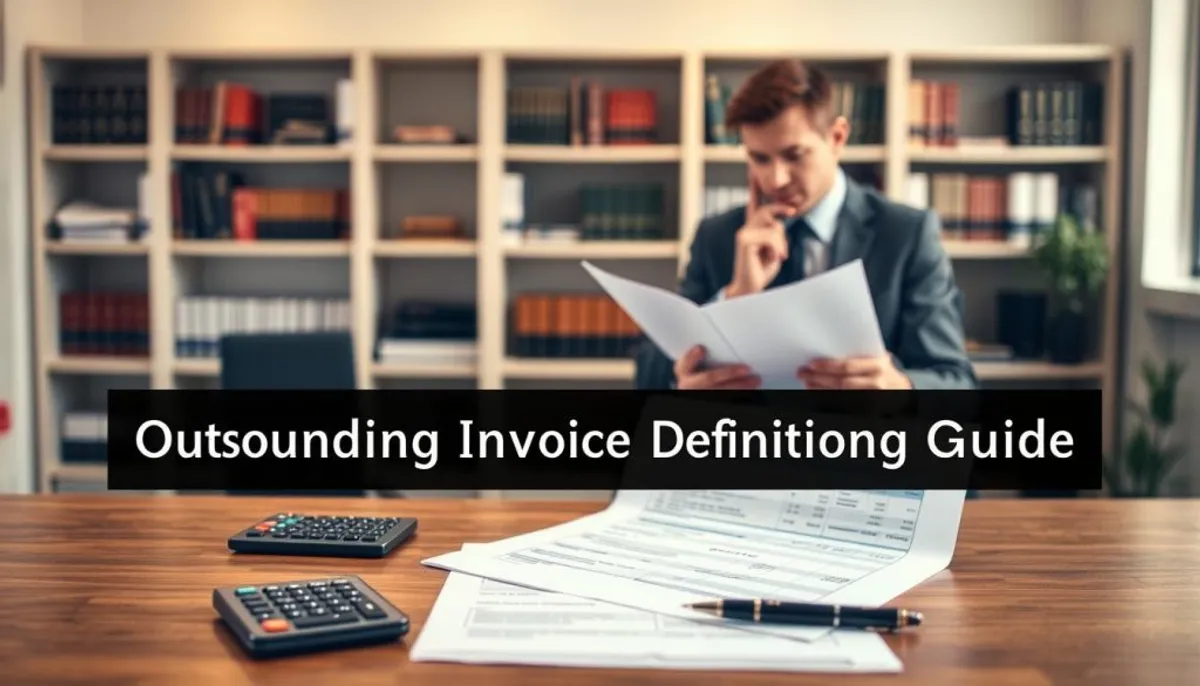
Every business owner knows the importance of billing and payment cycles. An outstanding invoice is a bill for services or products that hasn’t been paid yet. However, it remains within the agreed payment window. These invoices differ from overdue ones and maintain positive status in your financial records.
The outstanding invoice definition extends beyond a simple document. It serves as a crucial financial tool tracking your business’s economic health. These unpaid invoices represent completed work and delivered goods. They also reflect the trust established between you and your clients.
Mastering how outstanding invoices work can revolutionize your cash flow management. Businesses tracking these financial documents strategically maintain healthier client relationships. They also ensure more consistent revenue streams and better financial planning.
Key Takeaways
- Outstanding invoices are valid bills within payment terms
- They represent completed work awaiting payment
- Proper tracking prevents cash flow disruptions
- These invoices differ from overdue payments
- Strategic management maintains client relationships
Outstanding Invoice Definition
Mastering outstanding invoices is essential for solid business financial management. An outstanding invoice captures the relationship between delivered services and payments awaiting collection. This critical accounting component helps businesses track their financial health.
Outstanding invoices are billing documents currently within their designated payment window. These invoices represent legal financial obligations that haven’t reached their payment deadline yet. They remain active in your accounts receivable system.
What Does Outstanding Mean in Billing
In billing terminology, “outstanding” describes a specific invoice status with distinct characteristics:
- Unpaid but not yet overdue
- Within the agreed payment period
- Recorded in accounts receivable
- Represents a current financial claim
Businesses track outstanding invoices as potential incoming revenue. These invoices differ from completely paid or severely delinquent ones. They represent active financial claims awaiting resolution.
The Legal Status of Outstanding Invoices
Outstanding invoices carry significant legal weight in business transactions. They are binding documents establishing clear payment obligations between parties. The invoice status creates formal payment expectations within specified terms.
| Invoice Characteristic | Legal Implications |
|---|---|
| Payment Terms | Legally enforceable agreement |
| Invoice Date | Triggers payment countdown |
| Outstanding Period | Defines acceptable payment window |
Understanding outstanding invoices helps businesses maintain healthy financial practices. This knowledge enables effective cash flow management and stronger financial planning.
How Outstanding Invoices Differ from Overdue Invoices
Business owners often confuse outstanding and overdue invoices. Understanding the difference is crucial for maintaining healthy cash flow and professional relationships. These invoice terms might sound similar, yet they represent distinct stages in the payment process.
An outstanding invoice exists within the approved payment window. This means the client has not yet paid, but they are still within the agreed invoice terms. No immediate action is required during this stage.
- Outstanding Invoice: Payment deadline has not passed
- Client is within standard payment period
- No collection actions needed
In contrast, an overdue payment occurs after the specified payment deadline has elapsed. This signals that the client has failed to meet their financial commitment.
| Invoice Status | Payment Window | Recommended Action |
|---|---|---|
| Outstanding | Within Payment Terms | Monitor, No Action |
| Overdue | Past Payment Deadline | Send Payment Reminder |
Professional invoice management requires recognizing these nuanced differences. Treating an outstanding invoice like an overdue one can damage client relationships. Being too passive with overdue payments risks compromising your cash flow.
The key is timing: send gentle reminders for outstanding invoices. Use more direct communication for overdue payments. Your approach should balance maintaining good client relationships with protecting your business’s financial interests.
Why Outstanding Invoices Matter to Your Cash Flow
Cash is the lifeblood of any business. Unpaid accounts receivable create serious consequences for your company’s financial health. Outstanding invoices represent more than spreadsheet numbers—they’re critical resources stuck in financial limbo.
Grasping the true impact of outstanding invoices transforms how you manage business finances. Discover the critical ways unpaid invoices affect your growth and bottom line.
The Impact on Business Growth
Every dollar trapped in unpaid invoices can’t be invested in your business’s future. These growth limitations create real obstacles:
- Reduced capacity for hiring new talent
- Limited funds for marketing expansion
- Restricted ability to purchase inventory
- Decreased investment in research and development
A business holding $500,000 in accounts receivable with 10% capital cost effectively loses $50,000 annually waiting for payment.
Hidden Costs of Unpaid Invoices
Unpaid invoices damage more than immediate cash flow. These hidden costs silently erode your business’s financial strength over time.
| Hidden Cost | Financial Impact |
|---|---|
| Time Value of Money | Potential earnings lost while waiting for payment |
| Inflation Erosion | Reduced purchasing power of delayed payments |
| Administrative Burden | Staff time spent tracking and collecting invoices |
| Opportunity Costs | Missed business investments and growth opportunities |
Pro tip: Invoices are 60% less likely to be paid once they pass the 90-day threshold. Proactive accounts receivable management proves crucial for maintaining your business’s financial vitality.
Understanding Invoice Status and Payment Terms

Managing invoice status is crucial for maintaining healthy business finances. Every invoice goes through a specific lifecycle, from creation to payment. This process requires careful tracking and understanding.
Payment terms define the timeline for when customers must settle their invoice due date. Businesses typically use standard payment term structures. These structures provide flexibility and clarity:
- Immediate Payment (Due on Receipt)
- Net 7 (Payment within 7 days)
- Net 15 (Payment within 15 days)
- Net 30 (Payment within 30 days)
- Net 60 (Payment within 60 days)
The invoice status progression typically follows this path: sent → outstanding → overdue → collected or written off. Smart businesses customize these terms based on several key factors:
- Customer relationship value
- Transaction risk profile
- Industry standards
- Cash flow requirements
- Individual customer payment history
Tracking invoice status helps businesses maintain financial health. Modern platforms now offer automated tracking, eliminating manual monitoring. This reduces administrative burden significantly.
| Payment Term | Typical Use Case | Recommended For |
|---|---|---|
| Due on Receipt | Small transactions | New clients or high-risk services |
| Net 30 | Standard business transactions | Established clients with good payment history |
| Net 60 | Large project-based work | Long-term strategic partnerships |
Strategically managing invoice status can significantly improve your business’s financial predictability. It also enhances cash flow management capabilities.
How Long Can an Invoice Remain Outstanding
Understanding the lifespan of outstanding invoices is crucial for maintaining healthy business finances. Invoice aging can significantly impact your cash flow and overall business performance. Business owners need to know exactly how long invoices can remain unpaid before taking decisive action.
Typical invoice terms vary across different industries. Most follow standard payment periods that help businesses manage their accounts receivable effectively.
Standard Payment Periods Explained
Invoice terms typically fall into several standard categories:
- Net 7: Payment due within 7 days of invoice date
- Net 15: Payment required within 15 days
- Net 30: Most common term, allowing 30 days for payment
- Net 60: Extended payment period of 60 days
Industry-Specific Payment Terms
Different industries have unique approaches to invoice aging and payment expectations. The breakdown below illustrates these variations:
| Industry | Typical Payment Terms | Collection Risk |
|---|---|---|
| Construction | Net 45-60 | High |
| Consulting | Net 30 | Medium |
| Retail | Net 15-30 | Low |
Critical insights reveal that invoices become significantly harder to collect after 90 days. Businesses should track invoice aging carefully. Collection probabilities drop dramatically as time passes. Proactive management of outstanding invoices is key to maintaining financial health.
The True Cost of Outstanding Invoices to Your Business
Business owners often underestimate the real financial burden of outstanding invoices. Unpaid accounts receivable create damage that extends far beyond the initial invoice amount. Invoice aging triggers a cascading effect of financial challenges that quietly erode company profitability.
The true cost of outstanding invoices breaks down into three critical areas:
- Direct Financial Costs: Money tied up in unpaid invoices represents lost potential revenue
- Operational Costs: Time and resources spent tracking and collecting payments
- Strategic Costs: Reduced ability to invest in growth opportunities
Consider a concrete example of the financial implications. A business with $500,000 in outstanding accounts receivable and a 10% cost of capital loses $50,000 annually. This figure represents more than missed revenue—it represents squandered growth potential.
| Invoice Aging Bracket | Potential Financial Impact | Risk Level |
|---|---|---|
| 0-30 Days | Minimal Financial Strain | Low |
| 31-60 Days | Growing Revenue Disruption | Medium |
| 61-90 Days | Significant Cash Flow Risk | High |
| 90+ Days | Potential Business Threat | Critical |
Proactive management of accounts receivable proves essential for sustainable business growth. Strategic collection processes minimize these hidden costs effectively. Modern tracking tools help maintain a healthy financial ecosystem. Implementation of these systems protects your company’s bottom line.
Proven Strategies for Collecting Outstanding Invoices
Effective invoice collection requires a strategic approach that balances professionalism with customer relationships. Businesses can significantly improve their payment processing by implementing systematic collection methods. These methods minimize financial risks while maintaining positive client interactions.
Developing a robust collection strategy involves multiple key components:
- Segment customers based on payment history
- Create personalized communication channels
- Implement clear late fee policies
- Utilize automated payment processing tools
Building a Systematic Collection Process
A successful collection agency understands that one-size-fits-all approaches rarely work. Smart businesses develop tiered communication strategies tailored to different customer profiles. Reliable customers might need minimal reminders, while consistently late payers require more structured follow-up.
Effective strategies include:
- Send pre-due reminders for upcoming invoices
- Create escalating communication sequences
- Involve multiple departments in collection efforts
- Track and analyze payment patterns
Implementing Late Fee Policies
Late fee policies serve as both a financial deterrent and a motivation for timely payments. Transparency is crucial – clearly communicate these terms in initial agreements. Make them visible on every invoice to avoid confusion.
Consider offering one-time fee waivers for first-time late payments to maintain goodwill. This approach demonstrates flexibility while still enforcing payment standards.
Modern payment processing platforms offer more efficient alternatives to traditional collection agencies. They provide automated reminders and seamless tracking that preserve customer relationships while improving collection rates.
How to Prevent Outstanding Invoices Before They Happen

Preventing unpaid invoices is far more effective than chasing them later. Smart businesses develop proactive strategies to minimize invoice due date risks. These approaches help maintain healthy cash flow and reduce financial stress.
Implementing robust prevention techniques can significantly reduce the likelihood of unpaid invoices. Strategic planning protects your business from payment delays. The right methods create a more stable financial foundation.
- Conduct thorough credit checks on new clients
- Request deposits for new business relationships
- Establish clear payment terms upfront
- Send invoices immediately after service completion
- Offer multiple payment options
Developing a systematic approach to invoice management requires careful planning. Proactive communication with clients about invoice due dates helps set clear expectations. This transparency reduces potential payment delays and builds stronger business relationships.
| Prevention Strategy | Impact on Unpaid Invoices |
|---|---|
| Credit Checks | Reduces risk of non-payment |
| Immediate Invoicing | Accelerates payment cycle |
| Flexible Payment Methods | Increases likelihood of timely payment |
Digital tools like unpaid-invoices.com can automate many of these prevention strategies. Automation makes it easier to manage your financial health efficiently. By implementing these approaches, businesses can dramatically reduce the risk of outstanding invoices.
Writing Effective Payment Reminder Emails
Navigating invoice status can be challenging for businesses. Crafting the right payment reminder email balances professionalism with gentle persistence. The goal is encouraging prompt payment without damaging client relationships.
Crafting Subject Lines That Get Opened
Your email’s subject line is the critical first point of contact for addressing overdue payment. Research shows that subject lines under 50 characters boost open rates by 12%. Effective subject lines should be:
- Clear and specific
- Include company name
- State exact amount due
- Mention invoice number
Examples of powerful subject lines include:
- “Acme Corp: $3,450 payment due March 15”
- “Invoice #1234 – Payment Confirmation Needed”
The Perfect Email Structure for Payment Requests
Designing an effective payment reminder requires a strategic approach to your invoice status communication. Here’s a proven structure that increases response rates:
- Opening: Keep it brief (maximum 11 words)
- Body: Use bullet points with key details
- Invoice number
- Total amount
- Original due date
- Payment methods
- Close: Include a clear call-to-action
Send reminders on Monday mornings for faster payment processing. Automated platforms can streamline this entire process, saving time and improving collection efficiency.
When to Escalate Outstanding Invoice Collection
Navigating overdue payment situations requires a strategic approach. Initial communication methods sometimes fail to produce results. Businesses must carefully consider their next steps in collecting outstanding invoices.
The escalation process should follow a structured path:
- Begin with friendly email reminders
- Transition to direct phone calls
- Engage senior contacts or financial decision-makers
- Propose flexible payment solutions
Phone conversations often prove more effective than email for addressing overdue payments. Reaching out to higher-level contacts can unlock payment resolutions. Lower-level communication might miss critical decision-makers who can authorize payments.
Consider implementing these strategic approaches:
- Payment Plan Negotiation: Offer flexible installment options for customers struggling with full payment
- Early Settlement Discounts: Incentivize immediate partial payment
- Service Suspension: Use as leverage for significant outstanding balances
A collection agency should be your absolute last resort. These agencies typically charge 25-50% of collected amounts. They can permanently damage customer relationships. Modern automated platforms provide more nuanced collection strategies that preserve business connections.
Documenting all communication becomes critical if legal action becomes necessary. Maintaining professionalism throughout the process increases the likelihood of successful payment recovery.
How unpaid-invoices.com Simplifies Outstanding Invoice Management
Managing accounts receivable presents significant challenges for businesses regardless of their size. Unpaid-invoices.com functions as a revolutionary SaaS platform that streamlines payment processing. The system effectively eliminates the stress associated with outstanding invoices.
Automated Reminders Transform Accounts Receivable
The platform delivers a comprehensive solution for businesses grappling with late payments. Its key features include:
- Automatic payment reminder emails
- Real-time invoice tracking
- One-click payment processing
- Seamless accounting system integration
Why It Outperforms Traditional Collection Agencies
Traditional debt collection approaches frequently damage client relationships and impose hefty fees. Unpaid-invoices.com offers a smarter alternative that maintains your business professionalism. The platform simultaneously keeps your cash flow healthy.
| Feature | Unpaid-invoices.com | Traditional Agencies |
|---|---|---|
| Cost | Low monthly subscription | 25-50% of collected amount |
| Client Relationship | Maintains professional communication | Often damages relationships |
| Proactive Approach | Early intervention | Reactive collections |
Leveraging cutting-edge technology, unpaid-invoices.com transforms accounts receivable management into a smooth, efficient process. Businesses can concentrate on growth while ensuring timely payments with minimal effort.
Conclusion
Understanding the outstanding invoice definition goes beyond financial exercises—it represents a strategic business approach. Successful companies know that managing invoice due dates maintains healthy cash flow and strong client relationships.
Proactive invoice management can transform your business operations completely. Implementing systematic processes and leveraging modern technology minimizes revenue disruptions. This approach creates a more predictable financial landscape for your organization.
Platforms like unpaid-invoices.com offer powerful automation tools that streamline the entire collection process. These solutions handle invoice tracking and send professional reminders automatically. They help businesses maintain positive client interactions while ensuring timely payments.
Evaluate your current accounts receivable strategy and identify potential improvement areas. Consider implementing automated solutions to optimize your process. With the right approach, outstanding invoices become a smooth, efficient business process supporting sustainable growth.
FAQ: Outstanding Invoices and Payment Management
What exactly is an outstanding invoice?
An outstanding invoice is a bill for goods or services sent to a customer but not yet due. It represents money owed to your business within the agreed payment window. This amount is tracked in your accounts receivable as a current asset.
How is an outstanding invoice different from an overdue invoice?
An outstanding invoice remains within its payment terms, such as a 30-day payment window. An overdue invoice has passed its payment deadline. Outstanding invoices represent normal business practice, while overdue invoices require active collection efforts.
How long can an invoice remain outstanding?
The standard outstanding period varies by industry but includes common terms like Net 7, Net 15, Net 30, and Net 60. Most businesses use Net 30 terms. This means the invoice remains outstanding for 30 days from the invoice date before becoming overdue.
What happens if an outstanding invoice isn’t paid?
If an outstanding invoice isn’t paid by its due date, it becomes an overdue invoice. At this point, you’ll need to start a collection process. This may involve sending reminders, making phone calls, or implementing late fees as specified in your original payment terms.
How do outstanding invoices impact my business’s cash flow?
Outstanding invoices directly tie up capital you could use for business growth, hiring, inventory, or marketing. They represent money owed to you that isn’t currently available. This potentially limits your business’s financial flexibility and opportunity for expansion.
What are some best practices for managing outstanding invoices?
Send invoices immediately after service and set clear payment terms. Implement automated reminder systems and offer multiple payment methods. Conduct credit checks on new customers. Use a systematic approach to tracking and following up on unpaid invoices.
When should I consider using a collection agency for outstanding invoices?
Collection agencies should be a last resort, typically only considered for invoices that are 90+ days overdue. Before reaching this stage, exhaust internal collection methods. These include friendly reminders, phone calls, and negotiating payment plans.
How can I prevent invoices from becoming outstanding for too long?
Require deposits for new customers and send clear, immediate invoices. Offer easy payment options and maintain open communication with clients. Use automated tracking systems that send timely reminders.
What information should always be included on an invoice?
A comprehensive invoice should include your business details, customer information, and invoice number. Include itemized services or products, total amount due, and payment terms. Add the due date and accepted payment methods.
Are there tools that can help manage outstanding invoices?
Yes, many modern platforms like unpaid-invoices.com offer automated invoice tracking, reminder systems, and payment processing. These tools can significantly streamline managing outstanding invoices and improve collection rates.